Diving into Opportunities
From Caring for Others to Creating Educational Opportunity


Diving into Opportunity
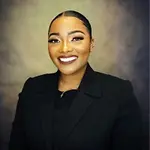
Loreta H. Ulmer, Ed.D.
My parents used to tell me, “Never look a gift horse in the mouth.” I never truly understood what that meant until I married my high school sweetheart.
He was an only child, and while he was an undergraduate at Pennsylvania Military College in Chester, Pennsylvania, his parents arranged for him to live with an elderly woman—a family friend who had recently become a widow. They paid her to make his bed, wash his clothes, prepare his meals, and keep him comfortable.
After he was accepted into Fairleigh Dickinson School of Dentistry, he asked me to marry him and join him in Hackensack, New Jersey. My “job” was to care for him—arguably even more so than the widow in Chester.
I had just graduated from the University of Delaware with a bachelor’s degree in psychology and was hired by the Hackensack Bureau of Children’s Services. I was thrilled to be working with children and their families and looked forward to creating a life of our own.
Initially, I was tasked with monitoring preschools to verify their licenses and ensure that safety materials were properly stored, and that children were being fed nutritious meals and snacks.
The most difficult experience I ever faced came when a couple walked through our doors and was ushered into our “family room.” The mother was holding a four-month-old infant, her husband paced nervously, and their five-year-old son and nine-year-old daughter began playing with toys from a basket by the sofa.
The husband worked at a junkyard, and the small bungalow where the family lived was located on the premises. The state had determined that the mother, who had cognitive challenges, was unable to care for the infant along with the other two children. As a result, the family was told they would have to give up one of their children—and the mother was asked to decide which one.
I was assigned to the case and tasked with helping the mother make that decision and assisting with the transition.
The nine-year-old daughter was gently caring for the infant while her brother played nearby. I waited until the mother was ready to speak. She began describing her mornings and how difficult it was to prepare all three children for the trip into Hackensack. She did not fully understand the purpose of the visit.
As I explained why she was there, she began to cry.
I spent some time playing with the older children, and when the mother was ready, I sat with her and explained my role. She nodded, and we began discussing each child.
Eventually, she reached a heartbreaking conclusion on her own. She told me she knew the favorite foods of her two older children and could not bear to lose them. She decided that it would be best for the baby to go to another family.
It is a day I have never forgotten.
After four long hours, the visit ended. The two older children kissed the baby goodbye, and the parents trusted that I would find a good home for their daughter. It was one of the most difficult experiences of my life at that point.
After my husband graduated from dental school, we returned to our hometown in Delaware. After he passed the Maryland Dental Board exam, we opened a dental practice in Cecilton. Initially, I worked at the front desk—scheduling appointments and ordering supplies.
Later, my husband opened a second practice in Hockessin, Delaware, to be closer to his parents. I again worked at the front desk, but when I asked how much he planned to pay me, he said he could not pay me unless I generated income.
So I asked how I could do that.
He explained what he paid his dental hygienist. That was all I needed to hear.
I enrolled at Delaware Technical & Community College to become a dental hygienist. It was a two-year program. I graduated, passed my national board exam, and gave birth to my eldest son, Robert.
After earning my associate degree in Allied Health from Delaware Tech, I was hired to teach psychology courses. The classes were held in the evening, which allowed me to work as a dental hygienist during the day and teach at night.
All three of my children attended the same elementary school I had gone to as a child. After school, they would walk to my parents’ house, where my parents fed them dinner and helped with homework. I could not have done it without their support.
As my courses received positive reviews, the college asked me to teach criminology, communications, child development, and more. Eventually, I became the director of the Teaching Resource Center, where I observed instructors, provided professional development, and organized teaching conferences.
At the same time, I was active in the Delaware Dental Hygienists’ Association and eventually became president. In that role, I was responsible for advancing continuing education for licensed dental hygienists across the state.
I also served as a delegate for the American Dental Hygienists’ Association, where I met Esther Wilkins, author of the first comprehensive dental hygiene textbook.
I dove into what was new and emerging in the field. At the time, teeth whitening was just becoming viable. Some people were even using household bleach to remove stains—a dangerous and toxic approach.
I immersed myself in research and discovered a dentist in New York City who had developed a safer formula. I contacted him and asked if he would allow a group of 50 dental hygienists from Delaware to attend his presentation.
He agreed enthusiastically.
I arranged bus transportation, promoted the event in my newsletter, and ultimately filled two buses to New York City to attend Dr. Bill Dorfman’s presentation of his professional take-home whitening product, “Nite White.”
I taught at Delaware Technical & Community College for thirteen years. Eventually, I felt I had reached the limits of what I could do with only a bachelor’s degree.
I enrolled in Pennsylvania State University’s graduate program and, after two years, earned a master’s degree in instructional design. At the time, computers were becoming more portable, and laptops were gaining popularity.
I began helping faculty integrate technology into the classroom.
Dr. Lonny George, a visionary leader, saw online learning as the next step. He brought in Jeffrey Feldberg to work with me, and together we began developing an online platform for Delaware Tech.
With the support of Ken Weaverling and a team of technicians, we partnered with Embanet in 1995. It involved long nights, hard work, and persistence, but we eventually launched online English writing courses and others.
Over time, we expanded access so that students could complete entire programs online. While the transition was challenging for faculty, it ultimately succeeded.
Embanet later merged with Compass in 2010 and was acquired by Pearson in 2012. The platform evolved further, eventually becoming part of what is now known as Blackboard.
Old Dominion University in Norfolk, Virginia, was expanding its Teaching Resource Center and transitioning to online learning. I was hired to help prepare instructors and convert traditional courses into fully online formats.
This required me to relocate to Norfolk, where I lived and worked for ten years, teaching and supporting the university’s transition to online education.
As I reflect on the many serendipitous experiences in my life, I realize that what made it all possible was self-confidence.
There is something powerful about the “Can-Do Kid” that lives within each of us.
My advice to students and colleagues is simple: if you believe you can do something, you can. Set boundaries, of course—but do not avoid something simply because you have never done it before.
I have had many “firsts” in my life, and each one brought me to a new level.
I strongly encourage you to dive into the opportunities that come your way.
Don’t miss a beat.