Respect and Strong Boundaries
R-E-S-P-E-C-T ~ Find out what that means to me.

Respect and Strong Boundaries
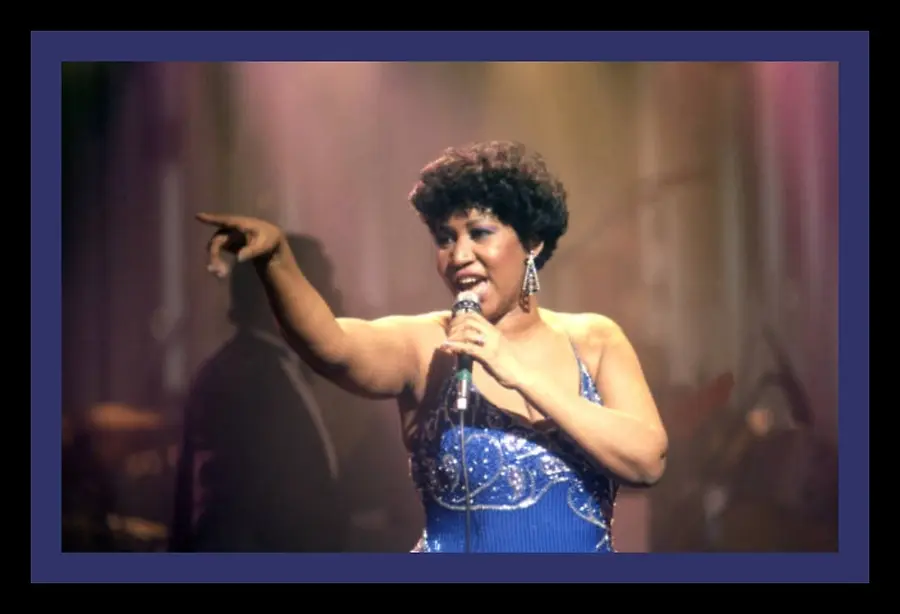
Generations of women have kept Aretha Franklin’s song “Respect” close to their hearts as they face the challenges of society—particularly in the business world (and in relationships as well).
Although Otis Redding initially released the song, Aretha Franklin’s iconic version of “Respect” was released in 1967. It quickly became an anthem for women’s rights.
In 1967, women in the United States faced significant legal and societal restrictions. They lacked rights regarding workplace equality and financial independence. Women could not obtain a credit card without a male co-signer, and men were often favored over women in higher education admissions.
In high school, girls could join the drill team, cheerleading squad, or tennis club. There were few organized women’s sports. Options for girls were limited.
Women were often fired for becoming pregnant and faced restricted job opportunities with lower pay. Sexual harassment in the workplace was rarely reported, and women had to endure it as best they could. Many universities did not admit women, and in some places, women were not allowed to serve on juries. Women seeking divorce had to prove, with undeniable evidence, abuse or constant unfaithfulness. A woman could not start a business without the backing of her husband or another male. She could not refuse intimacy with her husband, regardless of the circumstances or her health.
Today, creating strong boundaries is essential in all areas of life. Women often tend to be givers and nurturers. However, as workers, wives, mothers, friends, daughters, and leaders, women must model healthy boundaries in order to be respected and to protect their own well-being. Without boundaries, one may experience burnout, exploitation, abandonment, or depression.
A beneficial strategy for creating and maintaining strong boundaries is learning to say no without over-explaining, which can make a boundary appear weak. It is important to recognize what drains you and use those feelings as indicators that a boundary is needed.
For many people, social conditioning to be liked makes saying no difficult. Learning to say “no” should be a priority. Inconsistency invites others to ignore your limits in all situations and relationships—especially in the challenging role of parenting. Reiterating your boundary without apology is essential. It also helps to seek trusted mentors or peers who model strong boundaries and can offer guidance when challenges arise.
Individuals who were part of your life before you established strong boundaries may resist and even show animosity.
I am an educator currently working virtually for a company called Fullmind LMS. In my personal experience, I have observed red flags that suggest what I perceive to be a toxic culture characterized by poor communication and the withholding of offered tutoring and teaching assignments. In my opinion, this has resulted in unfair treatment, causing emotional, psychological, and economic distress.
This situation is somewhat unique to online work, as the agents assigning work and issuing mandates rarely meet educators in person or witness their expertise and qualifications firsthand. From what I can gather, the company is not run by educators, nor are most of the agents assigning work. In my view, this creates a disconnect between the ethics and professional standards of educators and the platform itself.
Fullmind (formerly iTutor) has been described by some teachers as stressful due to perceived disorganized management, inconsistent work, and a lack of meaningful communication or recognition. Teacher testimonies suggest that management personnel change frequently and that the platform undergoes constant modifications.
Creating strong boundaries in an online work environment requires the same strategies mentioned earlier, but they are often disregarded. A virtual teacher may not always be recognized as a professional with emotional and occupational needs.
In this situation, stating my boundaries appears to have instigated resistance from the Fulfillment Manager responsible for assigning jobs. To remain in integrity and steadfast in recognizing my own worth and expertise, I have taken the additional step of filing a case with the Equal Employment Opportunity Commission (EEOC). Based on my experience since asserting my boundaries, I anticipate that I may be pushed out through a lack of assignments or possibly made redundant.
This is where self-respect becomes essential. When you understand that standing your ground may result in dismissal or penalties, yet you remain firm in your boundaries, that is the true power of self-confidence. Disallowing anyone—individual or company—from crossing your boundaries must be unwavering.
Fear can be used as a tool to manipulate individuals. Some say F.E.A.R. stands for False Evidence Appearing Real.
I am taking a quantum leap by standing firm in my boundaries regardless of any unfavorable consequences that may follow. Perhaps younger or less experienced workers will benefit from my example. I trust that whatever comes next will be a step forward, should I be made redundant.
As a writer and screenwriter, I am focusing on generating income from my creative talents. Creating sovereignty over my financial and emotional well-being will provide the honor, respect, and recognition I know I deserve.
I have put myself first with boundaries that cannot be crossed—and that is precisely what Aretha Franklin was proclaiming in her iconic song:
R-E-S-P-E-C-T
Find out what it means to me.
Sharon A. Oakley