The Tale of Thankh
A Teacher's Journey: How One Student's Courage Changed a Classroom Forever

The Tale of Thankh
By Miriam Blum
His downcast, doe-like eyes were caked with tears from crying. His attire was poorly fitted. He looked undernourished, resembling someone who had experienced hunger throughout their life. I could not ascertain his age, only that he must have been significantly older than he seemed. He was unable to utter a single word in English. My principal had opened my classroom door just a fraction. He was attempting to discreetly introduce the new student into my Seventh Grade Remedial Reading Class at the small, suburban junior/senior high school. However, the boy was anything but discreet.
"You will manage this one," the principal remarked with his charming Scottish accent.
The boy stood motionless and then dashed across the room, clinging to me so tightly that I was nearly pinned against the blackboard. It was the first instance I had experienced that perplexed silence from my students. The boy remained there for the remainder of the day, grasping my hand, too frightened to release it.
It was my inaugural year of teaching, and I was merely 21, yet I possessed a strong social conscience and recognized that the boy required my assistance.
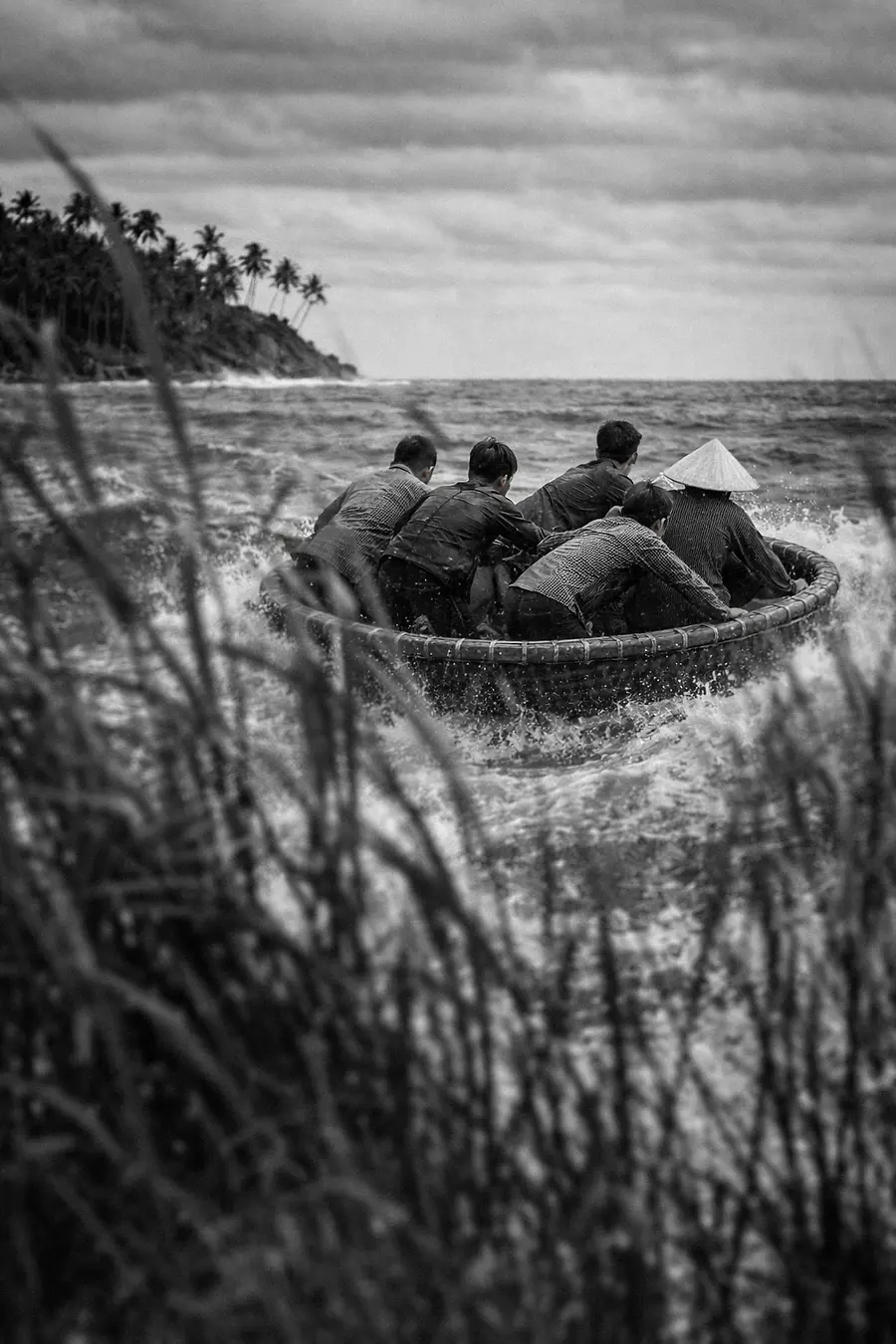
In the aftermath of the Vietnam War, numerous Vietnamese individuals escaped from Saigon by sea in small, bowl-shaped basket boats known as thung chai. Crafted from bamboo and using tar from coconuts as resin, they were designed to accommodate two to three individuals for fishing purposes.
That evening, while grading assignments at my desk, I observed that the boy had left a small piece of paper within his empty reading workbook. The handwriting was unsteady, but he had meticulously illustrated two small hands in prayer and a basket-shaped boat. The hands appeared to express gratitude through their gesture, while the boat narrated his tale. I gazed at the note, my hands quivering. I had never visited Vietnam. Moreover, I did not comprehend a word of his language. However, as an American and a novice teacher, I felt a duty to assist him. My principal had placed his trust in me, and I was resolute in my intention to justify it.
The following day, I presented the note to my principal and discovered the boy's story. The young boy had managed to flee Vietnam by boat alongside his entire family of six. Tragically, all of them except him had fallen victim to pirates. His sole valuable possession was a small gold ring that he had concealed between his teeth. He had journeyed approximately 2,300 kilometers by boat and was discovered off the coast of Malaysia. He was found in the South China Sea and subsequently placed in an internment camp. These camps were established by the UN for individuals seeking asylum, and the boy resided there for many months—alone in Pulau Bidong, situated off the coast of Terengganu.
During the late 1970s and 1980s, thousands of refugees were accommodated there in their quest for asylum. Each evening, he prayed fervently that he would not be sent back to the rice paddies of his childhood and that his journey might eventually lead him to a world devoid of war, poverty, and persecution.
In the town where my school district was located, there existed a Catholic Charities organization. After a lengthy wait, a family sponsored the boy through this organization, bringing him to America. Here he was, in my classroom. The parents were older and had no prior experience raising children. The boy had never attended school in Vietnam. He was skilled in sowing seeds in flowing retaining areas; however, he had never encountered running water, indoor plumbing, or electricity. Primarily, this newfound concept of freedom in America was quite daunting.
For two years, he participated in every one of my classes. I taught Reading, Math, and Gifted Education, with students ranging from grades 7 to 12. A schedule was displayed at the front of the room, and every 15 minutes, a different student was assigned to work with the boy. We were learning from him, and he was learning from all of us. Initially, we began with Richard Scarry picture dictionaries, practicing the names of words. The book contained over 2,500 words, and it took nearly six months to master them, with students sitting and pointing to each word alongside him. Eventually, we taught him to speak, then to learn the alphabet, and finally to read and write in English. Two years later, he reached the level of many of the remedial seventh graders. The most challenging tasks involved explaining clothing dryers and washing machines.
We were never certain of his age, as in Vietnam, birthdays are celebrated collectively during the Lunar New Year. Due to his lack of formal education in Vietnam, he did not learn math until he became my student in America. I taught him how to drive, as we believed he was approximately 17 years old, and we obtained a birth certificate to confirm this. Upon graduating in his senior year, he intended to travel to California, believing he had family there. Although we lost touch, the memories of him remain dear to my heart. One day, I hope to locate him. As an educator, I understand the significance of a solid education as a pathway to pursuing a successful career and achieving personal fulfillment.
But for this boy, it was more than just a journey on a boat. Despite significant obstacles and challenges, it was an opportunity to find a safe space and overcome language barriers, financial struggles, and malnutrition. America was a beacon of hope and a pathway to a better life. In America today, there are new challenges, including threats to education from state and federal policies and barriers for immigrant families and children. May public schools return to a time when we all felt an obligation to educate each and every child, regardless of their background.