Transforming Rural Health Care using an ICCC model
Nurse practitioners pioneering equitable healthcare delivery in underserved rural communities through innovative, integrated care models.

In many rural communities, healthcare is not inaccessible because people do not want care—it is inaccessible because the system does not reach them. Nurses are uniquely positioned to change that.
Across the globe, nurses are increasingly called upon to lead innovative solutions that address chronic disease, health inequities, and limited access to care. In rural and underserved communities, traditional health systems often fail to reach populations affected by poverty, geographic isolation, and workforce shortages.
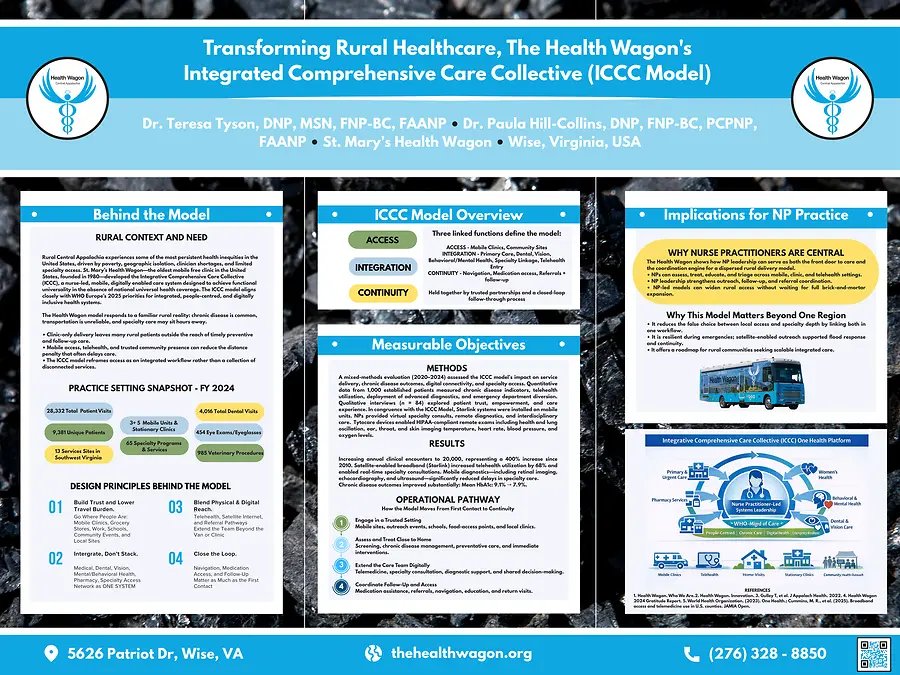
This article describes a nurse practitioner–led One Health Platform, grounded in the Integrated Comprehensive Collective Care model. This model addresses healthcare delivery and outcomes through prevention, chronic disease management, and community-level interventions, while delivering comprehensive, equitable care across diverse settings and scalable service models.
In Central Appalachia, the Health Wagon free clinic system has operationalized this model through seven integrated service lines: primary and urgent care; chronic disease management; women’s health; behavioral and mental health; dental care; vision and specialty diagnostics; and pharmacy services. Care is delivered through stationary clinics, mobile medical and dental units, home visits, satellite-enabled telehealth, and large-scale health expeditions.
Nurse practitioners lead interdisciplinary teams, coordinate community partnerships, and integrate digital health tools to support patient engagement and self-management.