What Operations Taught Me That Engineering Never Could
Why operations experience is essential for building systems that actually work in the real world.

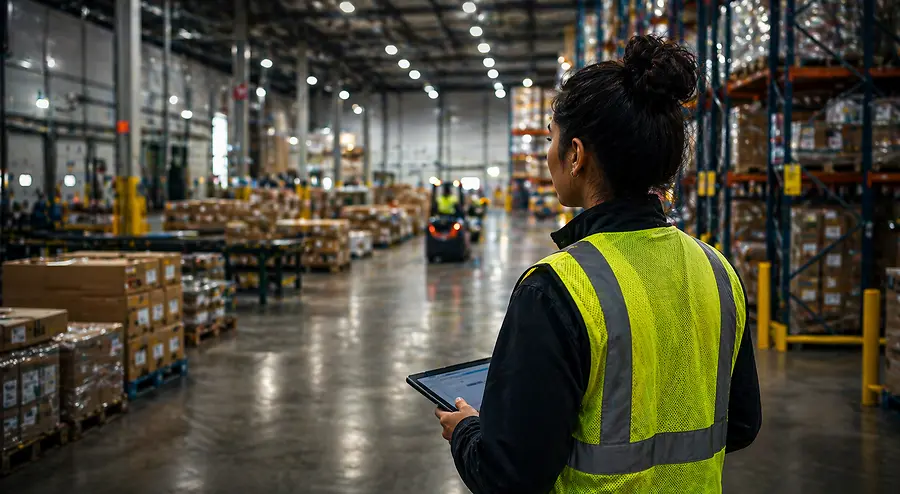
There’s a Difference Between Knowing Something Works and Watching It Work in Real Time
Before moving into engineering, I spent years in operations. It was fast-paced, unpredictable, and at times chaotic—the kind of environment where plans change in minutes and problems do not wait for perfect solutions. At the time, I thought I was just doing my job. Looking back, I realize I was learning lessons that no technical training could have taught me.
1. Systems Don’t Fail on Paper, They Fail in Reality
In engineering, a process can look perfect. The data is clean, the flow makes sense, and the outputs align with expectations. Operations teaches you what happens next.
You see how quickly a “perfect” system begins to break when it meets real conditions like staffing gaps, system delays, unexpected volume, and human variability. These are factors that rarely show up fully in a model, yet they define execution.
It forces you to understand that efficiency is not just about design—it is about how that design performs in reality.
2. The Quality of Inputs Determines Everything
In my current role, I do not design systems directly, but I help shape the inputs that feed those designs. That perspective has made one thing very clear: the output is only as good as what goes into it.
In engineering, it is easy to trust the numbers because they look clean and structured. But if the inputs are off—even slightly—the outcome can be completely misleading. A model can be technically correct and still produce results that do not hold up in the real world.
What I have also seen is how easy it is to misplace that responsibility. When something does not work as expected, it is tempting to point back to operations and assume execution was the issue. But sometimes the problem is not how something was done—it is how it was defined in the first place.
3. Behind Every Metric Is a Real Experience
One of the biggest shifts for me was realizing that metrics are not just performance indicators; they reflect someone’s day-to-day reality. A rate represents pace, movement, and consistency. A process represents a sequence of actions that either supports or strains the person executing it.
Operations makes that visible in a way data alone cannot. It teaches you to think beyond performance and consider sustainability—not just what can be achieved, but what can be maintained consistently and safely.
Because a process that is efficient but unsafe is not a good process. It is a short-term gain with long-term consequences.
That perspective changes how you evaluate success.
4. The Best Solutions Are the Ones That Actually Get Used
Engineering often focuses on what should work, while operations reveals what actually works. The gap between those two is where most failures happen. A solution can be technically correct and still fail if it is too complex, too rigid, or unrealistic to execute consistently.
It also fails if it overlooks safety in favor of speed or output. In operations, those trade-offs are not theoretical. They show up immediately.
That is why simplicity and practicality matter. A solution that works every day—and works safely—will always outperform one that only works in theory.
5. Ownership Looks Different When You Are in It
In operations, when something goes wrong, you do not step back—you step in. You troubleshoot, adjust, and keep things moving in real time. There is no separation between the problem and the person responsible for solving it.
That level of ownership builds resilience and a different kind of confidence—not the confidence that comes from having the right answer, but the confidence that you will figure it out under pressure.
Engineering has given me the tools to think more analytically and contribute to better system design, but operations gave me the perspective to do it responsibly. It taught me to question assumptions, value practicality over perfection, and consider the human side of every decision.
Because the true measure of a system is not how it performs on paper—it is how it performs in the real world: consistently, sustainably, and safely.
You can learn how systems are built through data and models. But understanding how they actually function day to day—that is something only experience can teach you.