55 Years Later: DES Victims Still Seek Recognition for a Historic Pharmaceutical Disaster
National DES Awareness Week – April 19–25, 2026

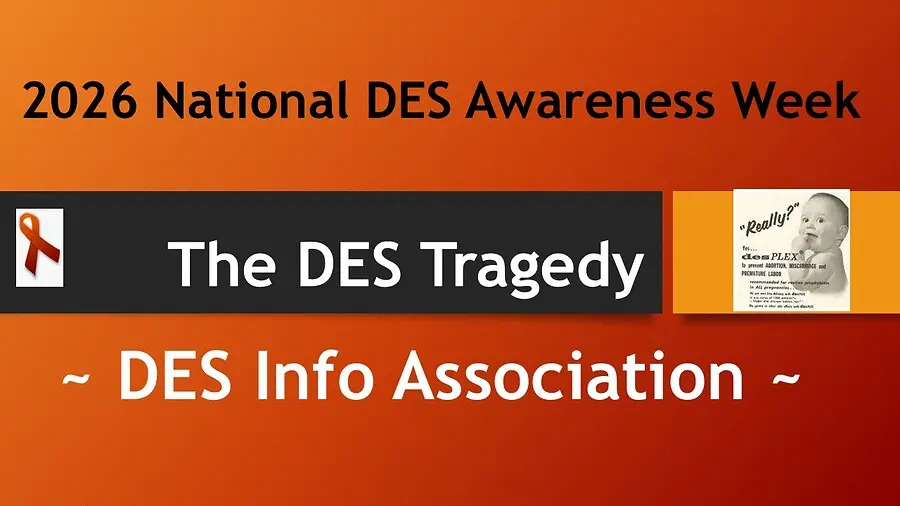
April 2026 marks a solemn milestone—55 years since physicians at Massachusetts General Hospital first linked prenatal exposure to Diethylstilbestrol (DES) with rare reproductive cancers. Once hailed as a “miracle drug,” it was prescribed to millions of pregnant women. DES is now recognized as one of the most devastating drug disasters in medical history—a multigenerational tragedy that is still unfolding.
Designated by President Ronald Reagan in 1985, National DES Awareness Week continues to highlight the lasting physical and emotional toll endured by the DES-exposed community—women, mothers, sons, daughters, and now grandchildren—as scientific evidence confirms that genetic damage continues across generations.
“DES changed my DNA before I was born,” says Karen, a DES daughter. “Fifty years later, we’re still living with the consequences—cancers, infertility, miscarriages, autoimmune disease, and other health conditions. The silence from those responsible has been deafening.”
Key Developments:
- New Federal Diagnosis Code: ICD-10-CM Code Z91.B, officially recognizing DES exposure as a “personal risk factor of exposure to diethylstilbestrol.”
- Congressional Resolution: H. Res. 342 (2025), introduced by Congressman Jim McGovern, acknowledges DES’s tragic legacy and calls for continued support and accountability.
- Recent Scientific Findings: DES exposure has been linked to cardiovascular disease, pancreatic and ovarian cancers, autoimmune disorders, and skeletal and genetic abnormalities—effects now seen in third-generation descendants.
Once prescribed from the 1940s through the 1970s to “prevent miscarriage,” DES instead caused structural reproductive anomalies, infertility, and cancers in those exposed in the womb. It was also prescribed to suppress lactation, used as a morning-after pill, and administered to stunt growth in young girls. Women exposed to DES are at increased risk for breast and cervical cancers. Despite decades of evidence, there has been no corporate apology or organized national compensation for those affected and their families.
“DES has been called the hidden Thalidomide,” says a spokesperson for the DES Info Association, “but hidden no longer. The victims are speaking out, demanding acknowledgment, justice, and research support.”
The DES Info Association invites reporters and health editors to cover the new publication, Voices of the DES-Exposed – Second Edition, featuring firsthand accounts from those whose lives have been permanently altered by this unacknowledged medical catastrophe.
Together, we are stronger.
We will continue to share our stories, spread awareness, and demand justice. We are determined that history will not be forgotten.
Knowledge is power.
For interviews, background resources, or story leads, contact: Karen Fernandes


