Turning Troubled Training Programs Around
From Chaos to Clarity: How I Built a Career Turning Training Programs Around

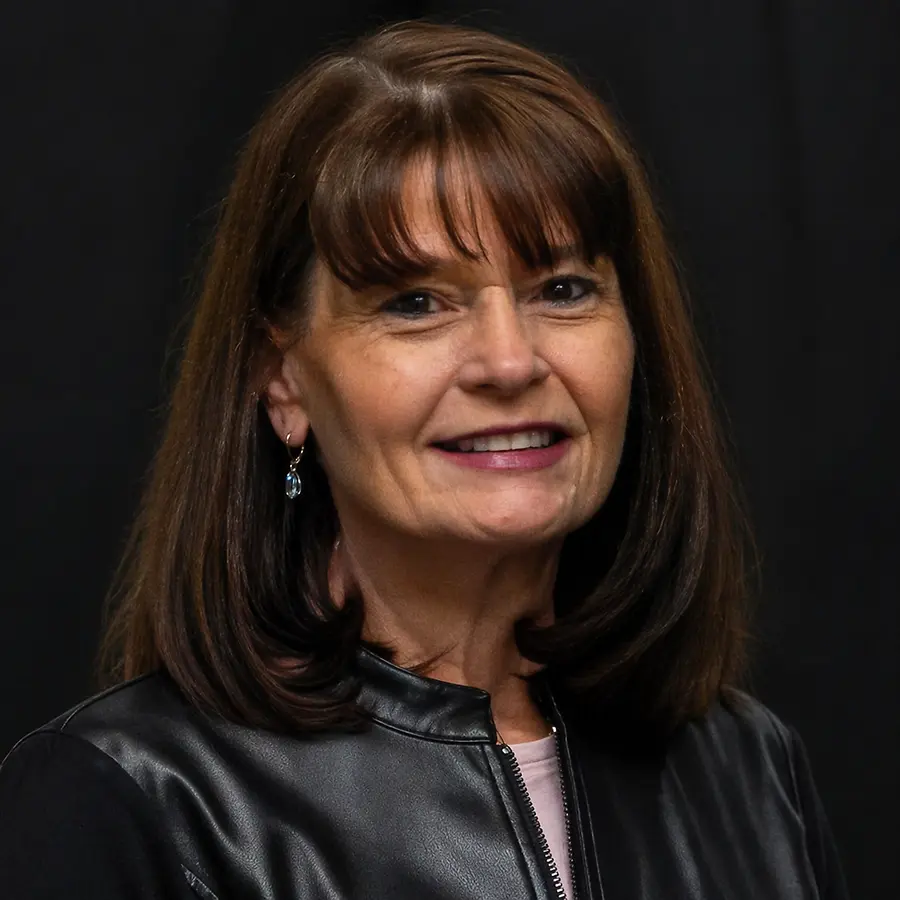
I didn’t set out to “build a career” in training. I was drawn to the messy moments—the programs that were late, unclear, overbuilt, or quietly failing—and I kept finding ways to make them work. Somewhere along the way, I realized that what felt natural to me—diagnosing what was broken, rallying the right people, and rebuilding the path—wasn’t just a useful skill. It was a calling.
Early on, at American Power Conversion, I learned that training isn’t “content”—it’s performance, reliability, and confidence under pressure. When you’re supporting people who keep critical systems running, ambiguity costs time, and time costs trust. Later, at Schneider Electric, that lesson deepened: scale magnifies everything. A small gap in onboarding becomes a companywide wobble. A fuzzy procedure becomes a habit. I began to see turnaround work as a kind of craftsmanship—quiet, practical, and measurable.
Still, instinct only takes you so far. I wanted a disciplined way to translate “what good looks like” into something teachable and repeatable. That’s what led me to DACUM—pulling real work out of experts’ heads and onto a wall where you can see it, sequence it, and build from it. Then SCID gave me the next step: how to turn those tasks into a competency-based system with objectives, practice, and proof. The work became less about guesswork and more about architecture.
Process improvement training sharpened it further. Six Sigma Green Belt taught me to stop treating symptoms and start chasing causes. Six Sigma Black Belt taught me how to lead change when data is messy and opinions are loud. And the Master of Business Administration helped me connect the dots that training teams feel every day: budgets, risk, strategy, and execution. I stopped thinking of “turning around training” as rescuing a course—and started seeing it as protecting the business.
Consulting widened the lens. When I worked with The Walt Disney Company, I saw how story, environment, and standards combine to create consistency without killing creativity. With Marriott International, I learned the power of service language—how a shared model of hospitality turns training into a culture that travels. With Burger King, I learned speed and simplicity: when the operation moves fast, training has to be crisp, visual, and immediately usable. Different industries, different pressures—the same truth: training only matters when it shows up on the floor.
Then came the assignments that shaped my leadership most—Tyson Foods, Del Monte Foods, 80 Acres Farms, Compac-Tomra, and Exela Pharma Sciences. In each place, I wasn’t just asked to fix training; I was brought in to set a vision for what “good” could look like, earn trust across operations and quality, and build high-performing teams that could deliver it. The turnarounds weren’t glamorous. They were won by listening deeply, aligning leaders, clarifying the work, and creating a training engine people believed in—and wanted to be part of.
80 Acres Farms was a different kind of proving ground. In a vertical farming startup, you can’t hide behind “the way we’ve always done it,” because the way you do it is still being invented. I had to paint a clear picture of what capability would look like as the operation scaled, bring SMEs and leaders into the design, and create enough structure to keep everyone moving in the same direction—without slowing innovation. It taught me that leadership in training is often the art of building clarity quickly, so teams can execute confidently at the moment it matters.
Compac-Tomra took that leadership global. I traveled across the United States, New Zealand, South Africa, Norway, Belgium, and England, helping establish customer training centers built around our equipment—but the real work was building a team that could scale knowledge, not just deliver a class. I brought SMEs together and taught them a practical process for knowledge transfer: how to capture what they knew, translate it into clear instruction, and deliver it consistently across sites and customers.
Along the way, I designed, launched, and implemented Packhouse Academy—so teams could access just-in-time training at the exact moment they needed it, right at the intersection of production pressure and real-world troubleshooting. Every site had its own language, pace, and constraints, but a shared vision made the work portable: make complex technology feel learnable, safe, and repeatable. Standing beside machines halfway around the world, I saw how strong teams—and the training systems behind them—become a bridge between engineering and operations, between vendor and customer, and between “this is intimidating” and “I’ve got this.”
At Exela Pharma Sciences, the work sharpened into its most exacting form—and I stepped in as the leader responsible for building the training program from the ground up. I set a vision for inspection-ready, performance-based training, aligned stakeholders across operations and quality, and built a high-performing team that could execute with discipline and urgency. Training isn’t just development—it’s evidence: documentation you can defend, competence you can demonstrate, and decisions you can trace. The goal wasn’t to create something perfect on paper; it was to build a system that reflects real work and produces real capability. And once again, the essentials held: listen to the SMEs, map the job, design with intent, measure what matters, and keep improving.
Looking back, the pattern is almost obvious. I was never chasing titles as much as I was chasing that moment when a struggling program finally clicks—when a supervisor stops compensating for gaps, when a new hire can perform with confidence, when a team speaks the same language of quality and expectations.
Realizing I was good at turning training programs around didn’t just give me something to do. It gave me my career path: to be the person who walks into chaos, brings clarity, and leaves behind a system that lasts.


