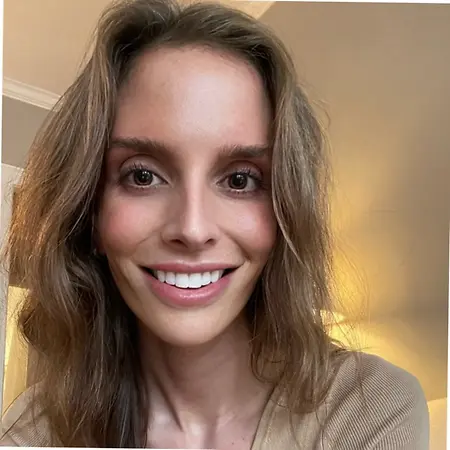
Her Story
About Meredith
Meredith Coburn is a communications leader, strategist and trusted advisor with more than 14 years of experience helping organizations navigate change, strengthen culture and align employees around business priorities. Her expertise spans executive communications, internal communications, change management and organizational strategy, with a career dedicated to translating complex business objectives into clear, compelling narratives that inspire action.
Most recently, Meredith served as Executive & Internal Communications Manager at Delta Dental of California, where she partnered closely with senior leaders to shape enterprise communications strategies, elevate leadership communications and strengthen employee engagement during periods of transformation. Acting as a strategic counselor to executives, she helped connect people strategy to business strategy, ensuring employees had the clarity, context and confidence needed to navigate change and contribute to organizational success.
Prior to joining Delta Dental, Meredith spent more than six years at Edelman, where she advised clients across a range of industries on corporate communications, employee engagement and reputation-building initiatives. She began her career at JPMorgan Chase, building a strong foundation in corporate communications and stakeholder engagement within the commercial banking sector.
Throughout her career, Meredith has been recognized for her ability to build trusted relationships, influence across functions and lead with both empathy and strategic rigor. She is passionate about the evolving role of communications as a business discipline and believes communicators have a unique opportunity to build trust, foster inclusion and help organizations navigate an increasingly complex and rapidly changing world.
Meredith is currently pursuing a Master of Science in Integrated Marketing Communications at Northwestern University. A lifelong learner, she is particularly interested in the intersection of communications, leadership and emerging technologies, including the role AI will play in shaping the future of employee engagement and organizational storytelling.
Outside of work, Meredith enjoys reading, spending time outdoors and exploring creative pursuits, including modeling and on-camera work. She is also an advocate for mentorship and believes that leadership is measured not only by personal achievement, but by the opportunities we create for others to learn, grow and succeed.
Her Interview
Ten minutes with Meredith
01What do you attribute your success to?
Curiosity, courage and a commitment to lifting others along the way.
Throughout my career, I've learned that growth starts with asking questions. Curiosity expands your thinking, helps you challenge assumptions and creates opportunities to learn from people with different perspectives.
I've also tried to lean into experiences that stretch my comfort zone. Whether leading cross-functional initiatives, advocating for a teammate or speaking up for greater inclusivity, I've seen firsthand that our perspectives matter. More importantly, I've learned that leadership isn't about having all the answers or getting everything right. It's about showing up consistently, being willing to learn and having the courage to contribute.
I also believe relationships matter. Your network isn't a scoreboard — it's an ecosystem. The strongest professional relationships are built by creating connections, sharing opportunities and helping others succeed.
Ultimately, one of the most fulfilling parts of leadership is lifting others. Influence grows when it's shared, not hoarded, and I've found that the more you invest in others, the greater your impact becomes.
02What’s the best career advice you’ve ever received?
A mentor once told me that when we share our lessons learned (in addition to our successes) we create opportunities for others to connect, learn and see themselves in our experiences. That idea has stayed with me throughout my career.
It's easy to focus on accomplishments, promotions and milestones, but some of the most valuable lessons come from the moments when things didn't go according to plan. Being willing to talk openly about challenges, setbacks and what you've learned along the way makes leadership more authentic and approachable.
I've found that vulnerability creates trust. It reminds people that growth isn't a straight line and that mistakes don't define us. When we share our experiences honestly, we help others navigate their own journeys with a little more confidence and a little less fear.
That's the kind of leadership I aspire to practice — one that turns individual experiences into shared progress.
03What advice would you give to young women entering your industry?
My advice would be to stay curious, use your voice and remember that success is not a zero-sum game.
Early in your career, it's easy to fall into the trap of comparing yourself to others or feeling like someone else's opportunity somehow diminishes your own. In reality, there is room for all of us to grow, learn and succeed. The strongest teams are made up of people with different perspectives, experiences and strengths.
I've found that one of the most important skills is learning how to balance advocating for yourself with championing others. Celebrate your teammates' wins, support their growth and look for opportunities to help them succeed. At the same time, don't be afraid to speak up, share your ideas and ensure your contributions are visible.
Your voice matters. Ask questions, seek out new experiences and trust that you have something valuable to bring to the table. Confidence isn't about having all the answers — it's about being willing to contribute, learn and grow along the way.
04What are the biggest challenges or opportunities in your field right now?
One of the biggest opportunities in my field right now is the chance to redefine the role communications plays within organizations.
For a long time, communications was often viewed as a function responsible for distributing information. Today, it's increasingly being recognized as a strategic discipline that helps organizations build trust, navigate change and create alignment during times of uncertainty.
At the same time, we're facing significant challenges. Employees are being asked to process an unprecedented pace of change, from new technologies and evolving workplace expectations to economic uncertainty and organizational transformation. In that environment, people aren't just looking for information — they're looking for clarity, transparency and a sense of connection.
The rise of AI adds another layer to that conversation. While AI presents exciting opportunities to improve efficiency and personalize communications at scale, it also reinforces the importance of the human elements of our work: empathy, judgment, trust and authentic storytelling.
I believe the organizations that will thrive are the ones that use technology to enhance human connection rather than replace it. That's where communicators have a unique opportunity to lead — helping organizations communicate with greater clarity, build stronger relationships and create cultures where people feel informed, valued and empowered.
05What values are most important to you in your work and personal life?
Trust and inclusivity are two of the values that matter most to me, both professionally and personally.
Trust is the foundation of every meaningful relationship, team and organization. When people feel trusted and empowered, they're more willing to contribute ideas, take risks and support one another. Inclusivity is equally important because the best outcomes happen when diverse perspectives are welcomed and valued.
More broadly, I'm passionate about the idea of influence becoming more relational than hierarchical. I'd love to see a future where leadership is defined less by titles and organizational charts and more by the ability to build trust, create opportunities and help others succeed.
Lifting others is one of the most fulfilling aspects of leadership for me. I believe influence grows when it's shared, not hoarded. The impact we have shouldn't be measured solely by individual achievement, but also by the opportunities we've created, the people we've supported and the communities we've helped strengthen.
At this stage of my life and career, I'm focused less on climbing the corporate ladder as quickly as possible and more on continuous learning, meaningful contribution and helping others grow alongside me.
Join Influential Women and start making an impact. Register now.