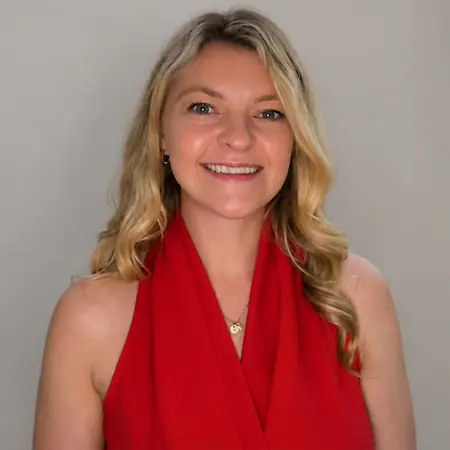
Her Story
About Abby
I've dedicated the past 9 years of my career to children's mental and behavioral health, starting right after I graduated with my bachelor's degree. My first role was at a PMIC facility (psychiatric medical institution for children) in Iowa, where we served about 50 kids across multiple campuses in what you could think of as residential settings for longer-term stays, typically 6 months to a year, for kids with complex behavioral and mental health needs. While working there, I pursued my first master's degree in organizational leadership, and then moved to Minnesota where I continued in various roles within children's mental health. I had a brief experience in adult mental health but quickly realized my true passion was working with children. I went on to complete my Master's in Social Work, finishing in 2024, and I'm now pursuing my doctorate in social work with an expected completion around 2028. For the past year and a half, I've served as the Senior Director of Crisis Programs at a nonprofit organization. In this role, my responsibilities span a wide gamut: clinical reviews of kids and their interventions and plans, staff management and training, ensuring compliance with county and state regulations, managing finances, and currently overseeing the exciting work of opening a new program. What I'm most passionate about is finding creative solutions within our current system to serve kids with high needs in community-based settings rather than traditional institutional residential care. These are homes that might be right down the street from where you live, and you'd have no idea, but they provide intensive care while keeping kids in the community. I'm a licensed graduate social worker working towards independent licensure, and I'm a certified trainer in Therapeutic Crisis Intervention through Cornell University, a model I really take pride in because it influences how we create safe environments and do verbal de-escalation with our kids. I also provide training to foster care agencies on trauma-informed care. Personally, I've done foster care myself and have adopted a son, which has given me invaluable perspective from both the professional and family side. I can see the challenges from both angles, not just as a provider but also connecting with families about how tough this work is and how things look different at home than they do from a provider's perspective. That experience has been really helpful in navigating these complex situations.
Her Interview
Ten minutes with Abby
01What do you attribute your success to?
I've always had a passion for helping others. I want kids and families to be together as much as possible, and I want them to have the supports they need to be successful. I've had a lot of good family and friends and mentors in my life that have helped me have conversations about what we can do differently. I have my family members and friends that I can rely on at the end of the day, right, after a tough day. I also personally have done foster care, and I have one child that I've adopted, and so I think I have that experience both personally and professionally that has really helped kind of round that viewpoint out. I can see challenges from both sides, not just the provider side, but I'm also able to connect with the families because this is tough, right? Things look different at home than they look from a provider, and so that has been really helpful to navigate some of these situations as well.
02What’s the best career advice you’ve ever received?
Just keep advocating, and keep pushing for change and growth. Don't settle, right? Our kids and our families deserve better, and if you believe in something, push for it and go for it.
03What advice would you give to young women entering your industry?
I think you can do it, right? I think if you have a dream, and you have a passion, and you have the drive, follow that, and follow your niche, follow where your heart leads you. I think as women, sometimes it can be intimidating to enter these higher-up leadership roles, because historically, a lot of times they're male-dominated, and understanding that women, we can do it, and our gender should not limit us to that. We can continue to shape the perceptions of the workforce and continue to be leaders within the workforce.
04What are the biggest challenges or opportunities in your field right now?
There are so many kids and families that come to us at really low points of desperation in their life, and a lot of the times, a problem we see is just not enough capacity to serve them within the system. So, trying to be creative within the current system that does exist for children and families and mental health, and all the obstacles around that, and making families feel supported while also recognizing our resources are limited. How do we think creatively and find creative solutions to serve some really complex kids with high needs in a setting that's more community-based? That's been something I've been really focusing on a lot lately, versus more of that traditional residential setting where I've been previously. You can think of that as a little bit more institutional, right? So these current programs that are running are all community-based. They're homes, like, you might have one down the street from where you live, and you would have no idea. The goal is to get these kids in the community while providing that intensive care. The challenge is finding creative solutions that allow kids to remain safe in the community while also meeting those complex needs. And then the other one is just lack of capacity overall for these beds. They're just in high demand.
05What values are most important to you in your work and personal life?
For me, a big one is honesty and authenticity. I think really, the ability to let individuals be who they are and support them around that, right? Just because we might not think, as a professional, that something is what we need to focus on for a person, they need to have their own voice, and we need to empower them to use that voice on their own as well. Other values to me are honesty, authenticity, and connection. I think that's important. I'm a huge advocate, so I would say that's a value to me, is to be an advocate and an ally. And I think just having passion. I don't think you can do really incredible, monumental work if you aren't passionate about it, so I would say make sure you're following what your passion really is.
Join Influential Women and start making an impact. Register now.