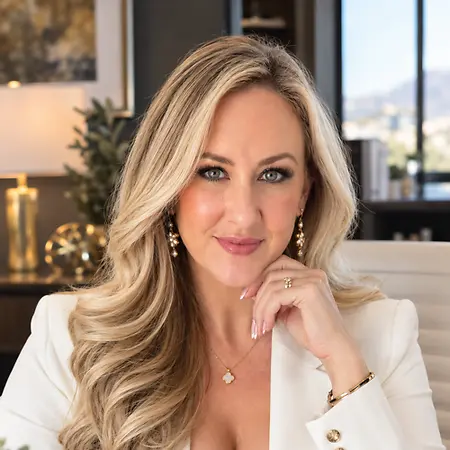
Influential Woman · ADVACARE ASSISTED LIVING NAVIGATION PROFESSIONALS LLC
Abi R. Eudy
Owner and CEO, ADVACARE ASSISTED LIVING NAVIGATION PROFESSIONALS LLC
Gilbert, AZ 85297
Her Story
About Abi
I have always believed that who we are matters just as much as what we accomplish.
I am an entrepreneur, advocate, leader, mother, and someone who genuinely loves people. I am ambitious and incredibly driven, but I also have a huge heart, a strong sense of humor, and a deeply compassionate side that influences almost everything I do. I can be intensely focused when there is a problem to solve or someone needs an advocate, but I also believe life is meant to be enjoyed, celebrated, and occasionally taken a little less seriously.
My family is at the center of my world, and being a mother is one of the roles I value most. It has shaped the way I understand responsibility, resilience, unconditional love, and the importance of creating something meaningful that extends beyond myself.
Professionally, I am naturally drawn to situations where I can make something better. I love building, creating, solving problems, challenging systems that no longer work, and finding possibilities where other people may see obstacles. I have never been particularly interested in doing something simply because “that is how it has always been done.” If there is a better, smarter, kinder, or more effective way forward, I want to find it.
That mindset is a large part of what led me to entrepreneurship and ultimately to building AdvaCare.
At the same time, some of the accomplishments I value most will never appear on a résumé. They are the phone calls when someone simply needed reassurance, the families who trusted me during an incredibly vulnerable moment, the people I have encouraged when they were questioning themselves, and the times I have been able to use my voice or knowledge to advocate for someone who needed another person in their corner.
I believe strength and softness can coexist. A woman can be compassionate without being weak, successful without losing her humanity, feminine without diminishing her authority, and ambitious without apologizing for wanting more from her life.
One of the most important lessons I have learned through my own life experiences is also the advice I give to others:
Never let anyone steal your light.
I have lived through experiences that could have changed me in ways I did not want to be changed. There came a point when I realized I was no longer afraid of what another person, circumstance, disappointment, or hardship could do to me. I had already learned something far more powerful: I knew how to heal.
And healing gave me a choice.
There is darkness in this world. We encounter it through loss, betrayal, cruelty, disappointment, failure, and circumstances we never would have chosen for ourselves. We cannot always control what happens to us, but we do have a choice about what we allow those experiences to create within us.
We can allow darkness to make us darker, or we can choose to become a source of light.
I choose the light. Every time.
I refuse to become the product of someone else’s darkness. I refuse to allow another person’s actions to determine the kind of woman I become. And I will never give anyone the power to take the compassion, joy, hope, love, or light that I have worked so hard to protect.
If anything, the experiences meant to dim me have taught me how to shine brighter.
That is what I hope other women understand, too. Your light belongs to you. Someone may hurt you, disappoint you, underestimate you, reject you, or make you question yourself. Life itself may bring you to your knees. Give yourself permission to feel those things. Give yourself permission to heal. But never mistake what happened to you for who you are destined to become.
You do not have to become part of the darkness that hurt you.
You can decide that the only lasting effect it will have is to fuel your light.
I don’t believe one person’s light can illuminate the entire world. But I do believe something extraordinary happens when more of us make the conscious decision to shine rather than spread the darkness we have experienced. Light has a way of reaching people. One person’s kindness reaches another. Courage gives someone else permission to be courageous. Compassion reminds another person that humanity still exists. And eventually, what began as one small light becomes something much larger.
That is how I believe we make the world brighter—not by pretending darkness doesn’t exist, but by refusing to let it win.
Outside of business, I love beautiful things, great conversations, laughter, travel, fashion, creating memorable experiences, and spending time with the people I love. I appreciate elegance and a little glamour, but I am equally comfortable being silly, laughing until my stomach hurts, or having a meaningful conversation with someone I have just met.
I am still building. Still learning. Still healing. Still evolving. And definitely still dreaming bigger.
I want my life to represent more than professional success. I want it to represent courage, compassion, resilience, authenticity, meaningful relationships, and the willingness to use whatever influence I have to make someone else’s path a little easier.
If there is one thing I hope someone takes from knowing my story, it is this:
Never let anyone steal your light.
Protect it. Heal it. Fuel it. Share it.
And when something or someone tries to dim it, make the choice to shine even brighter.
Because your light was never theirs to take.
Her Interview
Ten minutes with Abi
01What do you attribute your success to?
I attribute my success to a combination of resilience, genuine relationships, an unwillingness to become complacent, and a deep sense of responsibility to the people who trust me.
I have never been someone who believes success happens because you simply work hard and eventually get rewarded. Hard work matters tremendously, but I believe success also requires adaptability, humility, courage, consistency, and the willingness to keep learning—especially when something is not working.
Some of my greatest professional growth has come from being willing to ask, “How can this be better?” I question processes. I look for gaps. I pay attention to what people actually need rather than assuming the way something has always been done is the way it should continue to be done. If I don’t know something, I learn it. If there is a problem, I work to solve it. If I make a mistake, I own it, learn from it, and try not to make the same mistake twice.
I also attribute much of my success to relationships. I genuinely care about people, and I believe people can tell the difference between someone who is building relationships because they want something and someone who truly values the person in front of them. Some of the most meaningful opportunities in my career have grown from trust, reputation, showing up consistently, and doing what I said I would do.
Building AdvaCare has reinforced that for me. Our work often begins when a family is overwhelmed, scared, exhausted, or unsure of what to do next. They are trusting us with decisions involving someone they love. I never take that responsibility lightly. That creates a very different definition of success. Of course, I want to build an exceptional company, but growth means very little to me if we lose the reason we are growing in the first place.
I am also incredibly persistent. When I believe in something, I have a difficult time accepting “it can’t be done” without first asking why. I will research it, learn it, rethink it, find another route, ask better questions, and keep going. That persistence has carried me through both business challenges and personal ones.
I have learned that resilience is not about never struggling. It is about refusing to allow a difficult season to become your permanent identity. Some experiences have forced me to rebuild, rethink, and become more resourceful than I ever expected to be. In retrospect, many of those moments developed the qualities I now rely on most as a leader.
And finally, I attribute my success to staying connected to my heart.
I don't believe I have to become harder, colder, or less compassionate in order to be a strong businesswoman. I can negotiate, make difficult decisions, hold high standards, pursue ambitious goals, and still lead with kindness. I can be both strategic and deeply human.
There are certainly people who know more than I do, have more resources than I do, or started much farther ahead than I did. I have never needed to be the smartest person in every room. I simply try to remain teachable, work relentlessly toward what I believe in, surround myself with good people, treat others well, and remember why I started.
For me, success has never come from one extraordinary moment. It has been built through thousands of ordinary decisions to show up, keep learning, care deeply, do the right thing when it matters, and keep going when quitting would have been easier.
I believe that is ultimately what has carried me the farthest.
02What’s the best career advice you’ve ever received?
The best career advice I have ever received was deeply personal, and I have carried it with me ever since:
“Never let this industry change your heart, Abi. You have a great and beautiful heart, and that is what makes you special. This industry can be hard. It can be cruel, and if you let it, it can change your perspective and eventually change your heart. Don’t let that happen to yours.”
Of all the business advice I have received over the years, that may be the advice that has mattered most.
Senior care is an incredibly rewarding industry, but it can also expose you to some very difficult realities. You see families in crisis. You see people at their most vulnerable. You encounter loss, complicated family dynamics, financial pressures, difficult personalities, competition, disappointment, and occasionally situations that can make you question people’s intentions.
It would be easy, over time, to become hardened by some of those experiences.
That advice reminded me not to.
I have learned that you can become wiser without becoming cynical. You can develop stronger boundaries without building walls. You can learn to recognize someone’s intentions without assuming the worst in everyone. You can become a stronger businesswoman without becoming a colder human being.
In fact, I believe protecting your heart can be one of the greatest forms of strength.
As my career has grown, I have certainly become more experienced, more strategic, and more discerning. I have learned difficult lessons. I have learned when to say no, when to walk away, when to stand my ground, and when something simply is not right.
But I never want professional success to cost me the qualities that made me successful in the first place.
My compassion is not a weakness I need to overcome. My ability to genuinely care about people is not something I need to suppress in order to become a stronger executive. Those qualities are part of the reason families trust me, why I advocate so fiercely for people, and why I built AdvaCare the way I did.
Another piece of advice I have carried with me is to never be afraid to be the person in the room who asks the question.
I used to think leadership meant walking into a room already knowing every answer. Over time, I realized that some of the smartest and most successful people I have encountered are comfortable saying, “I don’t know, but I’m going to find out.”
That changed the way I approached my career.
I ask questions constantly. Why are we doing it this way? What isn’t working? What are people frustrated by? What does the client actually need? What are we missing? And perhaps most importantly: Is there a better way?
Some of the best things I have built began with that last question.
I have also learned that being willing to learn does not mean doubting your own value. You can respect someone else’s expertise without minimizing your own. You can ask for advice without surrendering your judgment. You can be teachable and still trust your instincts.
And one of the simplest pieces of career advice I believe in is this: consistency and follow-through are key.
Talent can open doors, personality can create relationships, and a great idea can generate an opportunity—but consistency is what builds a reputation. If you say you are going to do something, do it. If someone trusts you with an opportunity, follow through. Show up when it is exciting, but also show up when nobody is watching or applauding.
I have learned that people remember who follows through. They remember who returns the call, keeps the commitment, solves the problem, checks back in, and does what they said they were going to do. Over time, those seemingly small actions become trust, and trust becomes a reputation.
Success is rarely built through one extraordinary moment. More often, it is built by consistently doing ordinary things extraordinarily well.
So if I were passing the best career advice I have received on to another woman, I would tell her this:
Learn everything you can. Ask the question. Take the meeting. Sit at the table. Admit what you don’t know and become exceptionally good at finding the answer. Set boundaries. Become wiser. Become stronger. Trust your instincts. Be consistent. Follow through. And when you give someone your word, make it mean something.
But through all of it, protect your heart.
Don’t let disappointment make you bitter. Don’t let competition make you cruel. Don’t let success make you forget how you treated people before you had it. And don’t allow an industry, a title, or anyone you encounter along the way to take away the qualities that made you extraordinary in the first place.
Become stronger without becoming harder. Become wiser without becoming colder. Be consistent enough that people trust your word, and compassionate enough that they remember how you made them feel.
And no matter how far you go, never let success change the best parts of who you are.
03What advice would you give to young women entering your industry?
If I could give one piece of advice to young women entering the senior care industry, it would be this: never forget that behind every business transaction, referral, placement, diagnosis, discharge, or care plan is a human being.
Learn the business, absolutely. Become knowledgeable. Understand the regulations, the healthcare system, the financial side of care, the resources available to families, and the responsibilities that come with your role. Become exceptionally good at what you do.
But never become so focused on the business of senior care that you forget the people inside of it.
The families you meet may be experiencing one of the most overwhelming periods of their lives. A daughter may be making decisions for the mother who once made every decision for her. A husband may be realizing he can no longer safely care for the woman he has loved for fifty years. An older adult may be frightened about leaving the home they built an entire life in.
Those moments deserve more than efficiency. They deserve patience, dignity, compassion, and respect.
I would also tell young women to protect their reputation fiercely. Senior care is much more interconnected than it may initially appear. Your reputation will often enter a room before you do.
Be someone whose word means something.
Return the phone call. Send the email. Show up when you said you would. If you promise to follow up, follow up. If you make a mistake, own it. If you don't know the answer, say so and then find it. Consistency and follow-through may not sound glamorous, but they are two of the most valuable professional habits you can develop.
Build genuine relationships, not just a contact list. Networking is important, but relationships built solely around what someone can do for you rarely become meaningful ones. Get to know people. Help when there is nothing immediately in it for you. Celebrate other women's successes. Make introductions. Share knowledge. Become someone people are genuinely happy to see walk into a room.
And please, don't enter this industry believing another woman's success somehow reduces the amount of success available to you.
There is room at the table.
I would rather sit beside talented, intelligent, successful women who challenge me to become better than spend my career trying to make myself look bigger by making another woman smaller.
Learn from women who are ahead of you. Ask questions. Find mentors. Watch how respected leaders conduct themselves when things go wrong—not only when everything is going well. And eventually, when you have learned something valuable, turn around and teach the woman coming up behind you.
I would also tell young women not to confuse kindness with weakness.
You can have a beautiful heart and strong boundaries. You can be compassionate and still say no. You can be feminine and powerful. You can be warm and still command a room. You can negotiate confidently, advocate fiercely, make difficult decisions, and hold people accountable without becoming someone you don't recognize.
Do not feel pressured to become harder simply because you are entering a serious industry.
There will be people who underestimate you. There may be rooms where you feel inexperienced, intimidated, or as though everyone else knows more than you do.
Walk into the room anyway.
Ask the question anyway.
Introduce yourself anyway.
You don't have to know everything on your first day—or your thousandth. You need to remain curious enough to learn, humble enough to listen, and confident enough to know that not knowing something yet does not mean you don't belong.
Most importantly, remember the privilege that comes with working with older adults.
The people we serve have lived entire lifetimes before we ever meet them. They have raised families, built careers, survived losses, fallen in love, made mistakes, created memories, and contributed to their communities. Aging does not erase any of that.
Treat every person with the dignity you would want someone to give the person you love most.
And as your career grows, don't measure your success only by your title, income, company size, referrals, awards, or recognition. Ask yourself another question:
Are people better because I chose this profession?
If the answer is yes, keep going.
Learn the industry. Master your craft. Protect your reputation. Be consistent. Follow through. Build genuine relationships. Support other women. Set boundaries. Stay curious. Advocate fiercely.
And above everything else, never become so successful at the business of caring for people that you forget how to care about them.
04What are the biggest challenges or opportunities in your field right now?
I believe some of the biggest challenges in senior care right now are also creating some of our greatest opportunities to improve the way we serve older adults and their families.
One of the most significant challenges is simply navigating the system itself. Senior care is incredibly fragmented. Families are often expected to understand assisted living, memory care, licensed care homes, home care, skilled nursing, hospice, Medicare, Medicaid, long-term care benefits, veterans’ resources, and countless other services—often while they are in the middle of a crisis.
Most families do not know this system until suddenly they have to.
A hospitalization, fall, dementia diagnosis, caregiver crisis, or unexpected discharge can turn what should be a thoughtful decision into an urgent one. Families are trying to make major financial, medical, and emotional decisions while exhausted and overwhelmed.
That is one of the reasons I believe professional senior care navigation is becoming increasingly important. Families do not simply need more information. We already live in a world overflowing with information. They need knowledgeable people who can help them understand which information actually applies to their situation and turn it into a realistic plan.
Affordability is another enormous challenge.
The cost of long-term care continues to place tremendous pressure on families, particularly those who fall into the difficult middle ground: they may have too many resources to immediately qualify for certain assistance programs, but nowhere near enough to comfortably absorb years of private-pay care.
At the same time, staffing remains one of the industry's most important issues. Senior care depends on human beings caring for human beings. Technology can improve efficiency, communication, coordination, and decision-making, but it cannot replace compassionate, competent caregivers. Recruiting, retaining, training, and valuing the people providing direct care must remain a priority.
Dementia care is another area where I see both an enormous challenge and an enormous opportunity. As more families are affected by Alzheimer's disease and other forms of dementia, our industry has to become better at supporting not only the person living with cognitive decline, but also the family members experiencing it alongside them.
Education matters tremendously here. Families need help understanding behaviors, progression, safety concerns, caregiver burnout, and when a different level of care may become necessary. Better education earlier in the process can prevent families from reaching a crisis before they seek support.
I also believe our industry has an opportunity—and a responsibility—to use technology much more intelligently.
I am excited about what artificial intelligence and better technology can do for senior care when they are used appropriately. We can improve care coordination, identify appropriate resources faster, reduce administrative burdens, improve communication, create better matching tools, and give professionals more time to focus on the people they serve.
But technology should enhance human judgment and connection, not replace them.
A database can tell you that a community has an available room. It cannot necessarily tell you whether someone's mother will feel safe there, whether the environment fits her personality, whether the family feels heard, or whether the care culture is right for that particular person.
Those things still require people.
I also see a major opportunity for greater transparency and accountability throughout senior care. Families deserve to understand their options, what services actually cost, what different levels of care mean, who is providing guidance, and how recommendations are being made. Trust should never be assumed simply because we work in a caring profession. It has to be earned.
Another opportunity I feel strongly about is improving collaboration.
Hospitals, physicians, senior living providers, care homes, home health, hospice, caregivers, social workers, case managers, placement professionals, government programs, and families are all touching different parts of the same person's journey. Too often, however, those parts operate independently.
The older adult should be at the center, with everyone else working around that person—not the other way around.
Ultimately, I believe the greatest opportunity in our field is to rethink what aging well actually means.
Senior care cannot only be about where someone lives or how we manage their medical needs. It should also be about dignity, independence, purpose, relationships, safety, choice, and quality of life.
We are serving a generation of people who built businesses, raised families, served our country, cared for others, contributed to their communities, and lived full lives long before they ever needed our services. They deserve an industry willing to innovate on their behalf.
The challenges ahead are significant: affordability, workforce shortages, dementia, fragmented systems, caregiver burnout, access to resources, and a rapidly growing need for care.
But I don't look at those challenges and see a reason to become discouraged.
I see an industry with an extraordinary opportunity to become better.
Better technology. Better education. Better collaboration. Better transparency. Better advocacy. Better access. And most importantly, better experiences for older adults and the families who love them.
That is the future of senior care I want to help build.
05What values are most important to you in your work and personal life?
The values that matter most to me in both my work and my personal life are integrity, compassion, loyalty, authenticity, accountability, family, and treating people with dignity.
I believe integrity is who you are when there is nothing to gain from doing the right thing.
It is easy to have strong values when they are convenient. Character is revealed when doing what is right costs you something—an opportunity, money, a relationship, recognition, or simply the easier path. I want the decisions I make privately to align with the person I represent publicly.
Compassion is equally important to me, but I don't view compassion as simply being nice.
Real compassion sometimes means sitting beside someone during an incredibly difficult moment. Sometimes it means advocating when it would be easier to remain quiet. Sometimes it means telling someone something they may not want to hear because they deserve the truth. And sometimes compassion means giving another person grace while still maintaining healthy boundaries.
I value loyalty deeply.
When I care about someone—personally or professionally—I am invested. I believe in showing up for people, celebrating their victories, supporting them through difficult seasons, protecting the trust they place in me, and remembering the people who stood beside me before there was anything impressive to stand beside.
But I have also learned that loyalty should never require abandoning your own values. You can love people and still have boundaries. You can forgive someone without repeatedly allowing the same behavior. You can wish someone well and recognize that they no longer belong in your life.
Authenticity is another value that has become increasingly important to me.
I don't want to build a life that looks successful but doesn't feel authentic. I don't want to become a carefully edited version of myself simply because I am a CEO or because more people may be watching.
I love beautiful things, ambitious goals, business, leadership, and creating something exceptional. I also love laughing until I can't breathe, being silly with the people I love, having meaningful conversations, and sometimes being the least serious person in the room. Those things don't contradict each other. They are all parts of me.
I believe women should know that they don't have to choose between strength and softness, ambition and compassion, femininity and leadership. We are allowed to be multidimensional.
Accountability is also extremely important to me.
I believe our word should mean something. If I make a commitment, I want people to know I will do everything I can to honor it. Consistency and follow-through matter to me because trust is built in the small moments—the returned phone call, the promise remembered, the difficult conversation you don't avoid, and doing what you said you would do even after the moment has passed.
And when I get something wrong, I believe in owning it.
Being a leader doesn't mean being incapable of mistakes. It means being willing to acknowledge them, apologize when necessary, learn from them, make them right when possible, and do better going forward.
Family is at the center of so much of who I am.
My accomplishments matter to me, but the people I love matter more. Being a mother has shaped my understanding of love, responsibility, sacrifice, strength, and purpose in ways no professional title ever could. At the end of my life, I don't believe I will measure its value by how many awards I received, how large a company became, or how impressive my résumé looked. I will measure it in people, relationships, memories, impact, and love.
That perspective also influences how I approach my work.
In senior care, every person we serve is somebody's person.
Someone's mother. Someone's father. Someone's husband, wife, grandmother, grandfather, best friend, or lifelong companion.
I never want growth, numbers, or business objectives to make me forget that.
Dignity is therefore one of the values I feel most strongly about. Aging, illness, disability, financial circumstances, or cognitive decline should never determine how much respect a person receives. Every person has a story we may know nothing about, and I believe they deserve to be treated accordingly.
Finally, I value light.
“Never let anyone steal your light” is more than a quote I like. It represents a conscious decision about the kind of person I want to be.
Life will give all of us reasons to become angry, guarded, discouraged, or cynical. Other people will sometimes disappoint us. Circumstances will test us. We cannot always control what happens to us, but I believe we have tremendous power over what we allow those experiences to create within us.
I want the difficult things I experience to make me wiser, not colder. Stronger, not crueler. More discerning, but never incapable of seeing the good in people.
And I want my presence in someone's life—whether for twenty years or twenty minutes—to leave something positive behind.
Ultimately, my values come down to something very simple:
Do the right thing. Keep your word. Love your people. Treat others with dignity. Stay true to who you are. Take responsibility when you get it wrong. Protect your heart without hardening it. And wherever you go, try to leave a little more light than you found.
Those are the values I want reflected not only in the company I build or the work I accomplish, but in the person I am when no one is watching.
Join Influential Women and start making an impact. Register now.