Her Story
About Abigail
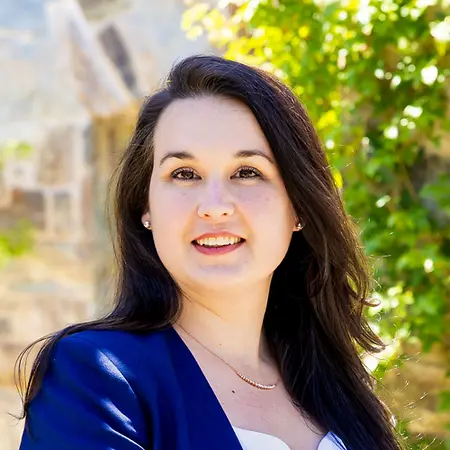
Abigail Casey is a PhD-trained scientist specializing in immunology, inflammatory biology, and skin pathology, currently based in the Greater Richmond Region. She serves as a Global Key Account Manager for Pharma and Life Sciences at Anton Paar, where she supports pharmaceutical and life sciences organizations in implementing analytical technologies within regulated environments. Her work centers on bridging R&D, engineering, manufacturing, and commercial teams, translating complex scientific data into actionable insights that enable alignment, operational success, and informed decision-making across organizations.
Throughout her career, Abigail has built a multidisciplinary path across specialty chemicals, manufacturing, and life sciences, including prior leadership roles at Evonik. She has led cross-functional initiatives spanning process optimization, external manufacturing, and the development of science-driven product innovations, including dermatology and skincare programs. Her academic foundation includes graduate research at Virginia Commonwealth University, the University of Florida, and Virginia Tech. In addition to her industry work, she contributes to the scientific and patient advocacy space through her involvement with the SYNGAP Research Fund.
Abigail’s areas of specialization include technology transfer between R&D and manufacturing, specialty chemical commercialization, dermatology-focused product development, and cross-functional scientific communication. She is actively engaged in professional communities such as the American Institute of Chemical Engineers, the American Chemical Society, and the Materials Research Society. Known for her ability to translate highly technical science into meaningful business and clinical impact, she is driven by collaboration, scientific rigor, and improving how innovations move from the lab to real-world application in healthcare and life sciences.
Her Interview
Ten minutes with Abigail
01What do you attribute your success to?
I attribute my success to grit - or maybe spite, if I'm being honest. I wasn't necessarily "college bound" when I graduated high school and definitely not to pursue a male-dominated industry like engineering and chemistry. But I knew what I liked, and I just never gave up. I think being very open to changes in your plan is also critical. I had opportunities presented to me, and if I wasn't open to them, I wouldn't be where I'm at now. Sometimes they were way off from what I was pursuing - I mean, what does nuclear engineering have to do with cosmetics? Not a whole lot, except for sunscreens maybe. But those unexpected paths helped me get where I am today. I never followed a completely traditional career path, and I made it work by staying curious, resilient, and willing to embrace opportunities that aligned with my passion for science.
02What’s the best career advice you’ve ever received?
The best career advice I have received is to remain open to evolving career paths and not become overly attached to a rigid plan. I have found that some of the most meaningful opportunities arise from unexpected directions. By staying flexible and willing to pivot across industries, I ultimately moved into highly impactful work in cosmetics innovation and specialty chemicals, which reinforced the value of adaptability in shaping a fulfilling career.
03What advice would you give to young women entering your industry?
Find a mentor or an advocate - but don't tell them they are your mentor. Putting that label on it creates this formalized pressure that makes things feel scripted. Instead, just find someone who you think believes in you, who has a little clout, who takes care of you and advocates for you. Schedule routine visible updates with them, check in regularly, and they'll act as a mentor without the pressure of it. You end up getting a lot more open feedback and candid responses about how to proceed in your career that way. The trick is just don't tell them, because then they get stiff and feel like they have to take it really seriously and can't be too open and candid. Find someone who's a little bit higher than you, doing something where you could see yourself doing it one day, and focus on bringing value to them too.
04What are the biggest challenges or opportunities in your field right now?
The biggest challenge I face is that it's still kind of a man's world in some ways in the chemical industry and engineering. It's changing, but I feel like I have to speak a little louder and be a little stronger with my initiatives and what I want to present to the team. I do feel like I still have to bring more justification and more reasons when I propose something. That's not just in pharmaceuticals - I think that's in the chemical industry as a whole and in engineering. On the opportunity side, I think people are really taking advantage of strong candidates and opening up their doors. The DEI initiatives are great for really broadening your scope of where you would normally look for candidates and being able to value contributions that are maybe not the same as what you've traditionally done in business, at least in the chemical industry. There's tremendous opportunity through growing representation in STEM and increased recognition of diverse perspectives in innovation and leadership.
05What values are most important to you in your work and personal life?
The values most important to me in both my work and personal life are transparency and open communication, along with a strong commitment to helping others understand the “why” behind initiatives. I place a high priority on creative exploration, curiosity, and fostering environments where teams have autonomy and freedom to do their best work. I also value recognizing and celebrating individual contributions, building relationships grounded in trust and integrity, and maintaining a deep scientific passion for mission-driven work that creates meaningful impact.
Join Influential Women and start making an impact. Register now.