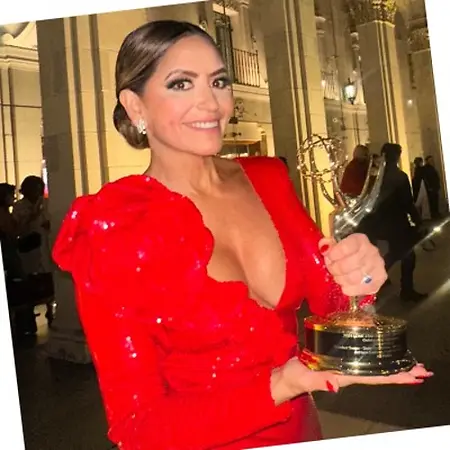
Her Story
About Adriana
I started my media career at 11 years old working in radio in Mexico, and I've been in this field for more than 45 years. My journey took me from radio to television, and eventually I opened my own channel in Houston. I worked with Univision for 11 years, and that was my university - they paid me while I learned. When I moved to the United States at age 30, I had to learn English, which was incredibly difficult, but I didn't let that stop me. As an independent production company, we handle everything - we pick the stories, verify them, produce the pieces, and manage the administration and sales. I have the unique ability to combine both creative production skills with business management, which is crucial because we don't have a network behind us. We solve all the costs for productions ourselves. What drives me is the community, especially the Hispanic community. Part of our company's revenue goes directly back into producing stories about human trafficking and domestic violence because we want to be free to tell these stories the way they need to be told, without sponsors controlling the narrative. My goal is not just to be a production company, but to be the company that educates the community. We're opening workshops to empower women and help them become economically independent. In five years, we want to be the hub of Latino influencers and communicators, so that when companies want to reach our community, they have access to a hub of experienced professionals. We're also expanding to open studios in Mexico City this year.
Her Interview
Ten minutes with Adriana
01What do you attribute your success to?
I attribute my success to my mother's example and the lessons she taught me. She broke the traditional model in Mexico by deciding to study and work in a bank when women had very limited opportunities. When my parents separated and my father became sick with addiction, my mother took control of everything and opened doors for us. She paid for my sister's university education and always prioritized our education, even when we couldn't afford trips to Disney. She always told me, 'do whatever you want to do, but be the best' and 'always stay with your family - no matter what, if they need you, you need to be there.' Those tools and that example are what I use until today in another country. I also learned by working with Univision for 11 years - that was my university, and they paid me while I learned. But what really drives me is the community. Real life inspires me. My mom inspires me. My community inspires me. When I speak with the community about their issues, that inspires me to be better and communicate better. I found my way to communicate with myself and be authentic. I'm a storyteller, and it's not just about communicating and bringing the story - it's about how we can prevent issues and what people can get involved in. That is my motivation and what inspires me in each story.
02What advice would you give to young women entering your industry?
First, be sure you want to do this, because this is not a fancy job like everybody thinks. Find the real reason why you want to do this, and when you find that, keep doing it - be persistent and resilient. Everybody wants to be famous now in one second, but you need to think about what you want to communicate and why you want to do this. Open the mic with responsibility. Learn how to manage yourself - don't trust or wait for somebody to rescue you or give you protection. Be ready to manage your economic part and charge the correct fee for your work. Don't give your work for free. Believe in yourself - in Spanish we say 'cretelo.' If you say you are the queen, believe you are the queen, not only for Instagram. You have some talent, and that's a challenge you need to share with the community because you can inspire another person. But that comes with a lot of responsibility. Every time you open your mouth and say something, you need to communicate the truth. Know what you hear before you retweet or share someone else's comments. You need to be sure that information is true. Don't give your opinion uninformed. We have a lot of hate in the community - let's share our good stories too and give a break from what's going on in the world. The new generations are fantastic and know the tools better than us, so use that power in the correct way. Be resilient, because this is not easy work. Sometimes you don't feel like somebody's listening to you, but they are. If you are persistent, resilient, and authentic, you will be very successful.
03What are the biggest challenges or opportunities in your field right now?
The biggest challenge in our industry right now is how fast technology is changing. The media has changed a lot - television was a strong platform, and now everybody is looking at news and information through social media, through Instagram. That makes us have to run faster than before. We can't just talk about five years anymore - the future is the immediate future because technology changes so fast. The goal now is to keep communicating in the way and on the platform that the community really reaches. Another major challenge is that everybody is trying to put drama into stories to attract more viewers or likes, but that affects the person who trusted you with their story. What's happening in our industry is that people are changing stories to make them more attractive instead of respecting the authentic narrative. We need to focus on communicating the truth and being honest, not just chasing engagement.
04What values are most important to you in your work and personal life?
The values most important to me are humanity, respect, work ethic, and honesty. As a journalist, we need to be honest. We cannot sell someone's testimonial just for a cheesy story to get more likes or shares. You need to respect each story. Have humanity, because that person had the confidence to share their story with you. Don't change it because you want to make more drama. Respect the story - don't change it because you want to make it more attractive. What's happening in our industry right now is that everybody is trying to put drama in there to attract more viewers or likes, and in the end, you affect the person who trusted you. Be transparent, be very clear. Respect that person, respect the story, respect the culture. Ask questions with humanity, like you really care about that person. Work ethic is also crucial - be honest, be respectful, be on time. This is part of ethics. Be real. Sometimes people don't understand what ethics means, but to me it's simple: be honest, have respect, and be on time.
Join Influential Women and start making an impact. Register now.