Her Story
About Agatha
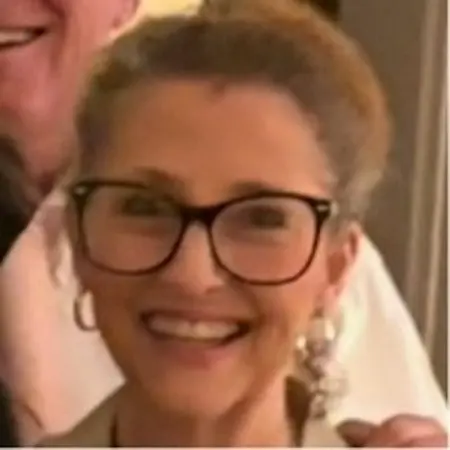
Agatha M. King, MHA, BSN, RN, NEA-BC, is a seasoned public health professional, registered nurse, and healthcare executive with more than four decades of experience spanning clinical care, leadership, education, and rural public health management. She began her nursing career in 1983 and dedicated 28 years to Women and Children’s Services, advancing from bedside nursing into progressive leadership roles. Over the course of her career, she has built deep expertise in system leadership, workforce strategy, quality management, patient safety, and healthcare innovation, with a consistent focus on improving outcomes through strong teams and evidence-based practice. Her professional journey has been defined by continuous growth and reinvention. She went on to serve as Assistant Vice President at Advocate Healthcare, where she led a nursing resource team that expanded from approximately 160 to nearly 900 healthcare practitioners under her leadership. Additionally, she created a foundation for and launched the Carolinas Healthcare Transition to Practice program serving new graduate nurses, preparing them for successful nursing careers. As an Associate Professor for the University of Southern California, Sol Price School of Public Policy, she provided valuable leadership insights for new and seasoned healthcare executives; teaching healthcare administration, quality improvement, safety and policy. After retiring from formal healthcare practice in 2018, she and her husband relocated to New Mexico, where she transitioned into public service through rural water system governance. What began as volunteer board service in 2019, the role evolved into her assuming operational leadership of her community water system in 2021, followed by executive board leadership as Secretary-Treasurer for the New Mexico Rural Water Association, where she advocates for the sustainability and advancement of small and rural water systems statewide. Agatha’s work reflects a lifelong commitment to public health, leadership development, and service to underserved communities. She has maintained her nursing licensure and professional certifications throughout her career, viewing safe drinking water management as an extension of her practice, into public health. In all of her operational and advocacy roles, she considers her most meaningful professional accomplishment, however, to be the development of leaders many of whom continue to seek her mentorship today reflecting her belief in collaboration, empowerment, and building sustainable leadership capacity in every organization she serves.
Her Interview
Ten minutes with Agatha
01What do you attribute your success to?
I attribute my success to staying focused on what God has called me to do. I ask myself, where is He leading, where am I being called? What doors has He opened for me? What doors has He closed? Because He can specifically open doors that no man can close, and He can close doors that no man can open. He has always been instrumental in opening and closing the doors that needed to be opened and closed for me at the right time. I stay focused on Him and where He would have me put my efforts and resources. Health Coaching is a great example. Each time I think I'm not going to continue to pursue coaching because I'm so "busy" with the water system, someone else reaches out and asks me about my health journey and asks me to coach them. It gives me great joy to help other people step in to a healthy journey when those opportunities present themselves, but I don't seek it out or force it. I let God guide me and expand my territory wherever I go and whatever I do.
02What’s the best career advice you’ve ever received?
The best career advice I ever received came when I went to the University of Southern California for my master's in healthcare administration. I learned you can always reinvent yourself. You don't have to stay in one lane. The other crucial piece of advice was to be available and willing to do the things nobody else wants to do. If you're willing to do those hard things that nobody else wants to do, then you're going to be the go-to person. My leadership roles did not come with directions, instead, my direct report would tell me the outcomes they wanted to see, like X, Y, and Z, and it was up to me to figure out how to make it happen. I absolutely loved that because I got to be creative with my programs and solutions. I also felt strongly that whatever I did had to be done as a team, never just me alone. I would create a team of individuals to join me in whatever project I was tasked with. In doing so, not only would we accomplish what we needed to accomplish, together, but I used that time as an opportunity to build new leaders in the process. Another influential piece of advice came when attending a Stephen Covey workshop early in my leadership career, where we actually got to meet Stephen Covey. The 7 Habits of Effective Leaders seminar was extremely instrumental in helping me to streamline my processes, how I organized my work from day to day, week to week, month to month.
03What advice would you give to young women entering your industry?
My best advice would be to stay focused on what you have been called to do. Be a life-long learner and accept failures as an opportunity to learn and grow. Celebrate your accomplishments, quietly, humbly. Rewards can be encouraging, however, be content in the subtle recognition given by those whose lives you have touched. Be creative and willing to tackle the jobs no one else wants to do. Embrace change.
04What are the biggest challenges or opportunities in your field right now?
Challenges and opportunities may actually be one in the same. Especially within small rural water systems. Similar to nursing, where a large majority of the workforce is "aging-out", the opportunities to work within and manage rural water systems are immense. The knowledge needed to support small water systems, however, goes well beyond basic water infrastructure. Financial management and reporting, state and national policy implications, water testing and sampling, grant funding and applications, contract services, project management. All part and parcel of what is needed to successfully navigate rural water. Not to mention, the dirty work; repairing water line breaks, looking for system water leaks and dealing with system emergencies. However, the greatest challenge for small water systems if having the financial resources to employ multitalented individuals to do the work.
05What values are most important to you in your work and personal life?
God is my source and my greatest joy in life is the family He has blessed me with. I have the most amazing family, and my greatest joy is when my husband and I get to travel and see our kids and grandkids and spend time with them. My husband and I are celebrating our 50th wedding anniversary in October, and I've been having a ton of fun planning our trip. We're taking our kids and grandkids on a big trip together. I also love cooking. My husband likes to call me "Chef Agatha". I love gardening and being connected to the earth. We have a large garden and a greenhouse where we're getting ready to plant fresh vegetables. Plus, I do some aquaponic gardening in the house. In my work, I value giving back to the community and helping others. I love what I do, giving back to our community is what motivates me. I've always enjoyed the work I have been led to, and even though there are times when things can be overwhelming with really busy, hard days, at the end of the day, I still love what I do. I also value staying humble in my accomplishments and focusing on the impact I make on others rather than any accolades I may receive. As my nephew wrote in his book The Invisible Medal, it's not about the medals we earn or the accolades we receive, but about the people we know we have in some way, shape, or form made a difference in their lives.
Join Influential Women and start making an impact. Register now.