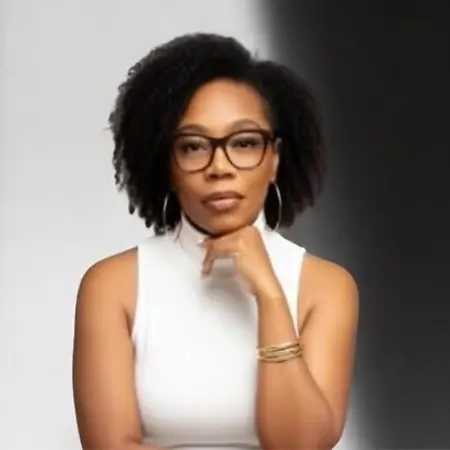
Her Story
About Aletha
I started my career after graduating in 2006 with my Computer Information Systems degree, which led me into networking roles and network administration. I worked for AT&T on their DSL business project for about 13 to 14 years, and eventually the job market pushed me to seek new opportunities to get pay increases, which led me to the city and to Citibank. I've been working with different clients, including a lot of Fortune 500 companies, assisting with their card programs in technical roles that involve troubleshooting and client support. In my current role, I'm more into app development, working with various teams within Citibank to update scripts, card programs, and campaigns for our consumer clients on the website they use to manage their card programs. It's a lot of Excel sheets, SQL queries, and submitting update requests to our development team to have scripting and verbiage updated on the website, which we do monthly because each month there's a different card campaign. In my previous role, I was the dedicated technical liaison for the state of Texas, in charge of all communications and any conferences held through Citi. I was able to go out and do hands-on training with a lot of the card program administrators within the state of Texas and formed lasting friendships with many people out there, which I consider my biggest achievement working at Citi.
Her Interview
Ten minutes with Aletha
01What do you attribute your success to?
I attribute my success to always having the mindset that I'm going to have to learn something new. Being able to accept criticism when I'm not doing what I'm supposed to do or when I'm going outside of my realm of what my job description is has been important for me. I've also always been able to lend a helping hand, and if I know something, I'm going to share that information with others. I'm a visual learner, so if somebody shows me something once or twice, I instantly pick it up, especially in the technical field. I'm able to grab onto different changes that are constantly coming in technical roles. I have the capacity to learn, and I think that's why I like technology so much because you always have to learn something.
02What’s the best career advice you’ve ever received?
The best career advice I've received is to tone down my intensity. I see patterns that other people don't see, and once I notice a pattern and report it, if nobody acts on it, I keep poking the bear until somebody responds. It took me a minute to realize that everybody doesn't see the same emergency or intensity, or how something is going to affect the business the way I see it. I had to learn to step back from that because not everyone looks at things like call volume the same way. If I see an issue that's going to cause a 30% increase in calls, I know that leads to burnout, and if we can nip stuff in the bud when we see it happening, we're saving resources and saving the company money. But a lot of people don't look at it that way. In my last position, I learned that I can give the information and just leave it there, and it's left up to upper management to figure out what they're going to do with it. I also had to realize that going through different management styles, every manager is not the same. Some people are bosses and some people are leaders, and I had to understand that sometimes you're reporting to somebody that's not really here to make a difference but just here for a paycheck.
03What advice would you give to young women entering your industry?
For women coming into the technology field, I would tell them to most definitely make sure you get some type of certifications. You would definitely want, I would say, a good two certifications. One in any type of Cisco or computer certifications for tech, computer-based work, and you definitely want one in AI. We have to look beyond the future because AI is constantly growing. You also need the ability to continue to learn, because what we learned today is not going to be the same thing five years from now. It's not going to be the same six months from now. It's going to be a different process, so you always have to have the mindset to want to continue to learn.
04What are the biggest challenges or opportunities in your field right now?
AI is a challenge right now. We're seeing massive layoffs in record numbers across the country because a lot of stuff that we do daily as humans, AI can do it in a millisecond. This is leading people in the technology field to have to learn something new. Now we have to learn and understand AI and how we can incorporate that into our current jobs. And if you can't incorporate it, you're going to have to pivot to something different, or you're going to be left behind.
05What values are most important to you in your work and personal life?
Honesty, loyalty, and being consistent are very high on my list of values. I think in the workplace, the loyalty is not the same as it is for your own person, but these values remain important to me.
Join Influential Women and start making an impact. Register now.