Her Story
About Alexa
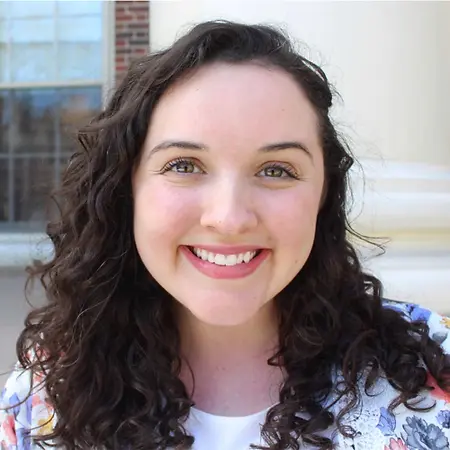
Alexa Cuff is an Elementary School Counselor at the Public Schools of Brookline, where she currently provides universal social-emotional supports to students at Edith C. Baker School. Her career in school counseling began with a commitment to ensuring that all children have access to mental health resources both in schools and in their broader communities. She earned her Master of Education and Certificate of Advanced Graduate Studies in Counseling from Harvard Graduate School of Education, where she grounded her practice in prevention science and developed a strengths-based, solutions-focused approach to supporting children within the systems they inhabit. With seven years of experience in school counseling, Alexa has designed and implemented innovative programs to promote student well-being. Notably, she created a weekly social-emotional intervention block, developed from the ground up during the COVID-19 pandemic, which reaches every student at her elementary school. This initiative has shown measurable improvements in students’ social-emotional skills and overall well-being and highlights her dedication to equity, prevention, and data-informed interventions that make a tangible difference in children’s lives. Alexa also co-founded an after school yoga club, is a core bargaining member for the Brookline Educators Union, and writes professionally on topics related to education and mental health. Beyond her professional work, Alexa enjoys spending time with family, being in nature, and creative pursuits such as writing, yoga, and painting. She strives to bring joy, empathy, and innovation to her work while inspiring students, colleagues, and peers through her dedication and creativity.
Her Interview
Ten minutes with Alexa
01What do you attribute your success to?
At my core, I am guided by a desire to make the world a better place. I try not to be too rigid with myself, and be open to where this calling leads me. For example, when I was a political science major in undergrad and felt called to volunteer with young people at a community center, I didn't realize that would plant seeds for the career that was to come. I just did it because it felt right in the moment. One thing led to another, and I changed my major and started exploring coursework and opportunities related to kids' mental health. Although I am intentional with my career, I am not attached to one singular path. So I follow what feels right, and trust that I will end up where I am meant to be. I am always going to be evolving. As long as I stay true to myself and my values, and work hard, then I can't go wrong. My mom always said "do your best and let God take care of the rest." I think there's a lot of truth to that.
02What’s the best career advice you’ve ever received?
The best career advice came from the late Jackie Zeller, who was a professor at Harvard Graduate School of Education and, in my view, the best teacher I’ve ever had. She taught me everything I needed to know about school counseling—including strengths-based counseling, ethical decision-making, and the importance of self-care. She preached about prioritizing self care as a central part of the job, and that really stuck with me. Jackie had an incredible influence on my professional outlook, and on a personal level, she was an inspiring mentor. I am deeply grateful for the opportunity to learn from her and to carry the beautiful lessons she instilled into my own practice every day.
03What advice would you give to young women entering your industry?
Make sure that you prioritize caring for yourself just as well as you care for others. I think that many people working in education are exploited - I mean, it is a female-dominated caretaking field - and that type of work is typically undervalued and underpaid. Many of us are naturally empathetic people, which is a gift that you need to protect. So I would say to young women entering education, or any helping profession, to prioritize self care. Boundaries are your friend. Develop a practice that you can sustain, down to the specifics of what you need to be well, and be diligent in your pursuit of that. Without that, you will not be able to sustain the work. Remember that you cannot pour from an empty cup.
04What are the biggest challenges or opportunities in your field right now?
One of the biggest challenges facing public education right now is the way schools are funded. Without proper funding, schools cannot function. The backlash always falls on the backs of teachers, and then, ultimately, on our students. Education has the potential to liberate, break generational cycles, and chip away at systems of oppression. Education can also be used as a tool of oppression. The choice is ours, and we need political, public, and financial support. Another challenge in the world of education is the behavioral and mental health crisis that is affecting young people. With this challenge comes an opportunity to provide innovative changes to the way we approach education, mental health, and social inequities. School counselors are uniquely positioned to help lead this movement, but they cannot do it in isolation. The entire system, including school leaders, parents, and the broader community, need to come along for the ride with us.
05What values are most important to you in your work and personal life?
There are two mottos that I always come back to. One of them is 'nothing without joy.' Working with kids, I believe that fun should be part of the equation. But, life can be hard, so it's important to notice and celebrate the joyful moments when we can find them. Kids are really good at that and I think grownups could learn a thing or two from them. Another motto I have is 'never worry alone.' I tell my students, families, and colleagues to never worry alone. This has really guided my practice and invited people to reach out during challenging times. It's a nice reminder to me as well - it is okay to ask for help and lean on your circle of support. So, really, it all comes back to joy and connection for me—making space for the good moments and making sure none of us has to face the hard moments alone.
Join Influential Women and start making an impact. Register now.