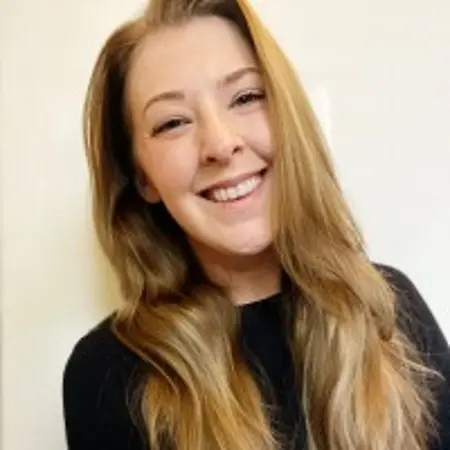
Her Story
About Alex
I believe the most effective way to improve the world we live in is through education. Education is an upward mobilizer and a matter of equity. While public education alone cannot eliminate opportunity gaps, it can meaningfully narrow them, and every child deserves access to the best support we can provide.
Over time, my work has expanded into the healthcare space as well, particularly in roles that sit at the intersection of education and clinical care, such as Speech-Language Pathologists and Board Certified Behavior Analysts. These professionals change lives every day, and I care deeply about building systems that reduce bias, expand access, and give both educators and students a real chance to succeed.
Nearly three years ago, I became a mother to an incredible little girl. Not to be stereotypical, but she is absolutely everything to me and only strengthened my motivation to help build a world I would be proud for her to grow up in. I hope to model for young girls that fulfillment does not follow a single blueprint. For some, it is career. For others, family, learning, sport, or community. For many, it is a mix of all of the above.
It took me longer than I would like to admit to accept that the opinion that matters most is my own. For me, having a career that challenges me and provides a sense of progress is essential. At the same time, I have learned that fulfillment does not come from work alone, and that balance is something you build intentionally, not accidentally.
Outside of work, I live in Portland, Oregon, where I spend as much time outside as possible. I share my life with two rescue pit bulls who have taught me a great deal about caregiving, patience, and importance of second chances. I stay active in ways I genuinely enjoy (after plenty of trial and error), play in a curling league with my partner, and support animal rescue efforts whenever I can. Whatever fulfillment looks like for you, I believe you should pursue it without apology. There is no shame in difference. In fact, difference is exactly what this world needs.
Her Interview
Ten minutes with Alex
01What do you attribute your success to?
I attribute my success to a combination of curiosity, persistence, and a willingness to figure things out before I felt fully qualified. I’ve been inspired by leaders, both men and women, who are genuinely themselves and lead with clarity, integrity, and confidence rather than performance. Seeing that kind of authenticity modeled made it easier for me to trust my own instincts and leadership style.
I was also shaped early on by a mother who set very high expectations, occasionally bordering on impossible, but always because she believed I was capable of meeting them. Over time, she made me believe it too. I’ve never been the person with the clearest roadmap, but I’ve always been willing to ask questions, teach myself new systems, and take ownership of problems that didn’t yet have a solution. I care deeply about the work I do and the people impacted by it, and I think that combination of accountability and genuine care has carried me further than any single credential ever could.
02What’s the best career advice you’ve ever received?
Early in my career, someone told me, “You don’t need to wait until you feel ready. Most people don’t.” That advice stuck with me because so many opportunities I’ve taken came with a learning curve, and if I had waited to feel fully prepared, I would have missed them. Confidence often follows action, not the other way around.
Following the start of my first leadership role, I received another piece of advice that changed how I showed up at work. I’ve always been outgoing and quick to bring warmth or humor into a room, but I didn’t see many leaders who led that way. I worried my personality wasn’t "professional" enough, so I tried to tone it down. My manager at the time pointed out that I seemed more reserved at work than I was otherwise, and that it came across as a lack of confidence rather than professionalism. In giving me permission to be myself, she helped me realize that my personality is actually one of my greatest strengths. Looking back, much of my success comes from bringing my whole self to the work. If you haven’t seen a leader like you yet, there’s probably a space that needs to be filled.
03What advice would you give to young women entering your industry?
Don’t underestimate how long it can take to find the version of your career that truly fits, and don’t mistake that time for failure. Say yes to opportunities that stretch you, but also pay attention to what energizes you versus what drains you. And perhaps most importantly, trust your own definition of success. You don’t need to mirror anyone else’s path for your work to be meaningful or impactful.
04What are the biggest challenges or opportunities in your field right now?
One of the biggest challenges I see right now is that hiring has become increasingly risk-averse, even as roles themselves have become more complex. We’re asking more of people, but often narrowing the definition of who feels “qualified” to a very specific template. That leaves a lot of strong, capable candidates on the sidelines. The opportunity, though, is real. This moment gives us a chance to rethink how hiring systems are designed, reduce bias, and get better at recognizing potential and transferable skills. Organizations that do this thoughtfully won’t just hire faster, they’ll build stronger, more resilient teams.
05What values are most important to you in your work and personal life?
Equity, integrity, and intention are central to how I approach both work and life. I value environments where people are treated with respect, decisions are made thoughtfully, and impact matters more than optics. I also believe strongly in building a life that allows space for joy, curiosity, and growth outside of work. Success is important to me, but fulfillment comes from alignment, not just achievement.
Join Influential Women and start making an impact. Register now.