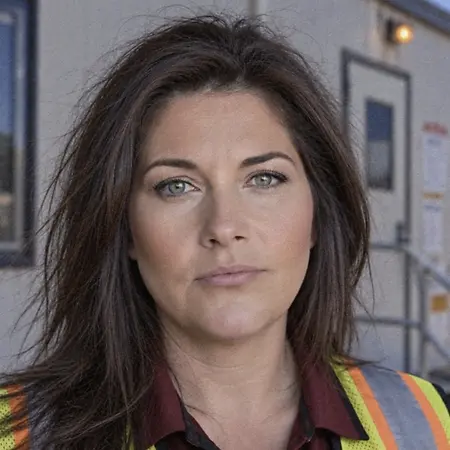
A safety professional's journey through 22+ years in construction, sharing insights on building strong safety cultures, earning respect as a woman in a male-dominated industry, and the importance of people-centered leadership in workplace safety.
“
You can't make someone take accountability, but you can choose not to let their actions control your future or define you.
Alexia Cockerham · In Her Own Words
Her Story
About Alexia
With 22+ years of hands-on experience in the construction industry, Alexia has built her career on hard work, determination, integrity, and a commitment to continuous growth. Currently serving as a Safety Coordinator with CBP Environmental in heavy civil construction, she brings a practical, field-driven approach to safety leadership.
Alexia began her career working for her father's construction company in Memphis, Tennessee. Starting as a laborer, she gained experience operating heavy equipment before transitioning into administrative and leadership roles. Her background gave her a strong understanding of construction operations and the challenges crews face in the field.
Over the past five years, Alexia has focused on construction safety. She leads daily safety operations on large-scale projects, conducts inspections and hazard assessments, facilitates JSA briefings, toolbox talks, and new hire orientations, and investigates incidents and near misses. She also monitors permit-required work, ensures compliance with safety standards, and works closely with project management and field crews to promote a strong safety culture.
One of her proudest accomplishments was developing and implementing a comprehensive safety program for Industrial Roofing & Construction that achieved zero injuries during her tenure as Human Recources and Safety Director. She holds an STS-C credential and previously served as Co-Chair of the National Women in Roofing Northeast Louisiana Council.
As a woman in a male-dominated industry and a single mother, Alexia understands the importance of resilience, adaptability, and perseverance. Throughout her career, she has faced challenges that have strengthened her character, shaped her leadership style, and taught her the value of determination. She attributes her success to a strong work ethic, the relationships she's built, and her willingness to learn from every experience. She believes that respect is earned through actions, accountability, and how you treat others.
Alexia is passionate about encouraging more women to pursue careers in construction and safety. Having worked her way up, she understands the importance of hands-on experience and learning from those performing the work. She believes effective leadership requires more than technical knowledge; it takes communication, sound judgment, and the ability to earn the trust of others.
Through her experience, Alexia hopes to demonstrate that women can build successful careers, take on leadership roles, and make a lasting impact in traditionally male-dominated industries without compromising who they are or the values they stand for.
Her Interview
Ten minutes with Alexia
01What do you attribute your success to?
I attribute my success to hard work, determination, and the experiences I've gained throughout my career. I started at the bottom and worked my way up, learning from the people around me and overcoming challenges along the way. Every experience has helped shape who I am today.
02What’s the best career advice you’ve ever received?
My mentor taught me to always use my moral compass and pick my battles. I've learned that not everything deserves a reaction. Sometimes leadership means standing your ground, and other times it means knowing when to walk away. You can't control others' actions, but you can control how you respond.
03What advice would you give to young women entering your industry?
Don't be afraid to get your boots dirty. Get out in the field, ask questions, and learn from the people doing the work. There's more to safety than what's written in a book. Be confident, willing to learn, and don't feel like you have to prove yourself to everyone. There's a place for women in this industry, so don't be afraid to take yours.
04What are the biggest challenges or opportunities in your field right now?
One of the biggest challenges is the need for more qualified safety professionals who understand field operations. With the industry still being male-dominated, there's also a great opportunity for more women to step into these roles. I'd love to see more women take advantage of those opportunities and make their mark in construction.
05What values are most important to you in your work and personal life?
Family is my foundation, and the values I live by are the same ones I bring to work every day. Honesty, loyalty, respect, and accountability mean a lot to me. I believe a good leader leads by example, stands behind their decisions, and isn't afraid to admit when they're wrong. To me, leadership is about building trust, doing what's right, and never asking someone to do something you wouldn't do yourself.
Her Content Hub
Articles by Alexia
From the Ground to Safety Leadership
From Field Worker to Safety Leader: A Woman's Journey in Construction
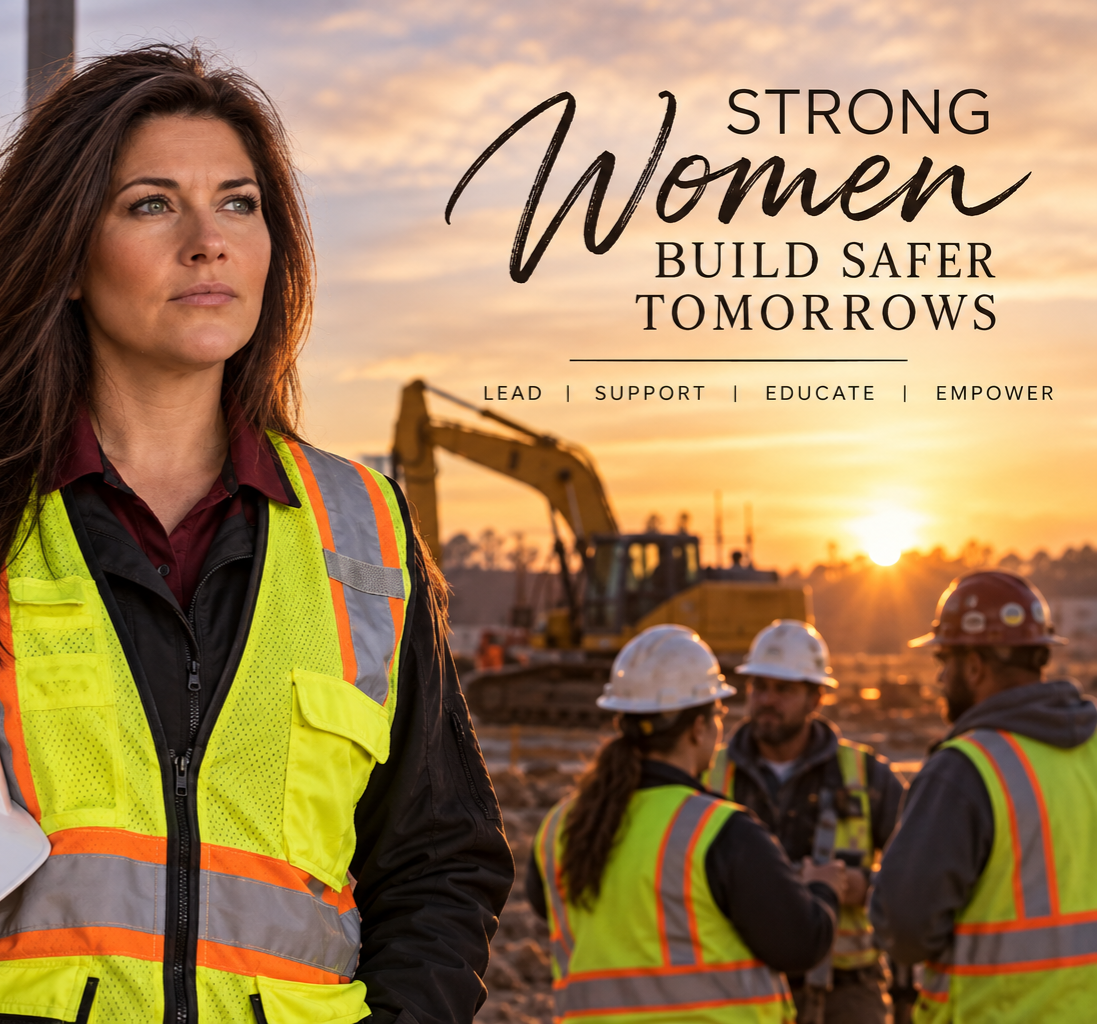
When I look back on my 22-plus years in the construction industry, I never imagined that the experiences I gained early in my career would eventually lead me into safety leadership.
What started with working for my father's construction company became a career that has challenged me, taught me valuable lessons, and helped shape the person and professional I am today.
I started as a laborer, eventually moved into operating heavy equipment, and later took on administrative responsibilities before finding my place in construction safety. Each role gave me a different perspective, but one lesson has stayed with me: You can't truly understand the challenges people face in the field unless you're willing to get out there and learn what they do.
That hands-on experience has been one of my greatest strengths as a safety professional. It's taught me to look beyond policies and procedures and understand the people responsible for getting the work done.
Safety Is More Than What's Written in a Book
Over the years, I've learned that being an effective safety professional takes more than knowing regulations, conducting inspections, or completing paperwork.
You have to understand the work, and more importantly, you have to understand the people doing it.
I've always believed safety professionals shouldn't be afraid to get their boots dirty. Spend time with the crews. Ask questions. Listen to the operators, laborers, and foremen who perform the work every day.
There's a big difference between reading about a task and understanding what it actually takes to complete it.
When you take the time to learn from the crews, you gain a better understanding of the hazards they face and the challenges that come with their responsibilities. It also helps you find practical solutions that protect people without losing sight of the work that needs to get done.
Some of the most valuable lessons I've learned throughout my career didn't come from a classroom or a textbook. They came from being in the field, working alongside experienced people, and being willing to listen.
I've also learned that respect goes both ways. You can't expect people to respect your position simply because you have a title. You have to earn their trust through your actions, consistency, and willingness to understand their work.
Earning Respect in a Male-Dominated Industry
Construction has always been a male-dominated industry, and being a woman in this field comes with its own challenges.
I've learned that you don't have to be the loudest person on the jobsite or feel the need to prove yourself in every conversation. Confidence comes from experience, preparation, and knowing what you bring to the table.
There have been situations throughout my career that have tested my patience, confidence, and ability to stand my ground. Those experiences taught me that leadership isn't about winning every disagreement or having the last word.
One of the best pieces of advice I've ever received was to follow my moral compass, control my emotions, and learn to pick my battles. That advice has stayed with me.
Not everything deserves a reaction, and not every disagreement needs to become a battle. Sometimes leadership means standing firm, and other times it means knowing when to walk away.
But when it comes to someone's safety, doing what's right should never be negotiable.
I want other women entering this industry to understand that they belong here just as much as anyone else. You don't have to change your personality or compromise your values to earn respect. Be willing to learn, take pride in your work, and let your actions speak for themselves.
Building a Safety Culture Starts With People
My journey in safety has taken me through different industries, leadership roles, and working environments.
Each experience has taught me something valuable about safety, accountability, and the kind of leader I want to be.
CBP Environmental played an important role in the beginning of my safety career. It was where I began developing the knowledge, confidence, and professional relationships that helped shape my approach to safety.
I eventually moved on to pursue other opportunities, including serving as Human Resources and Safety Director for Industrial Roofing & Construction. During my time there, I developed and implemented a comprehensive safety program that achieved zero injuries throughout my tenure.
I later worked as a Safety Manager for a concrete batch plant supporting a data center project. That experience gave me a different perspective on workplace culture and leadership. I saw firsthand how difficult it can be to promote safety when production demands take priority and safety doesn't receive the support it needs. While that experience was challenging, it taught me an important lesson: A strong safety culture cannot be built by the safety department alone. It requires commitment from leadership, supervisors, and every employee on the jobsite.
Eventually, my career brought me back to CBP Environmental.
Returning gave me an even greater appreciation for the people, the relationships, and the support system I had there. My coworkers have become more than colleagues; they're like family. Having people who support you, challenge you to grow, and genuinely look out for one another makes a difference.
CBP has played a significant role in shaping the safety professional and leader I am today. Being part of a team with a strong commitment to safety has reinforced my belief that the best safety cultures are built on trust, communication, accountability, and mutual respect.
Today, as a Safety Coordinator, I work closely with field crews, supervisors, and project management to identify hazards, address concerns, and promote safe working environments.
For me, building a safety culture starts with being present and leading by example. It's about having conversations with crews, listening to their concerns, and creating an environment where people feel comfortable asking questions or speaking up when something isn't right.
I don't believe in approaching safety as though it's us against them. We're all working toward the same goal, and the best results come when safety professionals and field personnel work together rather than against one another.
It's also about consistency. People need to know that safety expectations don't change depending on who's watching, how busy the jobsite is, or how much pressure there is to meet a deadline.
When employees feel respected, supported, and involved in the process, they're more likely to take ownership of safety themselves.
That's when safety becomes more than a set of rules. It becomes part of the way people work and look out for one another.
My experiences have taught me that you can have all the policies, procedures, and training programs in place, but without the right leadership and people behind them, you don't have a strong safety culture. You have paperwork.
Making Room for the Next Generation of Women
After more than two decades in construction, one thing I'd love to see is more women taking advantage of the opportunities this industry has to offer.
Construction and safety offer so many different career paths, and there is a growing need for knowledgeable, dedicated professionals who are willing to learn and take on leadership responsibilities.
I believe women have a lot to contribute, but I also understand how intimidating it can be to enter an industry where you may be one of the few women on a jobsite.
My advice is simple: Don't let that stop you. Don't be afraid to ask questions, and don't expect to know everything when you first start. Nobody does. Get out in the field. Learn the work. Spend time with the crews and find people who are willing to share their knowledge. Some of the best teachers you'll ever have are the people who have spent years doing the work firsthand.
I also believe having a strong support system and good mentors can make a tremendous difference. I've been fortunate to learn from people who have encouraged me, challenged me, and helped me grow throughout my career.
Not every experience will be positive, and not every workplace will be the right fit. But even difficult situations can teach you something about your strengths, your values, and what you're willing to stand for.
I want women to know that they don't have to have everything figured out to get started. Experience comes with time, and confidence grows when you're willing to step outside your comfort zone.
More importantly, I want women already established in this industry to remember the importance of supporting those coming up behind them.
Share your knowledge. Offer guidance. Encourage someone who's still finding her confidence. Sometimes having just one person believe in your potential can make all the difference.
There is room for more women in construction, and we should be helping one another succeed rather than making the journey harder.
What Success Means to Me
As a single mother, I've had to balance the responsibilities of my career with the challenges and sacrifices that come with raising a child.
It hasn't always been easy. There have been long days, difficult decisions, and times when I've had to remind myself why I started. But those experiences have taught me perseverance, patience, and the importance of staying focused on what truly matters.
I don't measure success solely by job titles, credentials, or professional accomplishments. I'm proud of what I've achieved, but I'm equally proud of the relationships I've built, the challenges I've overcome, and the example I'm setting for my son.
Success, to me, is knowing that I've continued to grow without losing sight of my values.
It's being able to look back at difficult experiences and recognize how much I've learned from them. It's earning the respect of the people I work alongside and knowing that I've made a positive difference in someone's life or career.
After all these years in construction, I'm still learning. I still ask questions, still listen to people with different experiences, and still look for ways to become better at what I do.
If there's one thing my career has taught me, it's that leadership isn't about knowing everything or having all the answers.
It's about being willing to learn, having the courage to do what's right, treating people with respect, and understanding that your actions can have a lasting impact on those around you.
For the women considering a career in construction or safety, my message is to believe in your abilities, stay true to who you are, and don't let anyone convince you that you don't belong. You have something valuable to contribute, and your experience, perspective, and determination can make a difference.
At the end of the day, construction safety is about more than rules, regulations, and paperwork.
It's about people, the culture we create together, and making sure everyone goes home safely.
That's what makes this work meaningful to me, and that's the kind of impact I hope to leave behind.
Join Influential Women and start making an impact. Register now.