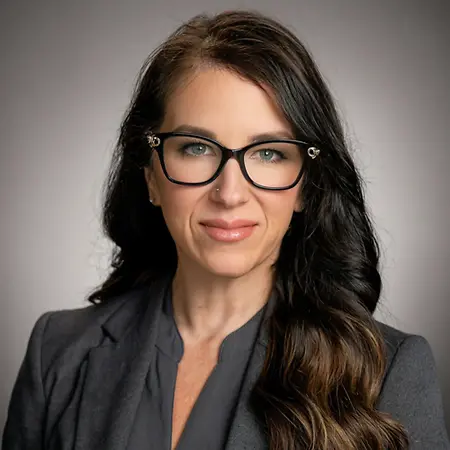
Her Story
About Alexis
Alexis Foote is a behavioral health executive and clinical leader with about 10 years of experience in the field. She currently serves as Chief Clinical Officer at Valora Health, a consulting firm where she works with clinicians and doctors to expand their practices and programs. She holds a master's degree in counseling from Texas A&M Corpus Christi, obtained in 2016, and is a licensed professional counselor supervisor. Her work emphasizes women's mental health, including the development of a 12-week intensive outpatient program focused on perimenopause, menopause, and postmenopause care. She is a member of Chi Sigma Iota, which promotes research, professionalism, leadership, advocacy, and excellence in counseling. Alexis Foote has shared that a mentor advised her to lead with her heart, be real, and recognize that she will learn from clients, advice that has shaped her approach across her roles as patient, clinician, and executive.
Her Interview
Ten minutes with Alexis
01What do you attribute your success to?
I attribute my success to resilience, curiosity, and a willingness to keep evolving. I’ve never been afraid to ask questions, challenge the way things have always been done, or admit when there’s something I still need to learn.
I also believe success comes from genuinely caring about the work and the people affected by it. In behavioral health, every policy, program, and decision ultimately impacts a real person. I’ve tried to never lose sight of that, even as I’ve moved into executive leadership.
Some of my greatest growth has also come from difficult seasons in my life. They taught me how to adapt, how to keep moving forward, and how to recognize possibilities where other people might only see obstacles.
More than anything, I think my success has come from refusing to believe that where you start determines where you finish. I’m still learning, still building, and still asking, “How can we do this better?” I hope I never stop.
02What’s the best career advice you’ve ever received?
My mentor told me to lead with my heart and to be real. Don't expect to be the smartest person in the room. Sometimes you're going to learn from your clients. Don't expect to know everything, and don't try to know everything. To be real in that would give you connection.
03What advice would you give to young women entering your industry?
Don’t wait until you feel completely ready, because you probably never will. Some of the best opportunities in my career came when I was willing to step into a room and figure things out as I went.
Learn everything you can, ask questions, find people who will challenge you, and don’t be afraid to take up space. You can be compassionate and still be strong. You can lead with empathy and still have boundaries. And you don’t have to become harder or quieter to be taken seriously.
I’d also tell young women not to confuse someone else’s confidence with competence. Trust what you know, but stay humble enough to keep learning.
And when you see something in healthcare that isn’t working, don’t assume you’re supposed to accept it because “that’s how it’s always been done.” Some of the most important changes begin with one person being willing to ask, “Why are we still doing it this way?”
04What are the biggest challenges or opportunities in your field right now?
One of the biggest challenges in behavioral health right now is that our system is still far too reactive. We often wait until someone is in crisis before we intervene, and by then we’re trying to stabilize something that may have been developing for weeks or months.
Access is another enormous challenge. People still face long waitlists, insurance barriers, provider shortages, and gaps between levels of care. And for women specifically, we’re only beginning to fully recognize how hormonal transitions, reproductive health, trauma, caregiving, and different stages of life intersect with mental health.
But I think those challenges also represent some of our greatest opportunities.
We have an opportunity to rethink what behavioral healthcare looks like—to integrate mental and physical health more effectively, create programs designed around populations that have historically been overlooked, and use technology and AI responsibly to identify changes earlier and provide support before someone reaches a crisis.
That’s the part of this field that excites me most. I don’t think the future of mental healthcare is simply about providing more treatment. I think it’s about becoming better at recognizing when someone needs us and reaching them sooner.
05What values are most important to you in your work and personal life?
Integrity, compassion, loyalty, and authenticity are probably the values that guide me most.
Integrity matters because I want to be the same person whether I’m sitting in an executive meeting, working with a clinician, or talking with someone who is struggling. I believe you do the right thing because it’s the right thing to do, not because someone is watching.
Compassion is at the heart of everything I do. I’ve spent my career in behavioral health, and I’ve learned that you rarely know the full story of what someone is carrying. That doesn’t mean we don’t hold people accountable, but it does mean we can lead with humanity.
Loyalty is also incredibly important to me. When I believe in people, I invest in them. I want the people around me to succeed, and I believe good leadership is about creating opportunities for other people to grow, not just advancing yourself.
And finally, authenticity. I spent enough of my life thinking I had to be a certain version of myself to belong in certain rooms. At this point in my life, I’ve learned that I’m a better leader, clinician, wife, mother, friend, and human being when I simply show up as myself.
Those values really come down to one thing for me: I want the work I do and the relationships I build to leave people better than I found them.
Join Influential Women and start making an impact. Register now.