A powerful exploration of why lived experience deserves equal standing with clinical expertise in mental health. This article challenges the hierarchy between professionals and patients, arguing that both perspectives are essential for better understanding, treatment, and outcomes.
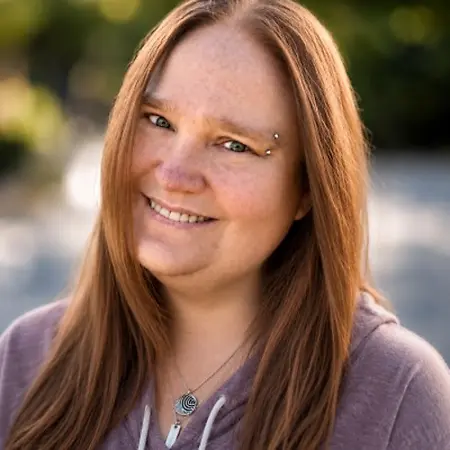
Verified Member
Influential Woman · Mental Health and Lived Experience Advocacy
Alexis Elizabeth Kur
Owner, Permission to Define, LLC
Wyandotte, MI 48192
8Years experience
1Article published
“
Meeting another person with DID at a survivor retreat in 2008 changed everything for me. She spoke openly about her diagnosis without apology, and showed me what was possible.
Alexis Elizabeth Kur · In Her Own Words
Her Story
About Alexis
Alexis Kur is a special education teacher, mental health advocate, speaker, and founder of Permission to Define, whose work is rooted in one belief: people should never be reduced to a diagnosis, a label, or someone else’s assumptions about who they are.
For fifteen years, Kur built a highly successful six-figure career in environmental consulting. She ultimately made the deliberate decision to walk away from conventional professional success and pursue work that felt more aligned with the person she believed she was meant to be: Someone whose work made a direct and lasting impact on people’s lives.
She returned to one of her other professional paths, education, and for the past seven years has worked in high school special education in Michigan, leading an Emotional Impairment program serving teenage boys. Her classroom extends far beyond academics. She helps students build social-emotional skills, prepare for employment, navigate interviews, understand finances and taxes, develop independence, and acquire the practical skills needed to move into adulthood with greater confidence and autonomy. Sometimes it is simply how to properly shake someone’s hand. At the center of her approach is a refusal to define young people solely by their behavior, disability classification, or most difficult moments. Those are just words she writes on an IEP.
Kur considers the greatest accomplishment of her professional career to be something that cannot be framed, hung on a wall, or added to a résumé. It is her ability to see her students beyond their labels, recognize what they do well, and help them believe those strengths can carry them farther than they may have imagined.
She often says that teenagers are telling adults far more about themselves than adults realize. Her students talk about anime, scary movies, music, games, and the characters they love. Kur wants to know the storylines and names, but she also listens for the opening beneath the conversation. A question as simple as, “What do you like about that character?” can reveal how a student sees loyalty, courage, anger, identity, fear, friendship, or even themselves.
For Kur, those moments matter because connection often begins in places adults are tempted to dismiss as small talk. She believes that when young people feel genuinely seen for who they are. Not simply managed according to a diagnosis, behavior, or school record. They become more willing to imagine what they are capable of becoming.
Her goal is not to convince her students to overcome who they are. It is to help them conquer the world with what they already do well.
That same philosophy drives Permission to Define, the platform Kur founded eight years ago to bring professional knowledge and lived experience into the same conversation. Through presentations, workshops, and candid educational discussions across the United States and Canada, she has worked with mental health professionals, graduate students, educators, school districts, and young people on topics including trauma, stigma, Dissociative Identity Disorder, identity, disclosure, and the language used to describe people receiving mental health care.
Kur’s work challenges a familiar imbalance: professionals are often taught extensively about the people they will serve without ever being taught by the people who have actually lived those experiences. She believes clinical, academic, and professional expertise are essential, but that lived experience belongs in those rooms as a form of expertise too. A mental heath professional can have vast and extensive clinical knowledge, but she can tell you what it is like to have DID on a Tuesday.
She holds a bachelor’s degree in Earth and Environmental Sciences with a minor in Geology from the University of Michigan, as well as a bachelor’s degree in Secondary Education with a minor in Women’s Studies and a Master of Arts in Teaching in Secondary Special Education from Wayne State University. She is also a certified yoga instructor and Reiki master.
Her commitment to service extends beyond her professional work. Kur served as an executive board member for nine years with Hope for Hearts, which raises awareness and funds for children and families affected by congenital heart defects. In 2023, Kur found her way back into the grassroots nonprofit sector again. She now serves as an advisory board member for Healing Hearts Therapeutic Farm, which expands access to animal-assisted mental health services for people who might otherwise be unable to afford them.
Across the classroom, boardroom, professional training space, and stage, Kur’s work asks people to question the definitions they have inherited, challenge the assumptions they make about others, and create room for people to define themselves. Her goal is not simply to increase awareness, but to replace misunderstanding with knowledge, conversation, and genuine human connection.
Her Interview
Ten minutes with Alexis
01What do you attribute your success to?
I attribute my success to the full arc of my career journey. I spent fifteen years building a successful career in environmental consulting before making the decision to transition into special education teaching and mental health advocacy through my organization, Permission to Define. I did not choose to leave consulting because I was failing at it. Quite the opposite. Leaving that career to define success according to me by pursuing teaching and advocacy is, without question, the best decision I have ever made. There are days that are hard, but I truly enjoy getting up and going to work every single day.
02What’s the best career advice you’ve ever received?
The best guidance I've carried with me has come from my own educational journey. Pursuing degrees in Environmental Studies, Geology, Education, and Educational Development at the University of Michigan and Wayne State University, along with my studies in women's studies, taught me the importance of continually seeking knowledge and understanding different perspectives. That mindset is ultimately why I do what I do today, so that I can make a real difference in the lives of the people who need it most.
03What advice would you give to young women entering your industry?
My advice is quite simple: Question the definition. Challenge the assumption. Create understanding. Define what comes next.
04What are the biggest challenges or opportunities in your field right now?
I see the challenges and opportunities in my work as existing on an almost equal plane. What tips the scale is how willing you are to approach both creatively.
In education, there are tremendous opportunities simply because there are not enough teachers, paraprofessionals, substitutes, and support staff.
The challenge is finding a district that values educators enough to compensate, support, and retain them accordingly. Those positions exist, but they come at a premium and are often difficult to land. Educators also face countless barriers when trying to help students succeed, from limited resources to rigid systems that do not always account for what individual students actually need. At the same time, there are enormous opportunities for educators who are willing to think outside the box. Creativity can turn limitations into possibilities, and sometimes the most meaningful breakthroughs happen when you stop asking, “How is this usually done?” and start asking, “What would actually work for this student?”
In my lived-experience work, the challenge has often been getting professionals to take me seriously enough to listen. Lived-experience advocates are frequently viewed as brave survivors sharing their stories. That can be valuable, and sharing my story is certainly part of what I do, but it has never been my end goal. My goal is to contribute knowledge.
I believe lived experience belongs beside clinical knowledge, not in competition with it. I am just as worthy of standing in the room with highly trained clinicians because I bring expertise they cannot acquire from a textbook alone. Once I stopped allowing my work to be framed simply as “sharing my story” and began insisting that lived experience be recognized as a legitimate form of expertise, the opportunities became far more abundant than I had ever imagined.
05What values are most important to you in your work and personal life?
Everything has value. Its value only becomes apparent when you approach it the right way. I believe the same is true of people, experiences, ideas, and even the things we are too quick to dismiss.
At the most basic level, we are all human beings trying to get through the day. Because of that, kindness, compassion, and basic human decency matter deeply to me. Ironically, they are often some of the least recognized or valued qualities, especially in professional spaces where productivity, credentials, and measurable outcomes tend to get more attention.
In my classroom, that means seeing the person before the label and looking for what a student does well rather than defining them by where they struggle. In my advocacy work, it means listening to lived experience with the same seriousness we give professional expertise. In my nonprofit work, it means remembering that access, dignity, and connection can change someone’s life.
I value curiosity, authenticity, compassion, and the willingness to look at something from a different angle. Sometimes the thing that appears to have the least value is simply the thing no one has taken the time to understand.
I also see the value in my life lessons, many of which end with: Well, that did not go the way I thought would. To me that is not a bad thing because I am willing to try. My most recent life lessons that came at somewhat of a cost is:
Disclosure is NOT access. Authenticity and vulnerability can exist with boundaries.
Her Content Hub
Articles by Alexis
Lived Experience and Clinical Knowledge Have Equal Value. That Is a Hill I’m Willing to Die On.
Why clinical expertise and lived experience must be equal partners in mental health care.

Lived Experience Belongs Beside Clinical Knowledge
There is a sentence I have said often enough that I no longer soften it for the comfort of the room:
Lived experience and clinical knowledge have equal value.
Not identical value. Not interchangeable value.
Equal value.
A person with decades of clinical training knows things I do not know. They understand research, diagnostic frameworks, treatment modalities, neurological processes, pharmacology, ethics, and theory in ways I may never fully understand.
I know things they cannot know simply because they studied them.
I know what it is like to sit on the other side of the room.
I know what it is like to receive a diagnosis and then discover that the diagnosis may become the first thing someone sees when they look at you.
I know what it is like to hear professional language used to describe an experience that feels nothing like the words being assigned to it.
I know what helps build trust.
I know what destroys it.
I know what it is like when someone asks a technically appropriate question in a way that makes you stop talking.
And I know what it feels like when someone finally asks the right question and suddenly you can breathe enough to answer it.
None of that makes me a clinician.
It makes me an expert in something else.
And that distinction matters.
Lived Experience Is More Than “Sharing Your Story”
One of the most persistent problems I encounter in mental health spaces is the way lived experience is framed.
A clinician presents information and is called an expert.
A person with lived experience presents information and is often called brave.
I appreciate the intention behind that word, but bravery is not my qualification.
When I speak about Dissociative Identity Disorder, trauma, therapeutic relationships, stigma, language, disclosure, or what it means to navigate mental health systems from inside them, I am not simply standing in front of a room telling a difficult personal story.
I am contributing knowledge.
My story may be the vehicle I use to explain that knowledge, but the story itself has never been the end goal.
There is an enormous difference between saying, “This happened to me,” and saying, “This happened to me repeatedly over many years. I have examined it carefully, compared experiences, identified patterns, worked alongside professionals, questioned assumptions, and learned what those experiences reveal about the systems surrounding them.”
That is where lived experience becomes more than testimony.
It becomes expertise.
Professionals Are Often Taught About Us Without Being Taught by Us
Mental health professionals can spend years learning about diagnoses, symptoms, behaviors, treatment approaches, and populations.
They may read case studies.
They may examine diagnostic criteria.
They may watch training videos.
They may participate in supervised clinical experiences.
All of that has tremendous value.
But there is something fundamentally incomplete about teaching people extensively about a population while rarely asking members of that population to participate in the education.
Imagine learning another language exclusively from textbooks but rarely speaking with someone who actually uses it every day.
You may become very knowledgeable.
You may even become technically proficient.
But there will always be nuances you cannot learn from the page.
Lived experience provides those nuances.
It tells professionals what a diagnostic criterion feels like from the inside.
It reveals the gap between what someone intended to communicate and what the person receiving that communication actually heard.
It shows how institutional policies function when they leave the handbook and collide with a human being.
It identifies blind spots that can remain completely invisible from the professional side of the relationship.
That information should not threaten clinical expertise.
It should strengthen it.
Equal Does Not Mean the Same
This is where conversations about lived experience sometimes become unnecessarily defensive.
Saying lived experience has equal value does not mean someone who has experienced a condition should diagnose or treat other people.
It does not mean professional training is unnecessary.
It does not mean scientific research should be replaced by personal anecdotes.
And it certainly does not mean one person's experience represents everyone with the same diagnosis.
It means that different forms of knowledge answer different questions.
Clinical knowledge may explain what commonly happens.
Lived experience can explain what it feels like when it happens.
I know what it is like to live with it on a Thursday.
Research can identify patterns across populations.
Lived experience can reveal how those patterns manifest in an actual life.
A treatment manual can explain how an intervention is intended to work.
The person receiving that intervention can tell you what happened when it reached the other side of the room.
Those perspectives are not enemies.
They are pieces of the same picture.
The Resistance Holds the Profession Back
What concerns me most is not disagreement.
Mental health needs disagreement. It needs questioning. It needs rigorous debate.
What concerns me is the reflexive hierarchy that sometimes appears when lived experience enters professional spaces.
There can be an assumption that the person with credentials is bringing knowledge while the person with lived experience is bringing emotion.
That distinction is both inaccurate and limiting.
Of course lived experience contains emotion.
So does clinical work.
Professionals are human beings, too.
The important question is whether someone can examine an experience thoughtfully, communicate it responsibly, recognize its limitations, and contribute something useful to the conversation.
When institutions dismiss lived experience because it is personal, they lose access to information that could improve training, communication, treatment, trust, and ultimately outcomes.
The irony is that many professions say they want to become more patient-centered, trauma-informed, person-centered, or culturally responsive while still resisting one of the most obvious ways to accomplish that:
Invite the people being served into the room.
And then listen to them as colleagues in the conversation.
Listening Is Not Surrendering Professional Expertise
There is another misconception I would like to retire.
Listening seriously to lived experience does not require clinicians to abandon professional judgment.
A professional can hear someone say, “This approach harmed me,” without concluding that the approach should never be used again.
They can instead ask:
Why?
What happened?
Was it the intervention itself?
The timing?
The relationship?
The language?
The implementation?
Was something overlooked?
Could another person experience the same thing differently?
That is how knowledge grows.
The purpose of lived experience is not to issue universal rules from individual stories.
It is to introduce information that may not otherwise enter the conversation.
Clinical professionals should absolutely question lived-experience perspectives.
I expect them to.
But lived-experience advocates should also be allowed to question clinical assumptions.
Expertise should survive questions.
If it cannot, the problem is not the question.
I Want a Seat Beside the Clinician, Not Their Chair
I have no desire to replace clinicians.
I have spent years working with extraordinary mental health professionals, and much of what I know today exists because they brought knowledge and perspectives I did not have.
What I want is much simpler.
I want lived experience to have a legitimate seat at the same table.
I want graduate students to learn from professors, textbooks, research, and people who have actually lived with the conditions they are studying.
I want clinicians to be able to say, “My training tells me this,” while someone with lived experience can say, “Here is what that looked like from my side.”
I want both statements to matter.
Because there are things a brilliant clinician can teach me that I could never discover through lived experience alone.
And there are things I can teach a brilliant clinician that no doctorate can provide.
Neither of us becomes smaller by acknowledging that.
We become better informed.
The Future Should Be Collaborative
The most productive mental health spaces I have encountered are not the ones in which everyone agrees.
They are the ones where different forms of expertise can exist without someone needing to win.
Clinical knowledge.
Research.
Professional experience.
Lived experience.
Family perspectives.
Community knowledge.
None of them contains the entire answer.
But together, they can create something much closer to understanding.
That is the direction I want to see the profession move.
Not toward replacing one authority with another.
Toward collaboration.
Toward curiosity.
Toward professionals who are confident enough in their education to hear what they may have missed.
And toward people with lived experience who are given opportunities to contribute more than their survival stories.
I will continue sharing mine.
But I am not asking anyone to admire me for surviving it.
I am asking them to listen to what I learned from living it.
Because lived experience belongs beside clinical knowledge.
Not beneath it.
Not above it.
Beside it.
And yes—that is a hill I am willing to die on.
Join Influential Women and start making an impact. Register now.