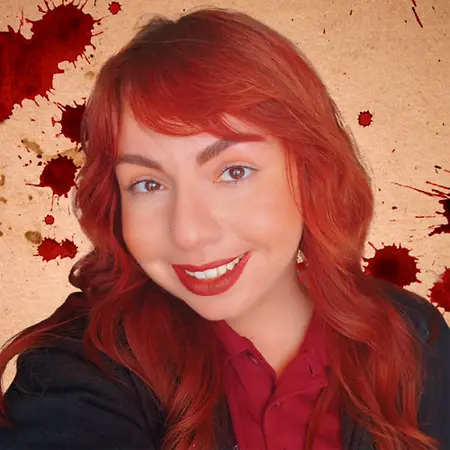
Her Story
About Alexis
I'm a first-generation student from a Puerto Rican family, and a lot of my success comes from the opportunities my parents gave up to get me where I needed to go. The hard work culture I grew up with, seeing them give up so much to give us better lives, has always inspired me. I've been in forensics for 7 years, starting as a crime scene investigator handling everything from burglaries to homicides. I became a field training officer, trained new investigators, and mentored countless interns. I presented at conferences about getting students where they need to go because I had people who wouldn't mentor me, who were burned by others and repeated that cycle. I decided to break that cycle instead. After earning my master's, I transitioned into full-time teaching a year ago, and since then, our program has seen at least a 200% increase in enrollment. I oversee a hands-on program where students don't just sit in a classroom - we spend maybe an hour on lessons, then three to four hours outside doing real scenarios that replicate what I did in the field. I advise at least 20 students, develop curriculum, network, and promote both the organization and the program. My teaching philosophy is students first - getting to know them, their challenges, being that rock they need. Sometimes all it takes is just that one person. I'm passionate about making sure people feel validated and believe in themselves, because I had that support system growing up, and I want to be for others what people weren't for me.
Her Interview
Ten minutes with Alexis
01What do you attribute your success to?
I'm a first-generation student, so a lot of my success comes from the opportunities that my parents gave up to get me where I needed to go. I come from a Spanish family, from a Puerto Rican family, so the hard work culture, and seeing them give up so much of them to give us better lives has always inspired me. It's about trying to push the mold and be someone for other people that people weren't for me. I had a lot of people that did not want to mentor me, did not want to help me, and it's because they were burned by other mentors. Instead of repeating that cycle, I somehow found a way to break that, and to foster a platform for people to at least feel like they have a chance. Because my parents gave me that chance, the people around me did, and people don't deserve for you to be like, oh, no one helped me, so I'm not going to help you. I heard that too many times in my career. So that's the biggest thing - making sure that people feel validated, and that they have belief in themselves, because I had that support system growing up.
02What’s the best career advice you’ve ever received?
The best advice is taking every no as a redirection and not the end of the course. Especially in our field, the biggest complaint from applicants - when I applied to 30 different agencies when I was a fresh grad, I got no's from everyone. And it's really discouraging because, you know, you get this degree, you spend all this time, and now nobody wants you. But it's never that they don't want you. Either their goals don't align with you, their timeline doesn't align with you, and it's just a realignment for you to find where you need to be. It's not necessarily telling you, no, you can't do it.
03What advice would you give to young women entering your industry?
I would give them the advice of be absolutely fearless, and don't allow others to dim your light because it makes them feel comfortable. It's a big thing right now. We're a very woman-dominated field, which is amazing, but also that means that the moment that you shine, some people just don't want you to shine brighter than them. I encourage women entering forensics to find people that will shine with them, and step back when it's time for them to shine. And if those people around them aren't willing to do that, don't dim themselves, don't hold yourself back, don't limit your opportunity just because they may not want to do the work, they may not want to be as out there as you. Find your group, and sometimes you might not find your person or your group, and just know that you can stand alone. As long as you're doing good, honest, forensic work, nothing's gonna come in between that. Let the work speak for itself.
04What are the biggest challenges or opportunities in your field right now?
I think a lot of the biggest challenges is probably a lot of resources. Some agencies, some individuals will get into different agencies, and they may not have the right funding, maybe they don't have proper training, and some people use that as an excuse as to why they don't grow. But there are so many resources online right now for forensics. I've been a part of the community sharing online resources since 2021. There's so many different trainings, free webinars. There's never an excuse to limit yourself because of what's in front of you. There are ways to get the job done, and whether you have to MacGyver a method from Amazon resources, phone a friend in another agency, there's always a way. We pride ourselves in problem solving. I think a lot of the issues is that we have maybe young graduates that have no help, and they immediately don't know what to do. So becoming natural-born problem solvers, finding a way to make things work, and advocating for change - if you feel like nobody's supporting you at the agency, speak up. Go to events. Take time out of your day to email your command staff and tell them, hey, I'm here, I exist, I matter. If you don't have the funding, reach out to people that can help you get the funding. There's always ways to go about lack of resources, and I think a lot of it is lack of advocacy. It's scary to advocate for yourself among a bunch of people, but the biggest issue is just lack of problem solving for problem solvers, which is a crazy thing to say. But sometimes we don't realize that solutions are much more simpler. We look at complex scenes all day, and then we come back to the office, and we're like, oh, the printer's not working, oh well. Being able to advocate for yourself and what you need to do your job well.
05What values are most important to you in your work and personal life?
I think a lot of having integrity and being passionate, but also being cognizant of everyone around you. During my career, I had some people that weren't the kindest to me, and it's easy to stoop to their level, but being honest, having integrity, being able to combat that, and kind of that kill-them-with-kindness mentality has gotten me through a lot of the harder parts of my career. Because not only do you face difficult things, and then you come back to the office, and you have difficult coworkers. So being able to do my work to the best of my ability, do it honestly, do it even if I make a mistake, being honest when I make those mistakes, but also looking in the faces of those who may not be in my best interest, and still being positive, speaking highly of them, and never stooping to their level, helps elevate where I'm at, and it doesn't allow me to foster the negativity.
Join Influential Women and start making an impact. Register now.