Her Story
About Alexxa
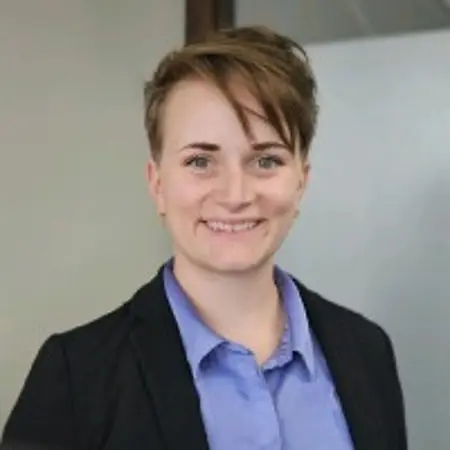
Alexxa Wartman is an Accessibility Liaison and Case Specialist at Nebraska Guardianship Counsel, LLC. In her role, Alexxa focuses on participant-centered programming and behavioral support interventions that prioritize dignity, autonomy, and meaningful inclusion. Her work emphasizes empowering individuals with developmental or intellectual disabilities to be active participants in their own care rather than passive recipients of services. Alexxa’s passion for advocacy is deeply rooted in lived experience. As a neurodivergent adult who received diagnosis later in life, as well as a parent to neurodiverse children, Alexxa understands firsthand the challenges many individuals, families, and guardians face when navigating complex systems to access adequate care for themselves or the loved ones they serve. Alexxa's experiences led her to explore how modifying environments and increasing accessibility—rather than trying to change the individual—can dramatically improve outcomes and quality of life. Through extensive self-directed research, lived experience, and conversations with professionals across multiple disciplines, Alexxa has developed a holistic perspective on disability support and behavioral intervention. Her advocacy centers on respectful, honest communication about normalizing neurodiversity, destigmatizing disability, and navigating challenging systems that unintentionally infantilize individuals or may fail to adequately address their support needs. Through both her professional role and community involvement, Alexxa strives to ensure that every person she encounters feels supported by a team committed to helping them succeed and pursue the life they choose.
Her Interview
Ten minutes with Alexxa
01What do you attribute your success to?
Ever since I was a kid, I've always fought for the underdog. I attribute my success here to doing something that truly aligns with my passions and something that is congruent with my character. I think if I had to force a role or to fit something, I wouldn't be as passionate and as driven. As somebody with an interest-based nervous system, I have to be doing something I love to truly thrive. No matter what my role is in this constantly changing environment with vast spectrums of humanity, my passion is for the heart of the individual. I strive to be a voice for the voiceless. It's something that I have innately sought since I was a kid on the playground - to stick up for the underdog, to include those that never felt included, and to listen with a desire to truly understand.
02What’s the best career advice you’ve ever received?
The best career advice I ever received came from my current employer, who is a legal guardian to over 40 Nebraskans and has served as an attorney in hundreds of guardianship cases. When I first started this role, I was very conscientious of individuals who might disagree with me and say something overly harsh, and I would feel like I needed to defend myself. She told me that my character, the way that I behave, and the work that I do will speak more to the people who are in my circle and to the public than the comments of one person who was disgruntled at the time. She said don't let that one person stop you from doing the good work that you're doing, even if it means that you have to ruffle some feathers sometimes. Disability advocacy isn't always easy, but I always keep who I'm serving and what we're fighting for at the forefront of my mind so I can stand my ground on the things that matter most.
03What advice would you give to young women entering your industry?
I think it would be to never underestimate the power of combined compassion and intelligence. I think when you combine the two, you can really make a difference in a way that women are incredibly gifted at, and so desperately needed. The deep perspectives and emotional intelligence that women generally carry is an incredible skill in the disability realm. Combine that with the confidence in your own intelligence, your ability to advocate for others, what you see, what you hear, and what you feel; you unlock this incredibly capacity to understand the individuals in this vulnerable community and make positive changes for them. Compassion and intelligence compliment one another heavily in this industry.
04What are the biggest challenges or opportunities in your field right now?
I think the biggest challenge that I see, and the one that I'm most passionate about, is changing the narrative to a positive outlook on disability advocacy. Behavior is something that all humans have - we all have our motives, and diversity and neurodiversity is a part of the human experience. The more we become comfortable talking about it, the more assistance we can provide to those who need it. I think that the veiled inability or veiled politeness to not talk about these things causes a barrier for disabled individuals to get the accessibility and assistance that they need. Furthermore, assigning moral value to certain behaviors can cause shame and fear for individuals truly struggling with certain aspects of their behaviors or disabilities that society tends to shy away from. True advocacy starts with safe and inclusive communication.
In terms of opportunity, one of the beautiful things about this community and getting into this industry, is that it starts exactly where you are today. Every time you see a child in the supermarket who's having a meltdown, be understanding. Every time you encounter someone different from you who may have different communication methods or physical presentations- abandon societal norms and make space for people to be different in your everyday life. Become a safe and welcoming place for people to show up as they are in your presence. As much as we in the professional field can do for these individuals, what will really make a difference is when every person decides to make an effort to include disabled individuals into our space in a respectful way, and to value their contribution in society.
05What values are most important to you in your work and personal life?
I think understanding is the first one. It's so often that we want to listen to people with the intent to solve, but I think understanding where they come from and empathizing first is always best. In this way, you prioritize the individual and your continued collaboration. Complimentary to being understanding, being trustworthy, honest, acting with integrity, and having a strong work ethic are all things that I strive to be in both my work and personal life.
Join Influential Women and start making an impact. Register now.