Waiting for the perfect time was just a prettier version of procrastinating, and most of my biggest decisions happened before everything felt fully aligned.
When She Stopped Waiting for the Perfect Time
Explore more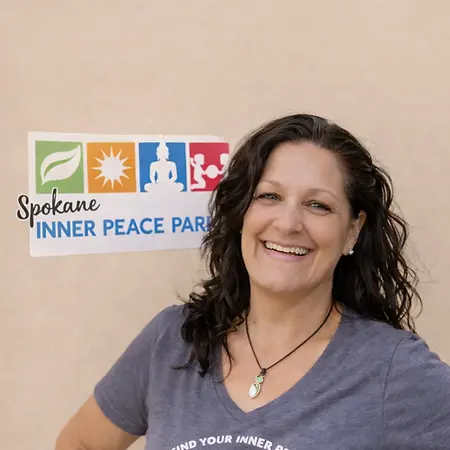
Influential Woman · Nonprofit / Social Impact
PTSD Advocate | Founder | Visionary Leader | Community Builder, Up and Atom Foundation
Spokane Valley, WA 99206
Anger isn't bitterness; It's the version of you who finally knows she deserved better.
Alia Zaidi · In Her Own Words
Waiting for the perfect time was just a prettier version of procrastinating, and most of my biggest decisions happened before everything felt fully aligned.
When She Stopped Waiting for the Perfect Time
Explore moreI didn't lose confidence during my pause. I just wasn't in rooms that demanded it. Confidence followed when I returned to work, like riding a bike.
How She Reclaimed Confidence After a Career Pause
Explore moreIn Conversation
Alia Zaidi: Well, being an influential woman to me is not about being the most flashy or the most perfect. I think that being an influential woman is really about being Consistent, honest, authentic, and showing up as yourself, even when it feels uncomfortable, and that's something that was difficult for me for sure. I believe that influence is a byproduct of how you make people feel. So when they feel heard, seen, and That you genuinely care for them, and they feel supported, well, that right there is influence. If they remember you because of how you showed up and how you made them feel. That right there, that's powerful, and that right there is influence.
What's one piece of advice you would give to younger women chasing their dreams?
Alia Zaidi: I love this question. It's very me. So the one piece of advice that I would give to younger women chasing their dreams would be: Don't wait. Quite simply, don't wait to feel perfect. Uh, don't wait to feel confident to start. Those things aren't a They aren't a prerequisite. I was very insecure and unsure about what I was doing when I started, and that is natural. All the tools and the confidence that you need is gonna come. When you get out there and start doing, start listening to people, start making decisions, and quite honestly, start making mistakes, because you're gonna learn from those mistakes. They're important actually. And If something feels off, it probably is, so trust your instincts. Don't be desperate, because when you're desperate, That's when you have a tendency to be taken advantage of. So, if something's too good to be true, it probably is. The last thing I'm gonna say is, If you are waiting for somebody to come along and give you permission to start: don't. You are the one that needs to give yourself permission to start. So, get out there, get up, and go chase those dreams, because doing it is gonna be what makes you happy. Enjoy it. These are your dreams.
Her Story
Alia Zaidi is a Spokane-based nonprofit founder and mental health advocate committed to building innovative, accessible spaces that foster connection, creativity, and healing. She is the founder of Up and Atom Foundation, a 501(c)(3) nonprofit, and the creator of its flagship initiative, Spokane Inner Peace Park (SIPP).
Spokane Inner Peace Park is a STEAM-based indoor park concept developed through Up and Atom Foundation to address social isolation, seasonal mental health challenges, and limited access to affordable wellness and educational spaces. The project integrates science, imagination, and play to create inclusive environments where children, teens, and families can engage, learn, and connect year-round.
Alia’s work is informed by a lifelong understanding of trauma and mental health, shaped by complex and cumulative experiences rather than a single defining event. This perspective guides her emphasis on trauma-informed, preventive, and community-centered approaches that support mental well-being before crises arise. She is particularly focused on challenging common misconceptions about PTSD and advocating for broader awareness of how prolonged or layered trauma impacts individuals and communities.
Drawing on more than 20 years of professional experience in leadership, operations, and organizational growth at national companies, Alia brings a strategic, systems-level mindset to nonprofit development. Through Up and Atom Foundation and Spokane Inner Peace Park, she has led STEAM and wellness programming, cultivated partnerships with local organizations, and advanced initiatives that blend science, creativity, and human connection.
Alia continues to expand Spokane Inner Peace Park through collaboration, sponsorship, and shared-use spaces, while advocating for equitable access to mental health–supportive environments. Her work reflects a commitment to practical, scalable solutions that help people of all ages feel supported, inspired, and connected—especially in regions where seasonal and economic barriers limit access to wellness resources.
IN SUPPORT OF UP AND ATOM FOUNDATION AND ITS FLAGSHIP INITIATIVE, SPOKANE INNER PEACE PARK, ALIA IS UNDERTAKING AN OFFICIAL GUINNESS WORLD RECORDS ATTEMPT AS A STRUCTURED ENDURANCE-BASED ADVOCACY AND FUNDRAISING INITIATIVE.
Her Interview
01What do you attribute your success to?
I attribute my success to persistence paired with purpose. Years of leadership experience taught me how to execute and adapt, while my lived experience with mental health challenges gave me clarity about the kind of impact I wanted to create. By combining structure with empathy, and strategy with creativity, I’ve been able to build initiatives that respond to real community needs.
02What’s the best career advice you’ve ever received?
The best career advice I’ve received is to stop waiting for permission to build what I know is needed. If a solution doesn’t exist, that’s often the invitation to create it.
Impact matters more than perfection. Progress, learning, and adaptability are what move meaningful work forward.
03What advice would you give to young women entering your industry?
My advice to young women entering this space is to choose work you genuinely believe in, and then commit to learning how to build it well. Don’t rely on passion alone. Credibility, follow-through, and collaboration are what earn trust and create lasting impact.
04What are the biggest challenges or opportunities in your field right now?
One of the biggest challenges in my field is meeting the growing demand for accessible, trauma-informed mental health and community-based wellness resources in an increasingly constrained economic environment. Funding has become more competitive, risk tolerance has narrowed, and both grant-makers and private partners are often hesitant to invest in innovative or nontraditional models—particularly those that require physical space, long-term commitment, or cross-sector collaboration. Even in-kind support, such as reduced-rate leases or shared-use spaces, has become more difficult to secure.
At the same time, this challenge highlights a significant opportunity. As traditional systems struggle to meet rising needs, there is increasing momentum for creative, preventative, and community-driven solutions that bridge education, wellness, and connection. Integrating STEAM-based programming with mental health–supportive environments offers a scalable, inclusive approach that resonates across sectors. I see a growing opportunity for partnerships that rethink how resources are shared, how impact is measured, and how communities invest in spaces that support well-being before crisis intervention is needed.
05What values are most important to you in your work and personal life?
The values most important to me are creativity, connection, and presence. In both my work and personal life, I prioritize creating space for curiosity, time in nature, and meaningful relationships—especially with my children. These values also show up through practices that keep me grounded and engaged, such as artistic swimming, gardening, and music, which reinforce the importance of balance, creativity, and intentional living.
Her Content Hub
A powerful exploration of PTSD recovery that reveals why self-forgiveness must come before forgiving others. Alia Zaidi shares her journey of learning to embrace her past and the courage it took to survive.
Learning to forgive yourself first—the hardest and most essential part of healing from trauma.
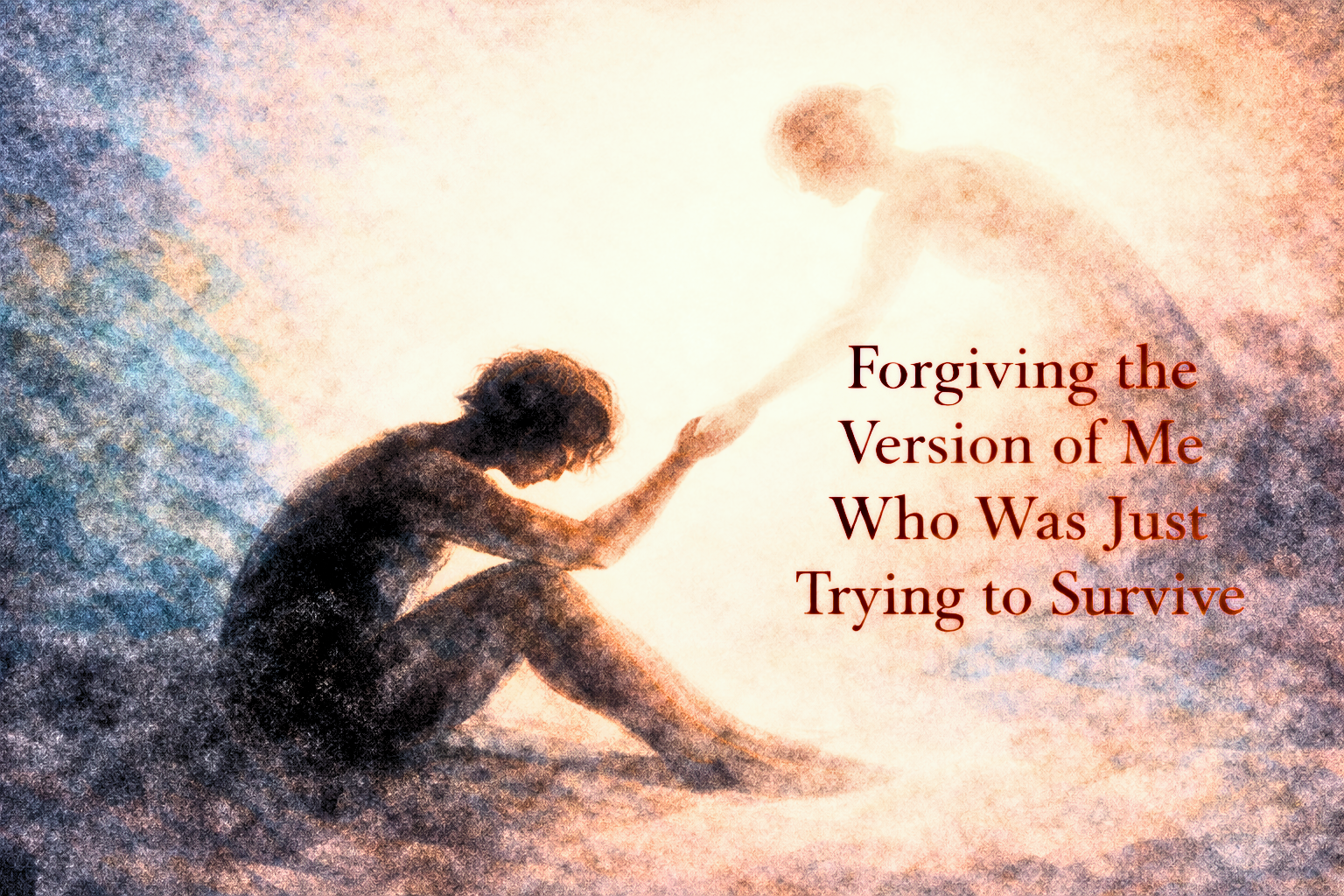
I want to share an article about PTSD, recovery, and something that doesn’t get talked about enough: forgiving yourself.
This part is the hardest for me. I’m still in it.
I struggle when old photos pop up on my phone. “Memories,” they’re called. But instead of nostalgia, they punch me in the chest. I see a version of myself who was broken. Angry. Sharp-edged. Surviving, but not living. I wish I could go back and redo those years. I wasn’t who I am today. I wasn’t properly medicated—because of stigma, because certain doctors wouldn’t listen, because asking for the right help felt shameful.
So instead of looking back fondly, I hurt. I cry. I cringe at how reactive I was. How mean I could be. How tired. How stuck.
I wish I had loved my kids differently in those years. I wish I had been stronger sooner. I wish I had pulled us out faster. I replay it all in my head, imagining some alternate timeline where I magically knew then what I know now.
But living there is a hindrance. It keeps you trapped.
This is where I started to realize that maybe I’m not alone in struggling with forgiveness. Because the way forgiveness is usually framed never quite worked for me. We’re often told that healing begins by forgiving the people who hurt us. Let go of the anger. Release the resentment. Move on.
But there’s a saying we hear all the time: you can’t expect someone else to love you if you don’t love yourself. I think the same applies to forgiveness.
For a long time, I hyper-focused my energy on trying to forgive others for their behavior. I thought that was the work. What no one ever told me is that forgiving the people who hurt you is incredibly difficult when you haven’t forgiven yourself first.
I was asking myself to offer grace outward while still holding shame inward.
That imbalance kept me stuck. I wasn’t failing at forgiveness. I was just starting in the wrong place.
As hard as it is, there comes a point where you have to tell yourself: I forgive you.
You were doing the best you could with the tools you had at the time. You did what you needed to do to survive. Yes, you wish it had happened sooner. Of course you do. But you did do it—and that took courage.
And as cliché as it sounds, those moments also played a role in shaping who I am now. Not in a romanticized way. Not in an “it all worked out” way. But in a real, uncomfortable way.
They taught me what I will never tolerate again. They sharpened my empathy. They made me fiercely protective of my children, my peace, and my boundaries.
I don’t celebrate what happened. I don’t excuse it. But I can acknowledge that surviving it changed me—and that the version of me standing here now exists because she endured what she did.
One day, when your children are adults, they will understand more than you think. They already love you now. Fully. As you are. That part matters more than we give ourselves credit for.
So soak that in—right now. Don’t let years pass and look back again wishing you had been more present, more gentle with yourself, more aware of how much love was already there.
Healing isn’t about erasing the past. Sometimes it’s about finally putting your arm around the version of yourself who didn’t know better yet and saying, I’ve got you now.
If you’re struggling with this too, you’re not weak. You’re human. And you’re allowed to forgive yourself first.
— Alia Zaidi
I do TED Talks and public speaking, and I’m always open to conversation and collaboration. Reach out to me at:
TheCometCrew@SpokaneInnerPeace.org
A powerful exploration of how women's PTSD and trauma are persistently dismissed and misunderstood, challenging stereotypes and advocating for compassion, accurate recognition, and the strength women demonstrate while healing.
Challenging the stigma: Why women's PTSD is real trauma, not emotional fragility.
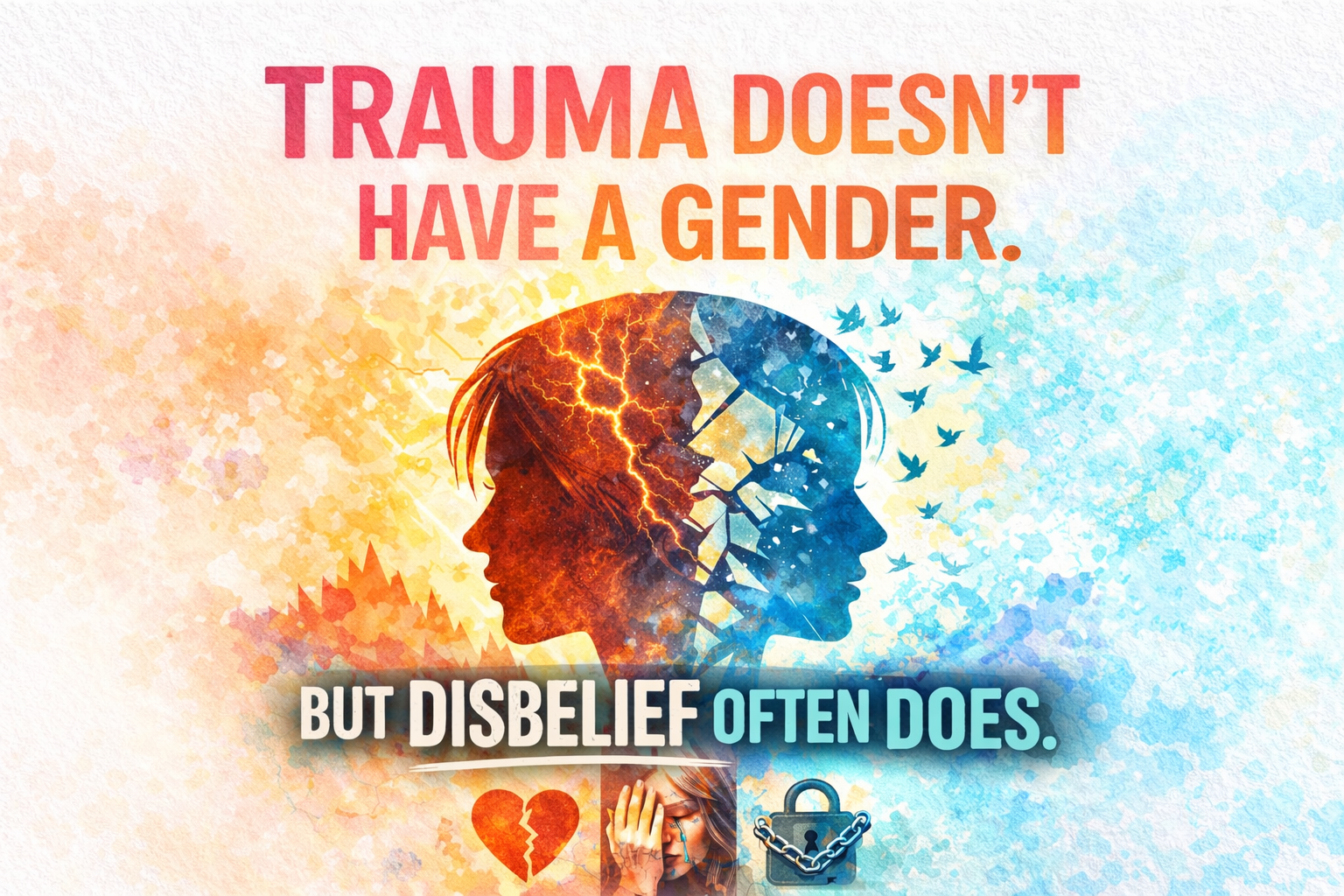
For many women, living with PTSD doesn’t just mean navigating our own nervous systems. It also means navigating the disbelief of others.
There is a persistent stereotype that continues to shape how trauma is understood: that “real” PTSD belongs to men who have been to war, while women’s trauma is emotional, exaggerated, or something we should simply “get over.” When women talk about boundaries, triggers, or long-term stress responses, the reaction is often dismissive.
“Oh God, you’re triggered again.”
“You’re too sensitive.”
“It wasn’t that bad.”
“That’s not real PTSD.”
These comments don’t just minimize pain. They reinforce the idea that women’s experiences are inherently fragile or dramatic.
What is rarely acknowledged is that trauma isn’t defined by spectacle. It isn’t measured by how extreme a story sounds to someone else. Trauma is defined by how the nervous system absorbs and stores stress over time. Many women live with cumulative trauma shaped by repeated experiences that may not make headlines but still leave lasting psychological and emotional imprints.
PTSD doesn’t only come from war zones. It comes from prolonged exposure to fear, instability, loss, and violations of safety—especially when those experiences are normalized, dismissed, or never properly addressed.
And yet, when women express discomfort or set boundaries, we are often treated as though we are asking the world to tiptoe around us.
Here is the truth:
Women with trauma are not made of glass.
We don’t need to be sheltered from humor, conversation, or real life. Experiencing sexual violence doesn’t mean every mention of sex is a trigger. Experiencing abuse doesn’t mean we fall apart whenever difficult topics are discussed. Trauma does not turn women into fragile objects that require constant protection from language or reality.
What actually triggers many of us isn’t what people say.
It’s how people behave.
Hostility.
Aggression.
Control.
Dismissiveness.
Power plays.
A lack of emotional awareness.
Those are the signals our nervous systems recognize.
In fact, one of the unexpected strengths many trauma survivors develop is heightened perception. Years of navigating unsafe environments often sharpen our ability to read energy, tone, and intention quickly. What some call “being sensitive” is often simply being perceptive.
Recognizing patterns isn’t weakness.
It’s awareness.
Setting boundaries isn’t overreacting.
It’s self-respect.
Naming discomfort isn’t drama.
It’s communication.
Women are not asking for special treatment. We are asking for accurate understanding.
Trauma doesn’t have a gender.
But disbelief often does.
When women are told their experiences “don’t count,” the message becomes clear: our pain is inconvenient. Our needs are excessive. Our healing is optional.
And yet, women continue to lead, build, nurture, create, and contribute—often while carrying invisible weight.
We are stronger than we are given credit for.
Not because we stay silent.
But because we learn to heal, adapt, and move forward anyway.
If we want healthier relationships, workplaces, and communities, we have to stop minimizing women’s emotional realities. Healing doesn’t require comparison. It requires compassion.
Women don’t need to be tougher.
The world needs to be more informed.
Author
Alia Zaidi
Nonprofit Founder | Mental Health Advocate | Community Builder
Founder, Up & Atom Foundation
Creator, Spokane Inner Peace Park
🔗 https://www.linkedin.com/in/aliazaidi/
🧠 https://influentialwomen.com/blog/when-science-play-and-connection-become-preventive-care-85583
🌱 https://influentialwomen.com/blog/leadership-that-builds-what-doesnt-yet-exist
Alia Zaidi explores how play, science, and intentional community spaces foster mental well-being and connection, challenging the myth that wellness only matters during crisis.
Building trauma-informed spaces where science, play, and connection become tools for healing and community well-being.
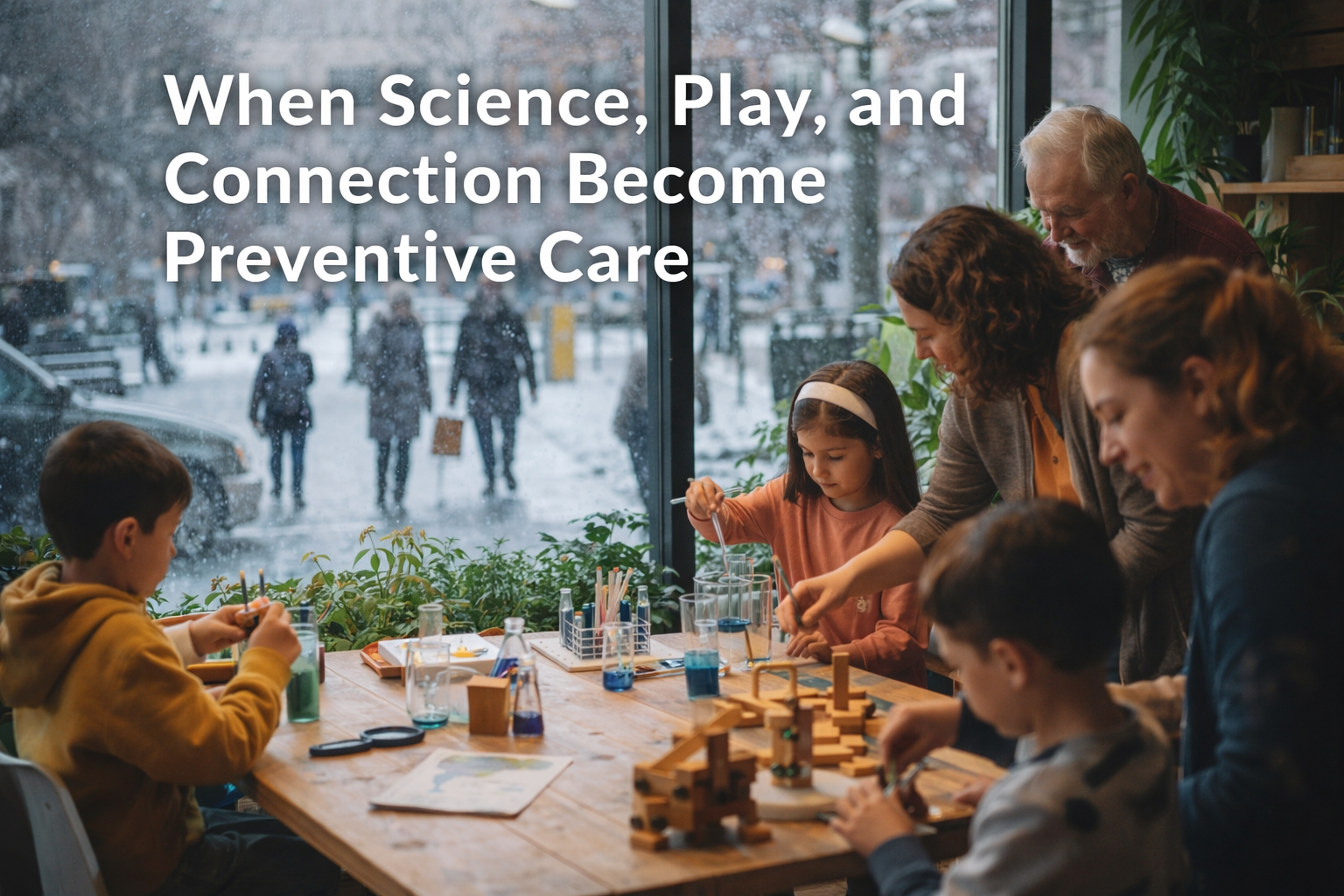
By Alia Zaidi
Founder, Up & Atom Foundation | Creator, Spokane Inner Peace Park
Human beings don’t thrive on productivity alone. We thrive on curiosity, connection, and environments that allow us to feel safe, engaged, and seen.
For much of my career, I worked in high-performance environments where efficiency, metrics, and results defined success. Later, through lived experience and community work, I came to understand something just as critical: mental well-being is shaped long before crisis intervention is ever needed.
My roots are in child development, where play is understood not as entertainment, but as a primary language of learning. Before we can articulate emotion, we regulate it through movement, exploration, creativity, and interaction. That truth does not disappear in adulthood—it simply becomes easier to overlook.
Living with long-term, complex PTSD shaped my understanding of how environments influence regulation, learning, and connection. Trauma is frequently misunderstood as a single defining event, when many people experience it as layered and cumulative over time. For those individuals, healing rarely happens in isolation or through one-off interventions. It happens through consistent access to supportive spaces that encourage curiosity, grounding, and connection.
Science is often framed as academic or technical, something reserved for classrooms or careers. But at its core, science is curiosity in action. It invites questions, experimentation, and engagement with the world. When science is paired with creativity and play, it becomes accessible—not just for children, but for adults who may have lost touch with that sense of wonder.
In Spokane and across the Inland Northwest, long winters quietly intensify isolation. Reduced daylight, fewer gathering spaces, and limited opportunities for movement and connection impact mental well-being across all ages. What many communities lack are non-clinical, non-transactional spaces designed to foster connection regardless of income, background, or diagnosis.
That belief led me to create Spokane Inner Peace Park, the flagship project of the Up & Atom Foundation. The vision is simple but ambitious: to build STEAM-focused, trauma-informed community spaces where science, imagination, and play function as preventive tools for mental health and social isolation. Spaces where children explore freely. Spaces where adults rediscover curiosity. Spaces where connection is intentionally built into the environment.
“Connection, curiosity, and creativity are not extras. They are foundational to community health.”
— Alia Z.
I do TED Talks, public speaking, and I am always open to conversation and collaboration. Reach out to me at: TheCometCrew@SpokaneInnerPeace.org
Copyright Reserved 2025
Join Influential Women and start making an impact. Register now.