Explore why succession planning is critical for hospitality leaders, how to build strong leadership pipelines, and strategies for identifying and developing future executives to ensure organizational resilience and sustained growth.
Her Story
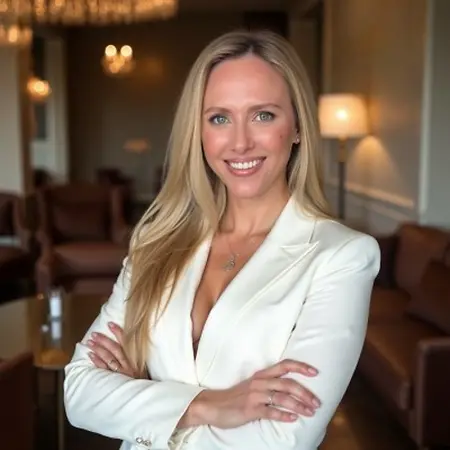
About Alice
I discovered my passion for the hospitality industry when I saw the Food Network for the first time as a kid and fell in love with food and cooking. I always knew I wanted to work in the industry, so I studied both the industry and business in college while working in restaurants, waiting tables, and putting myself through school. I moved on to manage restaurants and then opened restaurants, thinking I would one day run a restaurant company. I didn't expect to get into recruiting, but when I decided to take a break from operations, I joined HVS Executive Search and it just clicked. I started as an associate and implemented a training program because we never had one and I was passionate about it. That visibility and initiative really put me on the track to become CEO. I'm now the first female CEO at our company and the youngest, overseeing our global operations across the Americas, Europe, Asia Pacific, Middle East and Africa, and India. I'm very passionate about addressing the gender gap in hospitality leadership, where women make up over 50% of the workforce but only 6% of hospitality CEOs are women. I'm actively involved in women-focused organizations and nonprofits, and I'm doing a TED Talk-style presentation for a nonprofit specifically for women in hospitality.
Her Interview
Ten minutes with Alice
01What do you attribute your success to?
I attribute my success to starting work from a very young age and always working, even while going through school, which instilled a strong work ethic in me. I needed the money, so I worked in the industry out of necessity, and that gave me not only a head start in my career but almost 10 years of experience by the time I graduated college, even if I started washing dishes. Having that work ethic and starting early definitely contributed to my success. The way I treat people, being empathetic and genuine, has been a big part of it as well. I also stopped being apologetic and started taking up space. I used to make myself smaller in rooms and qualify my sentences, but one day I decided to let my big personality out, be warm, outgoing, friendly, and truly myself even in business situations. There's no business Alice and normal Alice. I am who I am, and if people don't like it, that's their problem, not mine. When I first started doing it, I felt self-conscious and scared, but now I can't remember why I ever did it any other way. I feel so much more confident being able to stand up and say this is who I am.
02What’s the best career advice you’ve ever received?
The best career advice I ever got was to look for gaps and propose the solution before anyone else notices that something is missing. That's what I did when I noticed there was no training program. I didn't just point it out and wait for help or wait for someone else to notice it. Instead, I built a plan and then took it to leadership and said, there's no training program, here's the solution I've put together, can I do it? That advice really stuck with me and contributed to where I am today.
03What advice would you give to young women entering your industry?
The biggest thing I would say is to find something that's missing, not something that everyone knows about. Find something that is quietly going unnoticed but that could be done better, create a solution or a plan, and then bring it to a decision maker. If you go to them and say you notice there's no training program and you'd like to spearhead it, they may say sure or they may put someone else on it. But if you go to them with a plan, you're not asking them to do much. As long as your plan is good and it doesn't cost money, all of a sudden you're now a visible leader in an organization. The other thing is, when I say do extra work and make yourself more visible, I don't mean the kind of work that gets dumped on women all the time, like taking notes in meetings or coordinating goodbye lunches or ordering birthday cakes just because you're the woman. I mean something you're actually passionate about that you'd like to be working on. The more you show your colleagues and the people you work for that you stand up, that you take ownership of things, that you are loud and take up space and are not going to quietly shrink into the background, the less they'll think of you as the person who should be taking their notes and doing their lunch orders.
04What are the biggest challenges or opportunities in your field right now?
The biggest thing is that the hotel and restaurant industries have always been rather old school and slow to adapt to new ways of doing things, to new tech, slow to add diversity, slow to add women. A big generation of people are retiring or moving on because it's always been an industry where people work very late into their career. We're hitting a point right now where a lot of people are moving on, so there's this changing of the guard, which I think is exciting. It also means that people who went to college during COVID and have lived completely different lives and have very different values and expectations are the ones entering the workforce. Understanding what they are looking for and how they respond in a workplace environment is going to be a challenge for all leaders. When I went to work for the industry, it was still, you do what you do, you work the extra hours, people are not always politically correct, that's the world we live in, and that's not gonna fly with a lot of the people who are coming into the industry now. All leaders are going to need to really focus on how we evolve while still maintaining our identity, and how do we connect with the next generation of workers coming into the industry.
05What values are most important to you in your work and personal life?
The values that are most important to me carry over from work to personal. Making a job change is one of the biggest decisions a person can make in their life, after marriage and kids. Even though my business model is we're hired by the client and we represent the employer, we owe just as much to the employee as we do to the client, even though they're not the one paying us. They're putting trust in us while they make a huge life decision, and we're guiding them through that. That's really how I feel about people in general. You have to be empathetic with everyone that you interact with. You have to understand that people are subjective and that situations and circumstances change. The most important thing you can be is truthful and authentic and be in someone's corner, whether that's family, friends, or business relationships. That authenticity and being there to support them and understanding them in an empathetic manner are the only ways to treat other human beings.
Her Content Hub
Articles by Alice
Future-Proofing Hospitality: Rethinking Succession Planning

In hospitality, people are the product. Yet when it comes to planning for future leaders, the industry often drops the ball. According to research, 60% of companies lack a CEO succession plan, and only 14% believe they are doing it effectively. That is not just a talent issue but a strategic risk that can impact guest satisfaction, brand integrity, and operational stability.
Succession planning is more than a contingency plan. It is a long-term investment that should be embedded into a company’s strategic DNA. Unfortunately, many hotel operators—especially those in family-owned and founder-led organizations—delay addressing it until a departure or crisis forces them to act. This reactive approach invites disruption. A proactive strategy, on the other hand, builds continuity, resilience, and sustained value.
It is time for hospitality leaders to treat succession planning as a future-focused investment in organizational health, not just a fallback measure.
The Hidden Costs of Poor Planning
Succession gaps ripple through every layer of an organization. Poorly planned leadership transitions can increase turnover and knowledge loss while decreasing morale. These effects often translate into lower service quality and an eroded guest experience.
For example, Cornell University research has shown that the average cost of replacing a hotel employee can approach $10,000 when accounting for recruiting, training, and lost productivity. For leadership roles, those costs rise exponentially.
Family-owned hotels are especially vulnerable to the negative consequences of poor succession planning. Studies suggest that two-thirds of such properties will undergo ownership changes in the coming years, yet most still lack structured transition plans. In many cases, succession becomes an emotionally charged issue rather than a strategic priority.
What is at stake is not just continuity. It is the long-term viability and legacy of the brand.
A lack of clear planning also creates uncertainty at every level of the organization. Staff may become disengaged or begin seeking new opportunities if they sense instability at the top. Vendors and partners may hesitate to make long-term commitments. Guests can often feel the ripple effects as well, especially when service consistency suffers during periods of internal transition.
Moreover, reputational damage from a poorly managed transition can be difficult to reverse. In an industry where word of mouth and brand trust are paramount, even a temporary decline in leadership effectiveness can have lasting consequences.
From Backfill to Bench Strength: Rethinking Readiness
Too often, succession planning is reduced to identifying a second-in-command and filing away a backup plan. But real readiness is about cultivating a deep bench of future leaders.
Companies with strong leadership pipelines tend to outperform their peers. According to a 2019 study, strategic bench-building correlates with improved financial performance and operational agility.
A proactive approach involves structured development paths, rotational assignments, and performance milestones spanning multiple leadership levels.
One example of this approach could involve a mid-sized boutique hotel group implementing a program that rotates assistant general managers through finance, food and beverage, and guest operations. Internal promotion rates increased by 40% within two years, and overall management retention improved. This illustrates how bench-building supports both operational resilience and employee engagement.
Bench strength also reduces the risk of “key person” dependencies—situations in which a single leader holds critical knowledge or relationships that the business cannot afford to lose. When multiple team members are groomed for leadership, the organization becomes more flexible, less reactive, and far more adaptable in the face of change.
What High Potential Really Looks Like
Identifying future leaders goes beyond job titles and tenure. True high-potential talent often reveals itself through adaptability, emotional intelligence, and strategic thinking.
In hospitality, cultural fit is just as important as technical skill. Future leaders must embody the brand’s values while also helping move the organization forward. Companies that broaden how they define leadership potential are more likely to foster diverse and innovative teams.
Key indicators of high potential include initiative, curiosity, comfort with ambiguity, and the ability to influence others. Individuals who seek feedback, demonstrate cross-functional thinking, and remain calm under pressure often emerge as natural leaders. Succession planning should focus on these qualities, not just résumés.
Too often, companies overlook promising individuals because they do not fit a conventional mold. But leadership does not always look like loud confidence or sharp suits. Sometimes, it looks like quiet composure during a crisis or the ability to bring calm to a high-pressure environment. High potential is not about who speaks the most in meetings—it is about who listens, learns, and elevates others.
It also helps to think in terms of leadership range: Who can adapt their style to different contexts? Who can lead both a team of direct reports and a cross-functional initiative? Who knows when to lead decisively and when to delegate? These subtler qualities often prove more valuable over the long term than technical mastery alone.
Five-Year Vision, Not Five-Week Reaction
Succession planning is not a scramble; it is a strategic roadmap. The most successful organizations take a five-year view, mapping leadership development across multiple levels.
This includes structured coaching, formal assessments, and staged career milestones. Organizations that prioritize long-term leadership development are 1.5 times more likely to outperform their peers financially.
Leadership readiness is not about predicting the future but preparing for it.
That preparation must also include room for adaptation. As business needs evolve—whether due to macroeconomic shifts, consumer behavior, or internal growth—the succession roadmap should evolve as well. A five-year vision does not mean a rigid plan; it means a dynamic one grounded in clear strategic intent.
It also requires collaboration across departments. Human resources may lead the process, but input from finance, operations, marketing, and ownership ensures alignment across the organization. When everyone is invested in building the next generation of leaders, succession becomes a shared priority rather than an isolated initiative.
What a Leadership Development Roadmap Should Include
A practical roadmap aligns talent development with business strategy. It typically begins by identifying high-potential individuals early and assigning them clear developmental goals. An example strategy might include:
- Year 1: Identify future leaders, initiate mentorships, and begin performance tracking.
- Years 2–3: Introduce cross-functional projects and leadership training.
- Year 4: Assign interim leadership roles and provide executive coaching.
- Year 5: Prepare successors for promotion and establish transition timelines.
Regular check-ins, 360-degree feedback, and leadership simulations help ensure accountability. This structured progression also boosts internal mobility and morale.
Another valuable element is shadowing, which gives emerging leaders the opportunity to observe senior decision-making firsthand. Whether sitting in on board meetings or assisting with annual planning, these experiences provide context and confidence that no classroom can replicate.
Clear communication is also essential. Employees should understand that leadership development is taking place—and that advancement is based on merit, not favoritism. Transparency around the process builds trust and encourages participation.
Succession at Every Level, Not Just the Top
Succession planning must extend beyond the CEO’s office. In hospitality, the departure of a department head, general manager, or director of operations can create operational stress if no successor is prepared.
Developing a leadership bench across key functional areas ensures continuity in service, reduces strain on remaining staff, and protects brand consistency. Identifying future leaders in finance, human resources, marketing, and guest services should be part of a comprehensive strategy.
A strong pipeline at every level enhances agility and responsiveness during transitions.
Organizations that apply the same discipline to mid-level and frontline succession planning often see increased engagement and retention. When team members see a path forward, they are more likely to stay, grow, and invest in the business. That sense of future—and possibility—becomes a powerful driver of performance.
It also strengthens the overall leadership culture. When succession planning is normalized across all levels, it becomes less about replacing individuals and more about sustaining excellence.
When to Look Outside: The Role of Executive Search Partners
There are moments in a company’s lifecycle when looking outside becomes not only helpful but necessary. This often occurs during inflection points—such as rapid growth, a generational shift in ownership, or a strategic pivot—when the leadership needs of tomorrow no longer align with the internal bench of today.
Executive search partners bring objectivity, discretion, and access to talent pools beyond a company’s immediate network. They also provide critical market data and benchmarking insights. This information helps boards and owners understand how their internal talent compares with external standards, what competitive compensation looks like, and where the industry benchmark truly stands.
In these moments, the best search firms act as strategic extensions of the organization itself, aligning long-term vision with market realities and helping companies make bold, informed decisions about the future.
The right external hire can also reinvigorate culture, introduce new capabilities, and signal positive change. When thoughtfully integrated, outside talent can complement—not compete with—internal development efforts.
Lessons From the Inside: A Future CEO’s Perspective
Having been part of a deliberate succession plan myself, I have seen firsthand how much intention it takes to prepare an internal candidate for a CEO role—and how much clarity it creates when done well. For those being positioned for leadership, the path is not always linear. Readiness is not just about results; it is also about exposure, sponsorship, and opportunities to contribute beyond one’s current title.
Future CEOs need development, yes, but they also need opportunities to step outside their functional swim lanes, influence beyond their immediate sphere, and participate in strategic conversations long before any formal transition begins.
From the inside, the clearest lesson is this: succession planning is not a moment. It is an ongoing process that requires intentional sponsorship, exposure to the board, and alignment around what the company will need five years from now—not just today.
Being groomed for leadership also requires a balance of challenge and support. Stretch assignments that test capacity, combined with access to senior mentors who provide honest feedback, can accelerate growth dramatically. When that growth is nurtured openly, with clear communication and support from senior stakeholders, it strengthens both the individual and the institution.
Resilient Leadership for a Resilient Brand
Behind every exceptional guest experience is a strong leadership structure. When that structure is left to chance, the entire organization becomes vulnerable.
Succession planning is not merely a human resources function. It is a business imperative. Companies that invest in leadership continuity are better equipped to navigate change, retain talent, and preserve brand identity.
Future-proofing begins with people. And the time to start is now.
Mixed-use hospitality developments have evolved from aspirational concepts into essential drivers of hotel success, requiring integrated design, operational sophistication, and strategic leadership to balance competing stakeholder needs while maximizing guest experiences and revenue potential.
When Hotels Become Ecosystems: The Real Impact of Mixed-Use Development
How Hotels Are Becoming the Strategic Anchor of Integrated Mixed-Use Developments

Over the past several years, I have watched mixed-use developments evolve from a nice-to-have concept into a defining factor in the success or failure of hospitality assets.
In my work with owners, developers, and operators across the hospitality landscape, I have seen this shift play out in real time. The projects that outperform treat mixed-use as an integrated ecosystem. The ones that underdeliver often approach it as simple adjacency.
Neighborhoods where people live, work, and play were once aspirational. Today, they are expected. Retail, dining, fitness, entertainment, and residential components are increasingly designed to coexist within a single ecosystem, reducing friction, maximizing convenience, and encouraging daily engagement.
Hotels are central to this shift. In many developments I encounter, the hotel is no longer just another component of the site plan. It is often the element that determines whether the broader environment feels vibrant or merely assembled.
Hotels are increasingly anchoring mixed-use developments that support how people live, travel, and interact with place. Guests want more than a room. They want access to food, culture, wellness, and community without leaving the environment they have bought into, even temporarily.
This movement toward fully integrated ecosystems is not unique to hospitality—it is emerging across industries that depend on deep consumer engagement.
As David Kuperberg, SVP of Development at UMusic Hotels, notes, the goal is to capture both artists and their superfans, who drive roughly 80% of music industry revenue. “The vision is everything in one defined environment—media, retail, and live experience—creating a hub that goes well beyond a place to stay.”
As traveler expectations continue to blur with residential and lifestyle preferences, mixed-use developments are quietly redefining hospitality itself.
The Luxury Segment Is Leading the Shift
While mixed-use adoption is broad-based, the luxury segment continues to set the pace for innovation. High-end travelers increasingly expect environments that feel curated, frictionless, and deeply integrated into their lifestyles rather than isolated hospitality experiences.
Luxury and upper-upscale hotels have led RevPAR recovery in the post-pandemic cycle, supported by resilient affluent demand and experience-driven travel patterns. Mixed-use environments naturally support these expectations by surrounding guests with retail, wellness, residential, and culinary touchpoints that extend the brand beyond the guest room.
Astute luxury developers recognize that the hotel is not simply an accommodation component. It is a brand amplifier and traffic engine for the broader ecosystem.
The Rise of Mixed-Use Hospitality
Why Mixed-Use Accelerated Post-Pandemic
Mixed-use development predates the pandemic, but recent years have seen significantly accelerated adoption. Remote work, flexible travel patterns, and a heightened focus on wellness and community reshaped how people evaluate space. Single-purpose assets proved particularly vulnerable during periods of disruption.
As the Urban Land Institute has noted, mixed-use developments offer greater resilience by diversifying revenue streams and activating space across multiple demand drivers. Hotels embedded within these environments benefit from built-in foot traffic, broader market appeal, and year-round relevance.
Another dynamic I frequently see in mixed-use underwriting is the compounding effect of complementary uses. Well-composed projects are rarely evaluated in isolation. Residential, office, and retail components often enhance the feasibility of the hotel itself while also creating opportunities to reduce the overall basis through early monetization.
Just as importantly, mixed-use planning allows developers to utilize larger land parcels more efficiently. Rather than forcing density into a single asset type, a balanced program might support a smaller key count alongside residential and retail elements, lowering the per-square-foot basis while diversifying risk across the capital stack.
Hotels as Anchors Within Larger Developments
In many mixed-use projects, the hotel is no longer a passive component tucked into the site. It functions as connective tissue, animating public spaces, activating food and beverage venues, and setting the experiential tone for the broader development.
Lobbies spill into plazas. Rooftop bars double as community gathering spaces. Wellness may open the door, but in the highest-performing projects, resident engagement extends well beyond the spa to restaurants, co-working spaces, social programming, and other areas that keep the ecosystem consistently active.
According to Hospitality Net, this anchoring role elevates the hotel’s strategic importance while increasing operational complexity.
Real-world projects illustrate this clearly. Denver Union Station demonstrates how hospitality can help catalyze an entire district when thoughtfully integrated. What was once an underutilized transit hub has evolved into a highly activated mixed-use destination where the hotel, food and beverage programs, retail, and transportation flows reinforce one another throughout the day.
At the destination scale, projects such as Deer Valley East reflect a different but equally important model: mixed-use not as urban infill, but as deliberate ecosystem creation. In these environments, hospitality helps establish the experiential tone early, shaping residential demand and the long-term positioning of the broader resort community.
Insights from the Urban Land Institute illustrate that well-executed mixed-use districts can outperform single-use assets in both dwell time and cross-spending.
Market-Specific Approaches
The expression of mixed-use hospitality varies by market. Urban projects often integrate hotels with office towers, luxury residences, and transit hubs. Resort and destination markets blend hospitality with branded residences, retail promenades, and experiential programming.
Increasingly, secondary and tertiary markets are adopting mixed-use concepts at smaller scales, recognizing that integrated environments are no longer limited to global gateway cities.
How Mixed-Use Is Changing Hotel Design
Designing for Multiple Audiences
One of the most significant design shifts involves serving multiple constituencies simultaneously. A single hotel lobby may host overnight guests, residents, office tenants, and local community members at the same time.
Designing for these overlapping audiences requires intentional zoning, intuitive wayfinding, and flexible layouts that support different behaviors throughout the day. In practice, this is where many otherwise well-conceived projects begin to experience friction. The design challenge quickly becomes evident in traffic flow, noise bleed, and competing user expectations.
The Blurring of Public and Private Space
Nowhere is this shift more evident than in the modern hotel lobby. Once a transitional space, the lobby has evolved into a living room, co-working area, café, and social hub often shared with the surrounding community.
This reinforces the hotel’s role as a communal anchor rather than a closed enclave, aligning hospitality more closely with daily life.
Shared Amenities vs. Hotel-Only Spaces
Mixed-use developments force critical decisions about which amenities are shared and which remain exclusive. Fitness centers, pools, spas, and meeting spaces can drive incremental revenue and activation when shared, but they also introduce complexity surrounding capacity, privacy, exclusivity, and brand expectations.
Clear delineation and thoughtful scheduling are essential. In one mixed-use project I observed, the hotel delivered strongly on its internal brand standards, but inconsistent lighting, signage, and service levels in adjacent co-owned areas created a perceptible break in the guest experience. Guests rarely distinguish between ownership boundaries; they experience the environment as a whole.
Without tight cross-stakeholder alignment, even strong individual components can feel disjointed.
Vertical Complexity and Circulation
Many mixed-use hotels stack functions vertically: retail at street level, lobby and food and beverage above, guest rooms higher up, and residential or office components elsewhere in the tower.
This vertical complexity introduces challenges related to circulation, acoustics, privacy, and security. Elevator zoning, back-of-house separation, and sound mitigation become fundamental design considerations rather than operational fixes.
As Spencer Kallick, real estate and land use attorney and Operating Partner at Allen Matkins, cautions, “Mixed-use projects often break down when they fail to anticipate shared uses. Seemingly simple elements—amenities, restrooms, and elevators—must be thoughtfully planned from the outset.”
Operational Implications for Hotels
Staffing and Service Models
Operating within a mixed-use environment requires staff to manage a broader range of interactions. Front-of-house teams engage with residents and locals as frequently as overnight guests. Security teams must balance openness with controlled access. Engineering and housekeeping teams often coordinate with non-hotel stakeholders.
Traditional service models frequently require recalibration. Staff at all levels must be prepared to interact with guests, residents, and unaffiliated visitors, while exercising the judgment needed to manage a wide range of situations.
In luxury mixed-use environments, expectations are even more nuanced. Staff must seamlessly shift between guest, resident, member, and local interactions without visible disruptions in the experience. Hospitality Net reports that cross-trained teams and integrated service models are increasingly essential to maintaining consistency across user groups.
Managing Brand Standards in Shared Environments
Brand consistency becomes more difficult when spaces are co-owned or co-used. While the hotel operator may control the lobby experience, adjacent retail or residential areas may fall outside direct control.
Aligning materials, lighting, branding, and service philosophy requires early coordination and clear governance. Municipal regulations can further complicate alignment, particularly regarding signage and public realm requirements.
Revenue Management Complexity
Mixed-use hotels benefit from diversified revenue streams, but managing them requires more sophisticated coordination. Parking, wellness memberships, retail leases, and experiential programming often involve revenue-sharing structures or independent operators.
Luxury mixed-use assets are also expanding the definition of hotel revenue. Leading projects increasingly underwrite:
- Wellness memberships
- Private club access
- Brasserie and rooftop activation
- Branded residential service fees
- Experiential programming
What is increasingly reshaping the underwriting model is the introduction of recurring revenue tied to residential and membership components. In several luxury mixed-use environments I have reviewed, the initial residential sale provides immediate capital recovery, while ongoing club dues, service fees, and amenity memberships generate highly predictable long-term income.
Just as importantly, these ecosystems rarely monetize only the primary owner or traveler. Residents and members bring friends, family, and business associates into the environment, expanding dwell time, cross-spending, and overall lifetime value far beyond the original buyer.
Private residential resort models such as Yellowstone Club demonstrate the strength of this approach. The combination of high-margin real estate sales followed by recurring membership revenue creates a fundamentally different financial profile than a standalone hotel asset.
JLL notes that mixed-use luxury developments that successfully monetize shared amenities can generate significantly higher total revenue per square foot than standalone hotels.
Notably, the economics of mixed-use development are also reshaping where these projects are most viable.
Kuperberg also points to the broader market forces at play. “Public companies often face pressure to scale quickly through acquisition,” he notes. “At the same time, rising labor costs and union dynamics are making certain gateway markets more challenging. We’re seeing real momentum shift toward secondary and tertiary markets where projects can be more economically viable.”
Governance and Stakeholder Alignment
Successful mixed-use projects rely on clearly defined governance structures among hotel operators, residential HOAs, office tenants, and developers. In reviewing assets across the market, governance ambiguity remains one of the most persistent sources of long-term friction.
Brand, Experience, and Identity
The Rise of the Lifestyle Ecosystem
Global luxury groups have spent the past decade building closed-loop ecosystems designed to capture a greater share of consumer spending across multiple lifestyle categories.
Consider LVMH. Within a single corporate family, a consumer can purchase luxury goods, dine at branded restaurants, stay at affiliated hotels, and engage with adjacent experiences. More than ever, mixed-use hospitality developments are pursuing a similar objective through physical space rather than through brand portfolios alone.
The strategic question is no longer simply, “How do we fill rooms?” but rather, “How much of the guest’s lifestyle can we thoughtfully capture within one environment?”
Maintaining a Distinct Hotel Identity
One of the greatest risks in mixed-use environments is brand dilution. When a hotel becomes overly integrated, it can lose its sense of arrival and emotional resonance.
An increasingly important question is whether design should tell the story or whether the story should dictate the design. In my experience, particularly with historic assets or irreplaceable natural settings, allowing the physical context to lead often produces the most authentic result. Over-programmed storytelling can feel imposed, while design that responds organically to place tends to create a more intuitive guest experience.
Kuperberg sees meaningful opportunity in the current landscape, but with an important caveat. “There is whitespace emerging as many boutique brands have been absorbed by larger platforms,” he says. “But success requires agility and creativity. These concepts have to feel organic—they can’t feel forced.”
What Owners and Developers Are Getting Right—and Wrong
Early Planning Pitfalls
Despite the momentum behind mixed-use hospitality, many projects still stumble during early planning. Common missteps include underestimating operational complexity, oversharing amenities without proper capacity modeling, and prioritizing aesthetic cohesion over functional separation.
Several first-generation U.S. mixed-use projects struggled when shared wellness and pool facilities became oversubscribed, creating friction between hotel guests and residential owners. According to the Urban Land Institute, inadequate upfront planning around user flow, permissions, and peak demand management remains a common source of post-opening tension.
I have also seen numerous instances in which a well-intentioned local sponsor carries a compelling vision but lacks the fully developed infrastructure required to execute it effectively. Mixed-use projects are unforgiving when the core team is assembled too late. Early decisions regarding zoning, utilities, and municipal negotiations can unintentionally constrain what the project ultimately becomes. The entitlement and advisory strategy established early in the process often determines long-term success.
Kallick emphasizes that assembling the right advisory team early is critical. “Hiring the right architect, engineers, and land use attorney with local market knowledge can materially reduce risk and accelerate delivery.”
He adds that entitlement strategy must prioritize flexibility: “When entitlement applications are submitted, the final hotel or food and beverage operators may not yet be known. Flexibility at this stage is essential to delivering a successful mixed-use project.”
Kallick also notes strong municipal support for well-conceived projects, particularly those anchored by hospitality, given their ability to generate transient occupancy taxes and activate districts throughout the day and evening.
The most successful developments bring together a multidisciplinary team early, including operators, residential sales teams, interior designers, architects, landscape specialists, wellness consultants, and technical advisors. Having the right voices in the room from day one surfaces conflicts early and materially improves long-term feasibility.
The Importance of Operator Involvement
One of the clearest differentiators between high-performing mixed-use assets and those that underdeliver is the timing of operator engagement. Projects that involve the hotel operator early in the planning process consistently demonstrate stronger operational flow and guest satisfaction.
In my experience, early operator involvement is one of the strongest predictors of whether a mixed-use hotel will feel seamless at opening or spend its early years working through avoidable friction.
Designing for Flexibility
Perhaps the most overlooked success factor in mixed-use hospitality is long-term adaptability. Rigid designs optimized only for opening-day conditions often struggle as consumer behavior evolves.
Developers who get this right prioritize:
- Modular public spaces
- Infrastructure that supports future wellness or club programming
- Back-of-house layouts that allow staffing models to evolve
- Technology systems that can integrate future tenant needs
According to JLL, assets designed with flexible programming tend to demonstrate stronger long-term performance and liquidity.
What This Means for the Future of Hotel Design
Hotels are no longer being designed as isolated destinations, but as experiential connectors. Design decisions made today must account for how assets will evolve over the next 10 to 20 years.
The Road Ahead
The convergence of luxury branding and mixed-use planning will only accelerate. Developers are underwriting projects based on system-wide value creation. The hotel serves as the emotional front door, residential drives long-term stability, and retail and wellness create daily activation.
From my vantage point working with owners, developers, investors, and operators globally, the organizations getting this right are treating mixed-use not as a design exercise, but as an integrated strategic discipline.
The complexity of these environments is increasing, and so is the premium placed on leadership teams that understand how to operate within this new landscape.
In a mixed-use world, design is no longer just about aesthetics. It is about strategy, execution, and having the right leadership in place to bring these increasingly complex environments to life.
Exploring the dual nature of International Women's Day in 2026: celebrating real progress in leadership representation while confronting persistent gaps at the executive level, and how diverse leadership reshapes organizational culture.
Why International Women’s Day Feels Both Necessary and Encouraging in 2026
The Progress Is Real—But the Path to the Top Remains Narrow

International Women’s Day has always carried a dual identity. It is both a celebration of progress and a reminder of how far there is still to go. In 2026, that tension feels sharper than ever.
On one hand, the progress is real. Women today make up nearly 46% of managers in the United States, a remarkable increase from 29% in 1980. Across global companies, women now hold about 34% of senior leadership roles, slowly climbing year after year.
But the view from the very top still tells a different story.
Only around 11% of Fortune 500 CEOs are women today—a number that has barely moved in recent years. Across large U.S. public companies, women occupy roughly 7% of CEO roles.
The Quiet Reality of Leadership
For many women in leadership today, the challenge is not just getting the job. It is navigating the expectations that come with it.
Women leaders often face a persistent double standard. They are expected to be decisive, but not abrasive; ambitious, but not threatening; collaborative, but still authoritative; confident, but not arrogant; assertive, but still likable.
Women are criticized for being too direct, yet questioned when they are diplomatic. Too visible, but overlooked if they step back. Too tough, but doubted if they show empathy. The expectations can be contradictory, but they have also shaped a generation of leaders who are thoughtful, resilient, and deeply aware of the people and environments around them.
Research frequently shows that women leaders must navigate a narrower band of acceptable behavior than their male peers. Yet many of the leadership qualities most valued today—emotional intelligence, adaptability, and inclusive decision-making—are the very traits women have long been encouraged to develop.
In many ways, the world is slowly catching up to a leadership style women have been practicing for decades.
A Pipeline That Still Narrows at the Top
Across many industries, the gap becomes even more pronounced when comparing the broader workforce to the executive level.
In hospitality, for example, women make up well over half of the workforce in hotels and roughly half of management roles. Yet women represent only about 6% of hotel company CEOs.
A similar dynamic exists in the restaurant industry. Women account for more than half of the restaurant workforce and nearly half of management positions, but only about 8% of CEOs at major restaurant companies.
The pipeline clearly exists. The final step to the top is where it narrows.
Hospitality is an industry powered every day by women leading teams, operating properties, and shaping guest experiences on the ground. Yet those same leaders remain significantly underrepresented in the executive seats where broader strategic decisions are made.
Having spent my career in hospitality—and now leading within it—those numbers are not just statistics. They reflect the reality many of us see firsthand in leadership meetings and boardrooms. Women have steadily moved into management and executive pipelines, but the final step into top leadership roles remains disproportionately rare.
And yet, the fact that these conversations are happening more openly—and that more women are advancing through the ranks than ever before—is itself a sign of meaningful progress.
Progress Is Real — But It’s Uneven
One of the more complicated truths about gender equity in leadership is that progress rarely happens in a straight line.
In some industries, representation has stalled or even declined. A recent report examining hedge funds and private equity partnerships found that women account for only about 15% of partners, with virtually no improvement over the past year.
At the same time, other signals are encouraging.
Female CEOs at major public companies have begun to out-earn their male counterparts on average, suggesting that when women do reach top leadership positions, they are increasingly recognized and rewarded for their performance.
This contradiction—visible progress alongside persistent gaps—is exactly why International Women’s Day still matters. It reminds us that meaningful change often unfolds gradually through persistence, visibility, and the steady expansion of opportunity.
Representation Changes What Leadership Looks Like
There is another reason representation matters that is often overlooked: it does not just change who holds leadership positions; it changes how leadership itself is defined.
When leadership becomes more diverse, organizations tend to rethink outdated assumptions, decision-making processes, and definitions of success.
That shift does not happen overnight. But it compounds over time. Each new leader who brings a different perspective expands the possibilities for those who follow.
The Next Phase of Progress
If the last two decades were about opening the door, the next phase is about normalizing who walks through it. Real progress will not be measured by a single milestone or headline statistic.
It will happen when:
- Women leading major companies is no longer considered noteworthy
- Leadership pipelines consistently include women at every level
- The idea of who “looks like a CEO” becomes far more expansive
We are not there yet, but the trajectory is clear. And that, perhaps, is the true spirit of International Women’s Day.
Not the illusion that equality has already been achieved, but the recognition that progress—while incomplete—is real, measurable, and accelerating.
And every woman who rises to lead does more than advance her own career; she expands what leadership can look like and creates space at the table for an entire generation to follow.
Join Influential Women and start making an impact. Register now.