Influential Woman · Non Profit
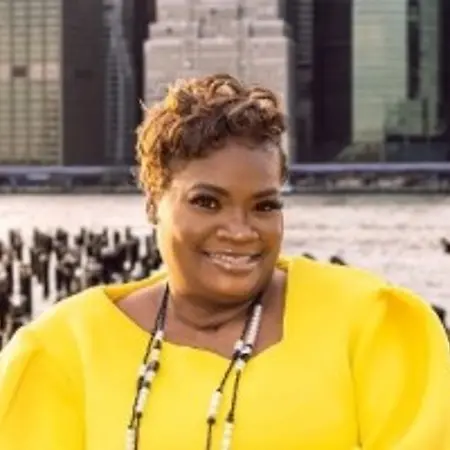
Alicia Collins
Lead Pastor/CEO, Everything Lemonade Inc
Mt Vernon Ave, NY 10550
Her Story
About Alicia
I started my career in corporate America right out of college, working for J. Walter Thompson advertising agency, then Verizon, before transitioning into education where I taught mathematics in middle school for about 5 years. In 2009, I entered full-time ministry and became a pastor, which has been my calling for over 17 years now. That same period brought incredible challenges - I was diagnosed with cancer in 2008-2010, then suffered a bowel obstruction at birth with only a 20% chance to live, and I survived both. But in 2020, I caught COVID and died twice - 15 minutes on the floor the first time, then 3 to 5 minutes the second round. The doctors told my daughter to pull the plug, saying I would have no quality of life because I had been without oxygen to my brain for too long. But here I am today, a living miracle. I had to relearn how to walk, talk, everything all over again. In 2017, I founded Everything Lemonade, a nonprofit dedicated to turning life's lemons into lemonade by celebrating and supporting survivors of cancer, COVID, domestic violence, and now addiction. We give scholarships to college students who have their own lemons that they've turned into lemonade - last year we gave away $5,000 to five young women, and we're hoping to increase that this year. I also work with non-emergency medical transport so I can minister in my car while taking people to dialysis or doctor's appointments, which is another way of doing outreach to our communities. My days are spent praying, counseling, connecting with people, and reaching out to get sponsors for our scholarship recipients. I'm also a published author - I've written books about my cancer journey and my COVID experience, including 'Give Me 15: Surviving Deaths Twice, a Monday Miracle,' and I'm currently working on another book called 'On the Edge of Everything.' I'm also a public speaker, and my goal is to do more speaking in schools and communities to help produce good humans and good citizens.
Her Interview
Ten minutes with Alicia
01What do you attribute your success to?
I attribute my success to the fact that I really am the face of a survivor - I am a serious, real survivor. What I'm doing is making an impact in the community because I've actually lived through what I'm advocating for. I had cancer, I had a bowel obstruction at birth and overcame it, and I survived COVID after dying twice - not just dying once, but dying twice. Now I'm recovering to the point where I'm able to take care of myself and do a couple other things that the doctor said I would never be able to do. I'm a testament to the fact that you can survive. It's up to you to actually give yourself over to a statement or have faith and live beyond it. My lived experience gives me the credibility and empathy to help others see that there is light at the end of the tunnel, because once you're in it, you can't really see a way out. But once you've gone through it, you can guide others through their own challenges.
02What’s the best career advice you’ve ever received?
Love well so you can live well. Heal so others can be healed by your presence and know that you are necessary that's why you're here.
03What advice would you give to young women entering your industry?
In starting a business or nonprofit, you first have to find your purpose. If you don't know your purpose, you can't understand why there's a need for creating whatever it is that you're supposed to do. Most people can't do anything until they find their purpose. I would say to any young person, whether they're starting a business or non-profit, do the thing that moves you the most to help humanity. That's the thing that you're supposed to do - the thing that causes you to weep. Once you see it, you weep, because you know that it's attached to you and attached to your purpose. When I think about people who have suffered in sickness, or suffered because they have a 10% chance to live, I think about my own story when I only had 2% chance to live, and that provides them hope by telling them my story. If somebody's going through chemotherapy, I can tell them, hey, you can get through this, because I'm familiar with that. I have the ability to empathize to a point where it helps them see that there is light at the end of the tunnel. So find the thing that moves you, do the thing that moves you positively - that's what I would say.
04What are the biggest challenges or opportunities in your field right now?
The biggest challenges are getting sponsors and getting people to believe in what we're doing. We started out to celebrate more than just breast cancer, because not everybody has breast cancer - we wanted to include men who have prostate cancers, and women who are survivors of domestic violence. Just recently, I connected with somebody who is a survivor of life after being addicted to drugs for so many years - he's had 3 years clean and has impacted the world with over 400,000 followers teaching people how to get free from addiction. We're honoring him this year because anybody that makes life better deserves recognition. I think this is much needed, especially now, because people haven't been right since COVID. Everybody has had a situation where they haven't even understood the level of grief that they had to go through - they just moved past it. The number of people that died without funerals, who couldn't say goodbye to their loved ones, means people could be silently carrying that grief and not even know it. So we try to teach people to find their tribe, so that when they're going through certain things, or depressions, or anything, they're able to talk it out. Not everybody's comfortable going to a therapist, but if you find your tribe of survivors, we're here to help you discover why you're still here, you're still alive, you still have purpose, and we're rooting for you.
05What values are most important to you in your work and personal life?
My value is love - loving everybody. Understanding that love is the key thing that keeps us moving, and everybody's entitled to love, no matter where they are, who they are, what they've been through. Everybody's entitled to love. When you look at the most hateful people, you don't know what they've been through. A smile can shift them. I know about several people that have just been hateful, but then you go into their backstory, and you find out they're angry because they lost somebody that they love, and they're angry with God because why did that happen to them. So everybody is deserving of love. They want - I should say - like this: everybody deserves love. There are some bad humans and some good humans, and my goal is to make sure that I'm helping to produce good humans and good citizens.
Join Influential Women and start making an impact. Register now.