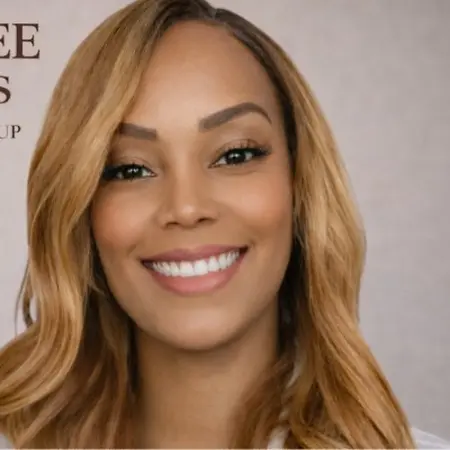
A reflection on the power of genuine human connections built without agenda. Alicia Cooper explores how approaching people with curiosity and a desire to help, rather than extract value, creates lasting relationships that transcend immediate opportunities and enrich our lives in unexpected ways.
Her Story
About Alicia
I initially started my career right out of college after graduating from Cal Berkeley in California in 1996 with a degree in business management. My mentor at the time said I would be good in HR, though I joked that I didn't really like people that much. I went into courses to become a coach because I noticed I had a knack for listening, shutting my mouth, and allowing people to speak, while also giving them really good nuggets to move forward in life. I stayed in the realm of HR, talent, and recruiting, and then got into marketing because that was really important to me with any business. I started my own recruiting firm and had it for almost 7 years, and did really well until the economy went haywire during COVID when people weren't hiring. I went back into recruiting and worked for Fortune 500 company Johnson Controls for a little over 8 or 9 years, where I was hiring legal, engineering, and IT professionals. After they transitioned to using more bots and didn't need people in higher positions, I moved to Las Vegas where my parents were. I had already been hiring legal and engineering as well as IT with Johnson Controls, so I'm now just kind of planted here working for a law firm. I manage a staff of almost 10, doing performance reviews, keeping them on metric with their goals, and keeping them honest about shooting for achievable targets. I do a lot of community engagement, talking with whoever will allow me to come in and speak about HR or AI, and how I'm using platforms like Claude, ChatGPT, and Manis to build out different platforms and give people a pathway and roadmap to build out these skills. I also do a lot of coaching with people who are looking to get back into working or just need regular coaching.
Her Interview
Ten minutes with Alicia
01What do you attribute your success to?
I've never met a stranger, and even in what I do, if I'm recruiting for a role, I have met really lifelong friends based off of me just talking to people. It's not really always about the recruiting and checking the boxes for the company - it's really building a community of people, because you never know where you lie, or that other person may lie, where they may need to rely on you. I take every experience that I've had in meeting people and say that it's for a reason, whether it be friendship, whether it be that I can help you maybe in another year, who knows. My accomplishments are when I get a chance to meet people and I can build real, honest, genuine relationships. People don't like relationships anymore in any shape or form, whether it be personal or professional, but I think that I can learn from anyone that I come in contact with, and vice versa. I meet really, really good people, and the bad ones, I just throw them back.
02What’s the best career advice you’ve ever received?
"Focus on building relationships, not transactions."
Early in my career, I thought success was about having the right resume, the right title, or the perfect opportunity. What I learned over time is that careers are built through people. Every conversation, every connection, and every opportunity to help someone creates a foundation that often comes back in ways you never expect.
That advice shaped how I approach leadership, recruiting, and business. I don't meet people wondering what I can get from them; I meet people to learn, to understand their story, and to see how I can add value. Some of the most meaningful opportunities in my career have come from relationships that were built years earlier with no expectation of an immediate return.
As technology, industries, and job markets continue to evolve, one thing remains constant: people do business with people they trust. Skills can be learned, and job titles can change, but integrity, curiosity, and genuine relationships create opportunities that last a lifetime.
If I could pass along one piece of advice to the next generation, it would be this:
Invest in people, keep learning, and lead with service. Success often follows where trust has already been built.
03What advice would you give to young women entering your industry?
Learn early that your perspective is not secondary it’s essential.
In this industry, you’re constantly balancing people and business needs. There will be moments where you’re expected to simply “fill a role” or move quickly through decisions. But the real value you bring is your ability to slow things down just enough to ask: Is this the right person, in the right role, for the right reasons?
Don’t rush past that responsibility.
I would also encourage them to become very comfortable with being in rooms where decisions are made not just executing them afterward. Ask questions. Understand the “why” behind hiring strategy, not just the “who.” That’s how you move from being a recruiter to being a talent advisor.
Another important lesson is to build resilience around feedback and rejection. In this field, you will advocate for candidates who don’t get selected, and you will sometimes disagree with decisions you don’t control. Learn to stay steady in those moments. Professional maturity is not avoiding tensio it’s navigating it with clarity and respect.
And finally, protect your standards. Be the kind of professional who is consistent, thoughtful, and grounded in integrity, even when the pace is fast or the pressure is high. Your reputation will not come from single wins it will come from how people experience working with you over time.
If you do that, you won’t just participate in the industry you’ll elevate it.
04What are the biggest challenges or opportunities in your field right now?
Right now, the field is sitting at a really interesting intersection of disruption and opportunity and both are equally significant.
One of the biggest challenges is the speed at which expectations are changing on both sides of the hiring table. Organizations want to hire faster, with more precision, and less risk. At the same time, candidates are expecting more transparency, flexibility, and alignment with purpose. That gap between speed and depth is where a lot of friction lives. Many hiring systems were built for a slower, more linear world and they’re being stretched beyond their design.
Another challenge is signal quality in talent decisions. With resumes, automation tools, and AI-generated content everywhere, it’s becoming harder to distinguish true capability from well-presented narratives. That puts more pressure on hiring professionals to strengthen their ability to assess judgment, behavior, and real-world problem solving not just credentials.
There’s also a very real leadership gap showing up inside organizations. Many companies are still promoting or assigning hiring responsibility to managers who haven’t been trained to evaluate people effectively. So HR and recruiting teams are increasingly stepping into a coaching and capability-building role, not just execution.
At the same time, the opportunities are significant. We are entering one of the most transformative eras in talent strategy because AI and data are finally giving HR teams leverage they didn’t have before. When used correctly, these tools don’t replace human judgment—they enhance it. They free up time for deeper evaluation, better candidate experience, and more strategic decision-making.
We’re also seeing a shift toward skills-based hiring and potential-based evaluation, which opens doors for talent that may have been overlooked in traditional systems. That’s a major step forward in creating more equitable and effective hiring practices.
And perhaps the most important opportunity is this: HR is finally being recognized as a strategic business function, not just a support function. The organizations that win in the next decade will be the ones that treat talent strategy as a core driver of revenue, culture, and execution not an administrative process.
So while the landscape is more complex than ever, it’s also more meaningful. For professionals in this space, the opportunity isn’t just to fill roles it’s to fundamentally improve how organizations understand, evaluate, and develop human potential.
05What values are most important to you in your work and personal life?
The values that matter most to me both in work and in life are rooted in one simple principle: how I treat others and the impact I leave behind, whether it’s small or large.
I believe every interaction carries weight. You don’t always see the outcome of your words, decisions, or presence, but they matter more than we often realize. So I try to lead with respect, consistency, and intention especially in moments where no one is watching or there is no immediate return.
Integrity is another core value for me. Doing what I say I’m going to do, being honest even when it’s uncomfortable, and making decisions that I can stand behind long-term not just in the moment. That’s what builds trust, and trust is the foundation of every meaningful relationship and opportunity I’ve had in my career.
I also value growth and learning. I don’t believe expertise is a fixed destination. It’s something you build by staying curious, listening closely, and being willing to evolve as industries and people change.
And ultimately, I value impact over recognition. Whether I’m helping someone land a job, advising a company on hiring strategy, or mentoring someone through a transition, what matters most is that the work actually makes a difference in someone’s life or path even if it’s quiet and unseen.
At the center of all of it is this: I want people to feel respected, understood, and better because we crossed paths.
Her Content Hub
Articles by Alicia
You Never Know What a Connection Will Become
How genuine curiosity and authentic connections shape meaningful relationships that transcend time and circumstance.

You Never Know What a Connection Will Become
By Alicia Cooper
I don't meet people with a transaction in mind.
- Not for recruiting.
- Not for marketing.
- Not to ask, "What can you do for me?"
I meet people because I'm genuinely curious about what they do, how they think, and what they've learned along the way. I've always believed that every conversation becomes part of a larger knowledge base I'm building for myself—not a pipeline, not a funnel, just perspective.
And I almost always lead with the same questions:
How can I help you?
How can we collaborate?
Not the other way around.
If you know me, you know that's not a strategy—it's just how I'm wired. I believe genuine people are rare. And when you find them, you don't rush the connection or try to extract value from it. You invest in it.
A while back, I met someone in a completely organic way—not through business, not through recruiting, just through life.
We weren't close friends. In fact, we only had a brief interaction more than a decade ago. Then twelve years passed.
One day, she reached out because she was looking for a job. She was in transition and exploring new opportunities. She applied for a role I was involved in, and while she wasn't the right fit for that specific position, I immediately remembered who she was—not because of her résumé, but because of the way she carried herself during that original conversation years earlier.
I didn't see a candidate.
I saw a person I could learn from.
Someone with perspective. Experience. Depth.
So even though the role wasn't the right match, the relationship wasn't dismissed. Because not every interaction is about an immediate outcome. Some people become part of your long-term network of insight, growth, and shared value.
And this is what I've learned over time:
The best relationships aren't built in moments of need. They're built in moments with no agenda at all.
When you lead with curiosity instead of extraction...
When you lead with "How can I help?" instead of "What can I get?"...
You build something that lasts far beyond any job, title, or opportunity.
And sometimes, twelve years later, life reminds you why that approach matters.
You never really know what a connection will become.
Sometimes it leads to a job.
Sometimes it leads to a friendship.
Sometimes it simply expands the way you see the world.
But the relationships built without an agenda often become the ones that matter most.
— Alicia Cooper
Join Influential Women and start making an impact. Register now.