Allyson Butler
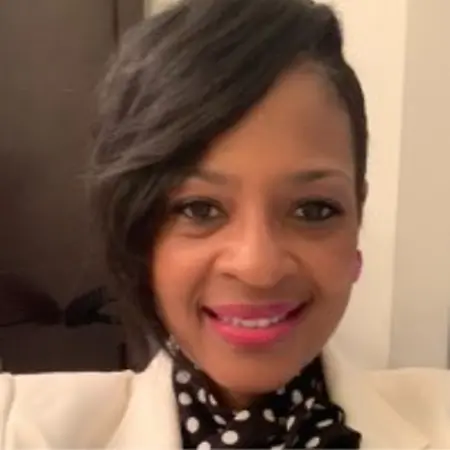
I've been working in hospice care for over 25 years, and it's truly become my life's work. I currently oversee the business development, intake, and admissions departments at Hospice Montgomery and Prince George, where I've been for 11 months. My day starts with reviewing our patient calendar and open referrals, working closely with my admissions manager and lead intake coordinator to ensure we're providing timely services to patients and families. I manage a team that includes nurses, intake coordinators, and nine business development liaisons whose job is to make the phones ring by getting out to their accounts and connecting with the right people at the right time. Before this role, I was Director of Business Development at Bridgepoint Healthcare, a long-term acute care hospital, and prior to that, I served as Director of Patient Access at Hospice of the Chesapeake. One of my proudest achievements was building the intake department at Hospice of the Chesapeake from the ground up, hiring and training the team, and creating processes so everyone knew what they needed to do and why. I got into hospice care when a clinical director at a hospice agency recognized my potential and encouraged me to interview for an intake specialist position, even though it required a nurse. I fell in love with everything about hospice - the philosophy, the support we provide to patients and families, and that feeling of being able to help people during the most overwhelming time in their lives. My father was a pastor, and I watched him help people on the street, bring them home, bathe them, and feed them. That instilled in me a heart for helping people that drives my work every day. I'm currently working on my doctorate in strategic leadership at Liberty University, building on my bachelor's in healthcare administration from Washington Adventist University and my master's in organizational leadership from Eastern Washington University. I also have a certificate in change management. Leadership is something I've really leaned into over the years. I know I have a natural ability to lead, but I've worked hard to understand what that responsibility truly means. I'm a servant leader who believes in making sure employees feel valued, heard, and supported, understanding that different people need different types of support and motivation beyond just a paycheck.
• Certificate in Change Management
• Bachelor's in Healthcare Administration
• Washington Adventist University
• Master's in Organizational Leadership
• Eastern Washington University
• Doctorate in Strategic Leadership (in progress)
• Liberty University
• Pediatric Brain Tumor Association
What do you attribute your success to?
I think it's a combination of things. I think it is definitely the heart I have for people. My father was a pastor, and I watched him just help people on the street. He would bring people home, and bathe them, and feed them, and I've watched that, and it's a part of my heart to help people. I think that goes a long way, but also making sure that the needs, or the wishes, of our patients and families are honored. And then making sure that the mission is honored - our mission to make sure that we're caring for folks, gentling their journey in the last stages of their lives, really focusing on that and never losing sight of the mission and the people. Every hospice I've worked for, that was always my focus - making sure the family's comfortable. And we make decisions based around that. Sometimes there are some hospices who are a little more strict when it comes to medications that really aren't covered by the Medicare hospice benefit, and we have to ask ourselves that question with every situation that comes up: what is the right thing to do for this patient and family? We know what the Medicare Hospice Benefit says, but is this a situation where we can say, you know what, in this case, this woman wants to live long enough to make it to her daughter's birthday - for this patient, this is the right thing to do. That consideration is so important, and it's huge for patients and families.
What advice would you give to young women entering your industry?
I would say come into it with an open heart and an open mind, because we learn something new every day. Every day we learn something new. And always, never allow the job or the numbers - this quota is attached to everything, you gotta get a certain number of admissions, you gotta get a certain number of referrals - never lose sight of that there's a human being behind each of those numbers. Never lose sight of that, because once you start just focusing on the numbers, you forget that these are human beings who are dealing with the most overwhelming time in their lives. And they sense when they are just a number to you. They can tell. They can tell when you're really talking to them and communicating with them, human to human, and connecting with them, versus I need to get you on the census so that I can meet my goal. So just never lose sight of that. Never lose sight of the fact that these are human beings, and our goal really is to be here to support them with the information they need, and guide them through this most terrible time in their life.
What are the biggest challenges or opportunities in your field right now?
I think that the biggest challenge is patients being referred late. We live in an area where we have Johns Hopkins and all these places that want to try this therapy, or this trial, or this treatment. And so families and the medical community at large, they wait longer, because they want to keep trying one more thing, even if it extends their life only by a month or two, or maybe not at all. And what we say is, you know, come to hospice care, and our goal is to keep you comfortable and allow you to maintain your independence, but manage those symptoms that would typically send you back to the hospital, especially for those patients and families that say we don't want to go to the hospital anymore. There's such opportunity for education, and that's across the board - that's to patients and families, that's to referral sources, that's to the medical community at large. Understanding truly what hospice is, what it isn't, but also when to refer. A lot of doctors think you should wait until they're on their deathbed, but we're saying imagine if you refer that patient sooner, that's 6 months or longer sometimes of getting a full understanding and experience of what hospice is - the nurses, the social workers, all the services that you get. Medicare has a hospice benefit, and as long as we can document that patient's decline and our doctor certifies that, Medicare will continue to cover. So people think it's only 6 months, but we had a patient on service with us for 2 years.
Locations
Montgomery Hospice, Inc.
Upper Marlboro, MD