
Alyssa Duff launches INDYpendent Bytes, a procurement platform helping independent restaurants reduce food costs by 15-30% through aggregated purchasing power while supporting local farms and reducing waste in central Indiana.
“
I realized my lived experience was expertise. Speaking up opened doors I never would've accessed if I'd waited to feel "qualified."
Alyssa Duff · In Her Own Words
Her Story
About Alyssa
Alyssa Duff is a chef-turned-operations strategist with 16 years of frontline kitchen experience. After witnessing the hidden crisis of food procurement, she founded INDYpendent Bytes, a platform that aggregates restaurant demand to unlock 15–25% food cost savings while strengthening small farms. Alyssa is finally building the missing infrastructure connecting independent restaurants, small farms, and community food systems across Indiana.
Her Interview
Ten minutes with Alyssa
01What do you attribute your success to?
I didn’t get here by accident. My success comes from a mix of clarity, grit, and the refusal to let chaos define me. I’ve learned to build structure where there wasn’t any, and that ability has shaped everything I do.
I succeed because I don’t move blindly. I need to understand the full system—every boundary, every failure point, every implication—before I act. That instinct for clarity has protected me, guided me, and made me a better builder.
I succeed because I’ve taken every hard thing I’ve lived through and turned it into architecture. Most people try to forget their scars. I use mine as blueprints. They taught me how to design systems that don’t break under pressure.
I succeed because I think in connections, not tasks. I see how things flow, where they bottleneck, and how to make them resilient. That’s why my documentation reads the way it does—because I’m not guessing. I’m mapping reality.
I succeed because I lead with empathy. I understand the psychology of the people I’m building for—chefs, farmers, owners. I know what overwhelms them, what earns their trust, and what makes them walk away. That awareness shapes every decision I make.
I succeed because I’m not afraid to ask for help. I don’t pretend to know everything. I learn fast, I adapt fast, and I don’t let ego slow me down.
I succeed because I’m driven by stability and long-term impact, not noise. I’m not chasing hype. I’m building something that lasts.
And I succeed because I pair vision with discipline. Ideas are easy. Turning them into manuals, specs, schemas, and operational logic—that’s where I thrive. I don’t just imagine systems. I build them.
This is who I am.
This is why I win.
02What’s the best career advice you’ve ever received?
The best career advice I’ve ever gotten was this:
“Build the thing that would’ve saved you.”
Not the thing that looks impressive.
Not the thing people expect.
Not the thing that fits neatly into someone else’s blueprint.
Build the thing that would’ve made your own path easier, clearer, safer, or saner.
Because if it would’ve helped you, it will help someone else — and that’s where real impact lives.
It taught me a few truths I carry everywhere:
- Your scars are data. They point to the gaps no one else is fixing.
- Your frustration is a compass. If something feels broken, that’s an opportunity.
- Your lived experience is a competitive advantage. No one can replicate it.
- Your work should solve a real problem, not just perform competence.
That advice is why I build the way I do now.
It’s why I obsess over clarity, systems, and boundaries.
It’s why I design for the people who are usually overlooked.
It’s why I’m creating something that stabilizes an ecosystem instead of extracting from it.
“Build the thing that would’ve saved you.”
That’s the advice that changed everything for me.
03What advice would you give to young women entering your industry?
First: you belong here. Don’t wait for someone to grant you permission or validate your seat at the table. This industry rewards clarity, competence, and consistency — not noise.
A few things I wish someone had told me early on:
1. Learn the system before you try to fix it
Everyone wants to “innovate,” but the people who actually make change are the ones who understand the real constraints — the timing, the margins, the psychology, the unspoken rules.
Study the ecosystem. Watch how decisions get made. Pay attention to what people don’t say out loud.
2. Your empathy is an asset, not a liability
You’ll hear people talk like empathy is “soft.” It’s not.
It’s how you read a kitchen before it boils over.
It’s how you understand a farmer’s risk tolerance.
It’s how you design systems people actually use.
Don’t dull that edge.
3. Document everything
In logistics and food systems, clarity is power.
Write things down. Map processes. Track decisions.
People will trust you because you make complexity understandable.
4. Don’t let anyone shrink your standards
You’ll meet people who cut corners, normalize chaos, or treat “good enough” like a badge of honor.
Hold your line.
Your standards will become your reputation.
5. Ask questions without apologizing
You’re not “bothering” anyone.
You’re gathering data.
And the people who get defensive when you ask questions are usually the ones who don’t understand their own system.
6. Build relationships, not transactions
This industry runs on trust.
Chefs talk. Farmers talk. Drivers talk.
Be the person who listens, follows through, and treats people like partners, not resources.
7. Protect your energy
You don’t have to be everywhere, say yes to everything, or carry the emotional labor of an entire team.
Set boundaries early.
People respect the woman who knows her limits more than the one who burns herself out trying to prove she has none.
8. Your lived experience is a competitive advantage
Everything you’ve survived, everything you’ve observed, everything you’ve had to figure out the hard way — that’s your edge.
Use it.
Build with it.
Trust it.
04What are the biggest challenges or opportunities in your field right now?
1. Fragmentation everywhere
Small farms, independent restaurants, wholesalers, distributors — everyone is operating in their own silo with their own spreadsheets, habits, and pain points.
Challenge: No shared language, no shared data, no shared expectations.
Opportunity: Whoever builds the connective tissue becomes indispensable. That’s the role you’re stepping into.
2. Zero operational visibility
Most decisions are made on gut, memory, or whatever someone scribbled on a whiteboard.
Challenge: Chaos, waste, and constant fire drills.
Opportunity: A system that brings clarity — clean data, predictable flows, and real-time insight — becomes a stabilizing force for the entire ecosystem.
3. Thin margins and risk-averse operators
Restaurants and farms don’t have room for mistakes or experiments.
Challenge: Adoption friction is high. Trust is everything.
Opportunity: If you design for their psychology — low lift, high clarity, immediate value — you win loyalty fast and permanently.
4. Wholesaler dominance and lock-in
Sysco, US Foods, and regional distributors shape purchasing behavior through convenience, credit, and habit.
Challenge: Breaking those patterns is hard.
Opportunity: You don’t have to replace them — you can complement them. You can fill the gaps they ignore: local sourcing, seconds bundles, micro‑logistics, transparency, and relationship-driven service.
5. Labor shortages and burnout
Everyone is stretched thin — chefs, farmers, drivers, coordinators.
Challenge: No one has time for more complexity.
Opportunity: Tools that remove cognitive load instead of adding to it become essential infrastructure.
6. Regulatory and liability complexity
Food safety, traceability, labeling, transport rules — most small operators don’t have the bandwidth to stay compliant.
Challenge: Fear of doing something wrong keeps people from trying new systems.
Opportunity: If your platform bakes compliance into the workflow, you become the safest path forward.
7. The rise of seconds, surplus, and waste reduction markets
The industry is finally acknowledging the economic and environmental value of “imperfect” or surplus produce.
Challenge: No standardized way to move this product efficiently.
Opportunity: You’re already designing the marketplace and logistics logic that makes this viable at scale.
8. Demand for local food without the infrastructure to support it
Consumers want local. Restaurants want local. But the system isn’t built for it.
Challenge: Supply is inconsistent, communication is messy, and logistics are expensive.
Opportunity: Whoever solves the coordination problem
unlocks a massive, underserved market.
05What values are most important to you in your work and personal life?
Clarity
I need to understand the full picture — the boundaries, the risks, the expectations, the psychology. Clarity is how I stay grounded, how I make decisions, and how I build systems that don’t fall apart under pressure.
Integrity
I don’t cut corners. I don’t play games. I say what I mean, and I follow through. In an industry full of chaos and shortcuts, integrity is my anchor.
Stability
I value environments — and relationships — that are steady, reliable, and predictable. I build systems that create stability for others because I know what it feels like to live without it.
Empathy
Understanding people is core to how I operate. I design with empathy, lead with empathy, and communicate with empathy. It’s not softness — it’s strategy. It’s how I build trust.
Respect
I treat people like partners, not resources. I expect the same in return. Respect shows up in how I communicate, how I set boundaries, and how I choose who I work with.
Excellence
I don’t do “good enough.” I care about quality, precision, and doing things the right way. Excellence is how I honor my work and the people who depend on it.
Accountability
If I say I’ll do something, I do it. If I make a mistake, I own it. Accountability is how I build credibility — with myself and with others.
Impact
I want my work to matter. I want it to make someone’s life easier, safer, or more stable. I’m not chasing hype; I’m building something that lasts.
Boundaries
I protect my energy. I don’t let other people’s chaos become my responsibility. Boundaries are how I stay focused, healthy, and effective.
Growth
I’m always learning — legally, technically, operationally, psychologically. I don’t pretend to know everything. Curiosity is one of my biggest strengths.
Her Content Hub
Articles by Alyssa
From Kitchen to Community: How One Chef Is Revolutionizing Restaurant Economics
How an Award-Winning Chef is Revolutionizing Restaurant Food Sourcing to Cut Costs and Support Local Farms
Local Food. Lower Costs. Less Waste.
Award-Winning Culinary Professional Launches Platform to Cut Food Costs, Seeks Pilot Partners and Funding
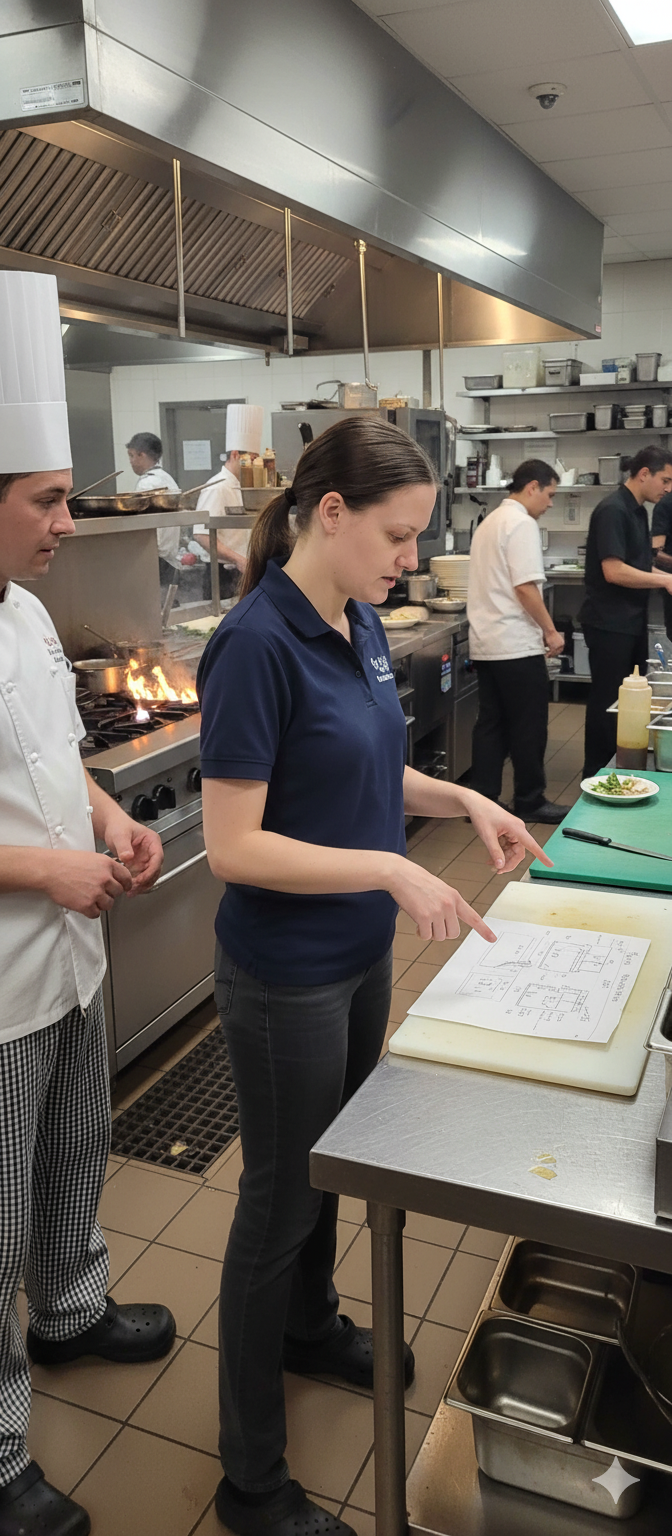
INDIANAPOLIS — After 16 years working in restaurant kitchens, Alyssa Duff thought she understood the industry’s challenges. As a sous chef, kitchen manager, and brand manager, she’d seen razor-thin margins, constant vendor juggling, and the impossible choices between quality and cost.
But it wasn’t until she tried to help restaurants from the outside that she discovered their biggest problem—and her life’s work.
“I was building a consulting business to help restaurants improve operations,” Duff explains. “Then I realized: they don’t have money to pay a consultant. The margins aren’t there.
“So I asked myself, What if instead of charging them for advice, I could actually save them money?”
That question led to INDYpendent Bytes, a procurement platform rewriting the rules of how independent restaurants source food.
The Cost Crisis Nobody Talks About
While most restaurant coverage focuses on labor costs and rent, Duff identified a quieter crisis: food procurement.
Independent restaurants lack negotiating leverage with distributors, face premium pricing for local ingredients, and spend hours each week managing multiple vendor relationships.
“A single restaurant ordering 50 pounds of tomatoes has zero bargaining power,” Duff says. “Meanwhile, they’re choosing between expensive ‘farm-to-table’ distributors charging 40–60% markups or commodity suppliers where they have no idea where the food comes from. It’s a false choice.”
Her solution: aggregate demand across multiple restaurants to unlock wholesale pricing on both local seasonal ingredients and national staples.
“We’re proving that local sourcing doesn’t have to be expensive,” she explains. “By pooling purchasing power and leveraging shoulder-season buying—when farms have surplus and prices drop 30–50%—we’re delivering cost savings of 15–30% while keeping food local and traceable.”
From Line Cook to Industry Innovator
Duff’s culinary journey began with an associate degree in Culinary Arts, followed by 16 years moving through kitchen positions. That frontline experience gave her insight most food entrepreneurs lack.
“I’ve been the one receiving eight different deliveries in the middle of prep, trying to reconcile invoices from ten vendors, watching product sit because we over-ordered to hit minimums,” she says. “I know exactly where the pain points are because I’ve lived them.”
How It Works: Simple for Restaurants, Strategic for Results
INDYpendent Bytes operates as a hybrid between a group purchasing organization (GPO) and a local food network. The model is deceptively simple:
For Restaurants:
Join as a member, place orders through one platform, receive consolidated deliveries, and reduce food costs by 15–25%.
For Farms:
List weekly inventory at no cost. INDYpendent Bytes aggregates orders across multiple restaurants to create meaningful volume and coordinates logistics.
The platform offers:
- Pre-negotiated pricing on both local farms and national wholesalers
- Seasonal buying intelligence identifying cost-saving opportunities before they hit the broader market
- Consolidated ordering and invoicing (one platform, one invoice instead of managing 10–15 vendors)
- Menu and crop planning coordination to reduce waste and align purchasing with actual needs
- Surplus routing to food recovery partners instead of landfills
“We’re not just another distributor,” Duff emphasizes. “We’re solving the complete procurement headache—lower costs, less waste, supply chain transparency, and hours of time saved every week.”
The model also creates stability for local farmers. By coordinating demand across multiple restaurants and committing to shoulder-season purchasing, INDYpendent Bytes provides farms with predictable buyers when they need them most—without upfront costs or complicated contracts.
“Farms just list what they have available each week, and we aggregate the demand,” Duff explains. “They may need to deliver to a central hub drop-off location, but otherwise, we handle the complexity. No fees. No risk.”
Building Stronger Networks: A Partnership Approach
Duff doesn’t see INDYpendent Bytes operating in isolation. She’s actively building relationships with established players in Indiana’s local food ecosystem, including FarmWise, an organization connecting farmers with institutional buyers.
“Our missions are completely aligned,” Duff explains. “FarmWise has built incredible infrastructure connecting farms to schools, hospitals, and institutions. We’re extending that same philosophy to independent restaurants—a market segment with different pricing, portion, and menu needs.”
Duff has reached out to FarmWise leadership and has a meeting scheduled to explore collaboration. “I reached out to every member listed on their website,” she says with a laugh. “Because I genuinely believe we’re stronger together.”
Potential collaboration could allow farms working with FarmWise to access restaurant buyers through INDYpendent Bytes, while restaurants benefit from FarmWise’s established supplier relationships and distribution infrastructure.
“This isn’t about competition—it’s about creating a complete ecosystem,” Duff emphasizes. “The more connected we are, the more resilient local food systems become.”
The Road Ahead: Pilots, Partners, and Funding
Duff is now entering a critical phase: proving the model at scale.
She’s recruiting for a pilot program launching in late spring 2026 in the Columbus-to-Indianapolis corridor, seeking 5–8 farms and 10–12 independent restaurants.
“We’re focusing on central Indiana first,” Duff says. “Once we prove restaurants save 15–25% and farms gain reliable volume, we can expand regionally.”
She is also seeking:
- Volunteer Liaisons: Individuals with strong organizational, relationship-building, and administrative skills to coordinate between farms, restaurants, and the platform
- Funding: Capital for platform testing, pilot expansion, delivery coordination, and staffing
Funding will support delivery drivers, coordination staff, and the technology infrastructure required for seamless ordering and logistics.
Why Central Indiana, Why Now
“This region has incredible farm density, a strong independent restaurant scene, and operators who care deeply about local sourcing but can’t always afford the premium,” Duff explains. “It’s the perfect testing ground.”
Restaurants continue to face margin pressure post-pandemic, while consumers increasingly demand transparency. At the same time, small farms struggle with inconsistent demand and limited access to buyers.
“Everyone in this system is working too hard for too little,” Duff says. “Restaurants are overpaying. Farms are under-earning. The infrastructure connecting them is broken. We’re building the missing piece.”
How to Get Involved
INDYpendent Bytes welcomes inquiries from:
- Independent Restaurants seeking lower food costs without sacrificing quality
- Farms and Producers with consistent weekly inventory looking for reliable buyers
- Volunteer Liaisons and Supporters interested in strengthening local food systems
- Investors and Funders interested in scalable, community-centered food system innovation
While the INDYpendent Bytes website is under construction, Duff personally responds to all inquiries via phone, email, LinkedIn, Facebook, or WhatsApp.
Beyond Cost Savings: Building Community Resilience
For Duff, this work goes beyond economics.
“When restaurants can afford to buy local and farms have reliable income, everyone wins,” she says. “The restaurant has a better story. The farm stays viable. The community keeps its independent character.”
The platform’s optional waste-routing feature connects surplus food with food banks and recovery organizations, transforming potential landfill waste into community meals.
“Local Food. Lower Costs. Less Waste,” Duff says. “The savings get people in the door—but the mission is bigger.”
A Chef’s Perspective on What Comes Next
Sixteen years in kitchens taught Duff that success comes from consistency, adaptability, and knowing your ingredients.
“Building INDYpendent Bytes isn’t that different,” she reflects. “We’re working with struggling restaurants, underutilized farms, and broken supply chains—and creating something better.”
Her immediate goal is clear: launch a successful pilot, prove the savings, and build case studies.
“I’m not trying to disrupt the entire food system overnight,” Duff says. “I’m trying to help 10 restaurants save real money and give five farms reliable buyers. If we can prove that works, everything else follows.”
For those ready to try something different, Duff’s message is simple:
“Let’s build this together. The model is ready.”
Join Influential Women and start making an impact. Register now.