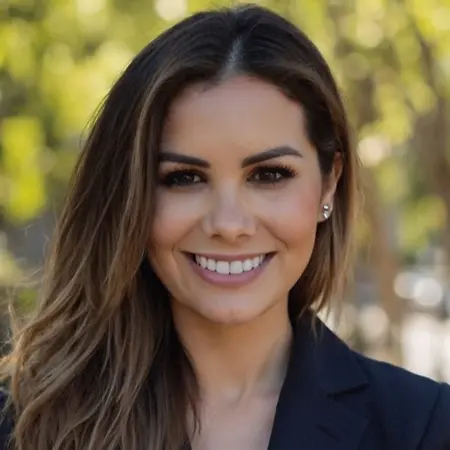
Showing respect earns respect. I listened to my mentors, valued their guidance, and now model the same thoughtful mentorship with my own team.
Alyssa Foster · In Her Own Words
Her Story
About Alyssa
Alyssa Foster is a reimbursement strategy and market access executive with deep expertise in medical device and pharmaceutical commercialization. She is the Founder and CEO of Directive Strategy Group, LLC and a Founding Partner at 4Front Strategic Partners LLC, where she partners with life sciences organizations to design and execute reimbursement pathways for complex and novel technologies. Her work centers on translating highly technical payer and CMS policy requirements into clear, actionable strategies that support sustainable market access and successful product adoption.
Her career path is both unconventional and defining. Initially trained in clinical psychology, Alyssa began her professional journey in mental health services, working with children, families, and underserved populations, including individuals experiencing homelessness and severe mental illness. While she was accepted into a PhD program, she ultimately chose to pivot, taking a role at UnitedHealthcare supporting members with benefits navigation, prior authorization, and claims education. That experience sparked her interest in the operational and commercial side of healthcare, leading her into the pharmaceutical and biotech industry, where she joined Genentech and was immersed in a fast-paced commercial environment that solidified her interest in healthcare strategy and reimbursement.
From there, Alyssa’s career accelerated through consulting and life sciences roles, including leadership work launching therapies and supporting access strategy at scale. An unexpected corporate transition led her into consulting, where she quickly found herself working directly with executive leadership and taking on expanded responsibilities that shaped her strategic expertise. What began as an independent consulting opportunity evolved into a thriving firm built through long-standing client relationships and referrals across the industry. Today, she continues to lead a trusted network of collaborators, delivering reimbursement and commercialization strategy while also building a flexible, supportive professional environment that values expertise, trust, and long-term partnership across every stage of healthcare innovation.
Her Interview
Ten minutes with Alyssa
01What do you attribute your success to?
I think it's good mentorship, honestly. From very early on, I got thrown into a situation where I had to be mentored in order for the business to be successful. That person took on the responsibility to mentor me and gave me grace to learn and possibly fail. I think that was the first example of someone who believed in me, even though I didn't necessarily have the knowledge or skills yet to do what they needed me to do. Literally every single boss I've had since then has been the exact same way. I've been so lucky. They've shown me the kind of mentor I want to be - I just want to do exactly what they did for me, because I know how much it helped me and how much it still helps me. I can literally hear the words of three separate bosses I've had in the past all the time, and I use those lessons every single day. If you have people who teach you, who believe in you, who help you, who show you what to do, no training program or degree could replace that.
02What’s the best career advice you’ve ever received?
The advice I've gotten from multiple mentors is it's business, and it's not personal, and you just need to do what you need to do. I reached out to my mentors for advice on winding down my second business, and they told me not to try to hold on to everything so tightly, and to focus on what really matters. Because I do love my job and I love the people I work with, and if you want to continue to enjoy that, then sometimes you just have to kind of let go of the stuff that's not working for you. I also recently read the book 'Let Them,' which teaches that somebody can have an opinion of you or do something you don't like, and you can just let them - you don't have to let it affect you or bother you. That's been really freeing and powerful advice, and I've taken that on. It's made things so much easier.
03What advice would you give to young women entering your industry?
I would say don't be afraid of a career and having a family conflicting with each other. Maybe that advice would be different pre-COVID, because there are a lot of work-from-home opportunities now - it's just a different environment today than maybe it was 10 years ago. When I first started, I was really nervous that if I started to have a family, I wasn't going to excel in my career, and I couldn't do both, and I couldn't travel for work if I had a baby at home, and all of the things. But now that I've done it, I'm like, oh yeah, you can do it. Most of the women who work for me have young kids, are either single moms or primary breadwinners, and they're doing it too. It's about being brave to give it a try. Maybe that wouldn't work for everybody - some people are more comfortable with a 9-to-5, going to an office, daycare, the more traditional model - but I would say to somebody who doesn't want to do that, give it a try. You might just be able to make it work for you. The second piece of advice is lean on your mentors. If I didn't both have the amazing mentors and also take advantage of learning from them, realizing that I had lots to learn and still have lots to learn, then I wouldn't have grown. So it's both of those things.
04What are the biggest challenges or opportunities in your field right now?
I think the challenges are that technology is moving so fast - it's just booming, both on the drug side and the device side. On the drug side, these gene therapy, cell therapy molecules and things are really hard for my non-clinical brain to understand, and the payment models don't exist yet or are evolving so quickly. It's about being uncomfortable in a space that's not really well established and just working with what you can, trying new things, or engaging with government or insurance companies to find a solution when there really isn't one yet. So that's challenging - just kind of figuring it out. On the med device side, AI is being fully integrated into how medical therapy is delivered. Again, it's the same thing - how do we figure out how to pay for something where there's no physician doing work? It's a computer, it's a program, an algorithm. It's just like the wild, wild west. I think 10 years ago, it would be so uncomfortable for me to try to find a solution where one hasn't already been established. But thankfully, having experience now and being at the point of career I'm in, I'm like, okay, well, let's just send CMS an email and see what they say, or let's attend this meeting and talk to this medical society or coding committee or whoever, and not being afraid to do that. My clients will be like, oh, can we do that? I'm like, yeah, sure, why not?
05What values are most important to you in your work and personal life?
I really like having a relationship with my clients obviously professional, but something I've learned over the years is that nobody cares if you show up to the Zoom meeting in a blazer. My clients actually love to know me as a consultant, but also me as a human, and I feel the same. When my cat walks across the screen, instead of being incredibly embarrassed, my client's like, oh my god, who's that? And then they want to talk about the cat, or the kids, or whatever. It just makes the working relationship really fun, and you can know each other on a personal level and still be a really good, really professional, smart person. That's helped maintain my network that I've had for so long, and I think all the clients I work with would hopefully say that they've really loved working with me and also get good results too, but it's just more than that. I think having good vendor partners is important - there are plenty of other consultants or consultant-adjacent people that work in this field with the same people I work with, and I have no qualms working together. Not being competitive, not being territorial, referring out whenever I need to, offering help. Other consultants will call and be like, hey, I need a sanity check, is this true? Can you explain this to me? And I do it, and they do it for me, and we're not sending anybody a bill in the mail. We just do it because we want to genuinely do a good job and help each other out. I think that naturally drives more referrals - that's not the intent, but it does make things beneficial for the company too. Same goes with the people who work with me - if you need something from me, if you just want to call and vent, if you need me to help you find another job, or you're a subcontractor and you need more work, I'm going to help you out, because ultimately, I want you to be happy, I want you to be successful, there's enough to go around. That underlying rapport with my network, my community, is the most important thing to me.
Join Influential Women and start making an impact. Register now.