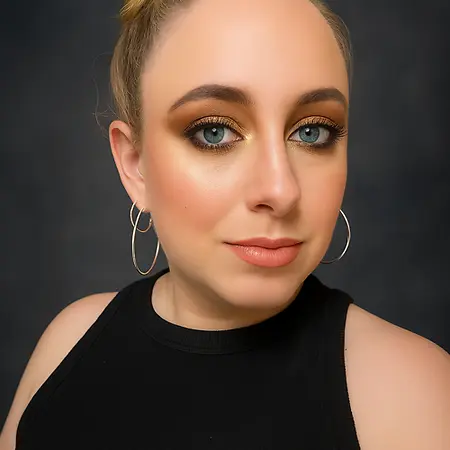
Her Story
About Alyssa
For Alyssa M. Garcia, history is fluid. It is continually interpreted, remembered, challenged, and reshaped by the people and communities who engage with it, influencing how we understand ourselves, where we come from, and how we see one another. Garcia’s perspective on history is deeply informed by her own life and family. As the mother of two children who are half Thai and half Italian and who have special needs, preserving and celebrating their multicultural heritage while creating a world in which they can thrive is deeply important to her. Her experiences as a parent have also fueled her interest in accessibility and in creating spaces where people of different abilities, identities, and backgrounds can fully participate and feel that they belong. These experiences inform the way she thinks about history, identity, representation, and access, and reinforce her belief that people deserve to see their histories and experiences represented with honesty, complexity, and care. Her work comes from a place of solidarity and a commitment to honoring the experiences of others and amplifying histories and perspectives that deserve to be heard. She is particularly interested in what happens when histories are excluded, rewritten, or simplified, and how those choices affect the way individuals and communities understand themselves. For Garcia, representation is not only about whose stories are told, but also about who has access to those stories and who is given the opportunity to participate in the historical conversation. Intellectual freedom is central to her values. She believes knowledge is power and that even the difficult parts of American history should be remembered and examined because understanding the past allows us to recognize patterns, confront injustice, and question the narratives that have shaped our society. She believes education belongs to the public and will continue to advocate for access to information because learning from experiences beyond our own teaches empathy, widens our understanding, and helps us better understand who we are as a society. Garcia also approaches her career with an openness to change and possibility, believing that career paths do not always unfold as expected and that remaining open to opportunities can lead to places you never anticipated. She strives to be present for the people and communities around her through her professional work, volunteerism, and community service. At the core of that philosophy are love, forgiveness, and a desire to be the person she needed when she was younger. Ultimately, Garcia sees history as an ongoing conversation between the past and the present, and believes that the stories we preserve, the voices we amplify, the spaces we make accessible, and the histories we choose to confront all contribute to the world we create for those who come after us.
Her Interview
Ten minutes with Alyssa
01What do you attribute your success to?
I attribute much of my success to my children, who are my greatest motivation. Much of what I do is driven by the desire to help create a world in which they can thrive. They are half Thai and half Italian, and nurturing and preserving both sides of their heritage has been deeply important to our family. Their multicultural identity has influenced the way we understand our family, our history, and our place in the world. It has also profoundly influenced my career, and deepened my commitment to preserving diverse histories, challenging narrow narratives, and creating space for people to see themselves and their experiences reflected in the histories we tell. My children have given greater purpose to my work and continue to remind me why the work I do matters.
02What’s the best career advice you’ve ever received?
The best career advice I’ve received is that your career path may not look the way you originally imagined, and that you have to remain open to where the opportunities take you. I’ve learned to recognize opportunities, accept the ones that feel meaningful, and look for the positives wherever I go. Keeping an open mind has kept many doors open for me and allowed me to grow in ways I never anticipated. I’ve learned to be flexible enough to show up for people when they need me, while also being willing to grow into new roles and become the person they need me to be. Sometimes the unexpected opportunities are the ones that lead you exactly where you are meant to go.
03What advice would you give to young women entering your industry?
The field of history is very niche, so my advice is to find what speaks to you most, your life, your experiences, and your identity, and run with it. I’ve done the same, building my work around the subjects and stories that resonate most deeply with me. I believe our personal experiences can be a source of purpose and direction in our work, especially in a field like history where there are so many stories waiting to be explored. My work also comes from a place of solidarity, with a genuine commitment to honoring the experiences of others and using my work to support and amplify histories and perspectives that deserve to be heard. Find what matters to you, let it inform your work, and do not be afraid to make your own path.
04What are the biggest challenges or opportunities in your field right now?
One of the greatest challenges facing the field of history today is the growing effort to control how history is taught, which stories are made available, and whose experiences are considered worthy of being remembered. The current administration and the book bans taking place across the nation are deeply concerning to me because they reflect a larger struggle over who gets to tell our history. History is fluid, and our understanding of the past continues to evolve as new voices, perspectives, and evidence enter the conversation. When access to information is restricted, we limit that conversation and make it more difficult for people to develop a complete understanding of themselves, their communities, and the society they live in. I believe education belongs to the public, and I will continue to advocate for the freedom to access information. Knowledge is power, and even the darkest parts of American history deserve to be remembered and examined. We cannot learn from what we refuse to acknowledge, and understanding the past is essential to recognizing injustice and preventing us from repeating it. Education should challenge us, expose us to experiences beyond our own, and encourage us to ask difficult questions. Access to history also teaches us empathy by allowing us to encounter lives, cultures, and experiences different from our own and, in doing so, widening our understanding of what it means to be human. For me, intellectual freedom is about more than the right to read. It is about having the opportunity to learn from one another, engage with difficult histories, and develop a deeper understanding of our shared past. I believe everyone deserves the freedom to encounter diverse perspectives because that is how we develop empathy, broaden our experiences, and become more thoughtful members of our communities. Protecting access to history means protecting our ability to question, learn, and decide for ourselves what kind of society we want to build.
05What values are most important to you in your work and personal life?
Love and forgiveness are among the most important values in my life, along with compassion, solidarity, and service. I try to live those values every day through the way I treat others, the work I do, and my commitment to volunteerism and community service. I believe in showing up for people, especially when they need someone in their corner, and in extending grace and understanding even when circumstances are difficult. I strive to be the person I needed when I was a child, and I carry that commitment with me in both my personal and professional life. To me, service means being willing to listen, learn, help, and step into whatever role is needed. I want to be someone who contributes more than I take and who uses what I have learned and experienced to make space for others. Above all, I want to be the kind of person who leads with love, meets others with compassion, and remains willing to stand in solidarity with the people and communities around me.
Join Influential Women and start making an impact. Register now.