A heartfelt exploration of how parental vulnerability and honest struggle teaches children more than perfection ever could. Discover why showing your authentic self—mistakes, tears, and all—builds stronger, more resilient families.

Verified Member
Influential Woman · Coaching
Alyssa Smith
Educator, ADHD & Executive Function Coach, Parent Coach, Workshop Facilitator, Alyssa Smith Coaching
Cornwall, NY 12518
3Years experience
1Article published
Her Story
About Alyssa
Alyssa believes that children don't become more capable because adults manage them better. They become more capable because the adults in their lives learn to lead differently. After nearly two decades in education, from Montessori classrooms to International Baccalaureate schools, and years training educators around the world, Alyssa noticed the same pattern everywhere: children thrive when adults replace rescuing with curiosity, over-direction with coaching, and control with connection.
That realization became even more personal at home. As a neurodivergent mother raising neurodivergent children, she found herself falling into the same patterns she had spent years helping others avoid: over-explaining, over-helping, and carrying far more than she needed to. Those experiences reshaped not only her parenting, but also the philosophy that guides her work today.
Today, Alyssa helps families navigate ADHD, executive function challenges, and everyday parenting in a way that builds both capability and connection. Her work sits at the intersection of education, child development, executive function coaching, and lived parenting experience, equipping families with practical strategies they can use immediately while strengthening relationships for the long term.
Whether she's coaching a parent, supporting a neurodivergent child, or leading a workshop, Alyssa's mission is the same: helping families turn toward challenges together and get back on the same team.
Her Interview
Ten minutes with Alyssa
01What do you attribute your success to?
I don't attribute my success to having all the answers. I attribute it to finally letting go of the idea that I needed them before I could help someone else. For years, I believed the person people wanted to learn from was polished, perfectly put together, and somehow untouched by struggle. As a single, neurodivergent parent raising two wildly different humans (one with ADHD), there were seasons when I wondered,
"Who would ever look at my life and think, 'That's who I want parenting advice from?'"
Then, after more than a year in career coaching, a coach asked me one simple question:
"But are you actually loving your work?"
I burst into tears. Not because my business wasn't successful...Because I realized I had been building a career around who I thought I should be instead of who I actually was. And where I’d always been at my best: relationships. That moment forced me to stop trying to be palatable—to stop chasing the path that felt "safe" enough—and start trusting my lived experience, much of which I'd hidden for years, as one of my greatest strengths.
Today, I know families don't need someone who does everything perfectly. Not even close. They need someone who's willing to be honest about the messy parts, stay curious, keep growing, and help them do the same. My greatest strengths were never perfection or certainty.
They're self-awareness. Humility. Honesty. And the desire to never stop learning.
Ironically, the very experiences I once believed disqualified me—raising neurodivergent children, navigating loss, solo parenting, moving across countries, and constantly questioning myself—became the experiences that allow me to sit beside families without judgment and show up wholeheartedly. That's the foundation of my work. Not perfection. Presence. And the belief that when we're willing to revisit what's not working with curiosity, honesty, and hope. Change is always possible.
02What’s the best career advice you’ve ever received?
The best career advice I ever received eventually became the advice I gave. Stop asking what you should do. Start paying attention to who you already are. As a career coach, I saw it over and over again. People were looking for the perfect next step when what they really needed was permission to trust themselves. To notice what energized them. To notice what came naturally. To notice where joy and skill intersected. That's where meaningful work usually begins. Funny enough, following that advice is what eventually led me here.
03What advice would you give to young women entering your industry?
My advice is to work on yourself first...and to keep doing it. Parents don't need another expert with perfect answers.
They need someone who's willing to question their own assumptions, notice their own patterns, and model what growth actually looks like.
Also? Leave society's expectations for parents and children at the door. Whenever you catch yourself thinking, "A good parent should..."
or, "Children are supposed to..." pause and ask:
Who taught me that?
Is it true?
Is it mine to carry?
The most powerful thing we can offer families isn't perfection. It's permission. Permission to be honest. To repair. To seek support when we need it. To ask questions and stick around for the answers even when they're uncomfortable. And to let their children see what it looks like to be beautifully, imperfectly, vulnerably human - because that's what allows our children to be the same.
04What are the biggest challenges or opportunities in your field right now?
One of the biggest challenges in parenting today is that the world our children are growing into is changing faster than ever before.
We can't possibly prepare them for every situation they'll encounter. What we can do is help them develop the skills they'll need no matter what the future looks like: curiosity, flexibility, resilience, self-awareness, and the confidence to tackle challenges they haven't seen before.
That's why I believe the opportunity in this field is shifting away from simply managing children's behavior and toward strengthening the relationships and life skills that allow families to navigate uncertainty together. Whether a child has ADHD or not, every child is growing an executive brain. They're all learning how to plan, regulate emotions, solve problems, recover from mistakes, and think independently.
When we focus on building those capacities—instead of simply getting through today's challenge—we prepare children not just for school, but for life. Rather than trying to pave the way for our children, I believe our greatest opportunity is to prepare them for the world…and to show them they never have to face it alone.
05What values are most important to you in your work and personal life?
Curiosity is the value that anchors almost everything I do. It's the antidote to judgment, shame, and power struggles. When we become curious—about ourselves, our children, and the stories we're telling—we make room for growth. I also deeply value honesty. Not the kind that demands perfection, but the kind that says, "I'm having a hard day," or "I got that wrong," and trusts that relationships become stronger through repair, not flawless performance. As a parent, I want my children to know they don't have to hide their struggles, because I don't hide mine. We talk openly, lean on one another, and remind each other that nobody has to carry hard things alone. That belief extends to every family I coach. I want parents to leave with more than practical strategies. I want them to leave trusting themselves, trusting their relationships, and believing their family doesn't have to be perfect to thrive. Because the values I care about most aren't perfection or performance. They're curiosity, connection, courage, and the confidence that grows when people know they're loved exactly where they are.
Her Content Hub
Articles by Alyssa
My Daughters Didn’t Need the Strong Mom
The day I stopped protecting my children from watching me become
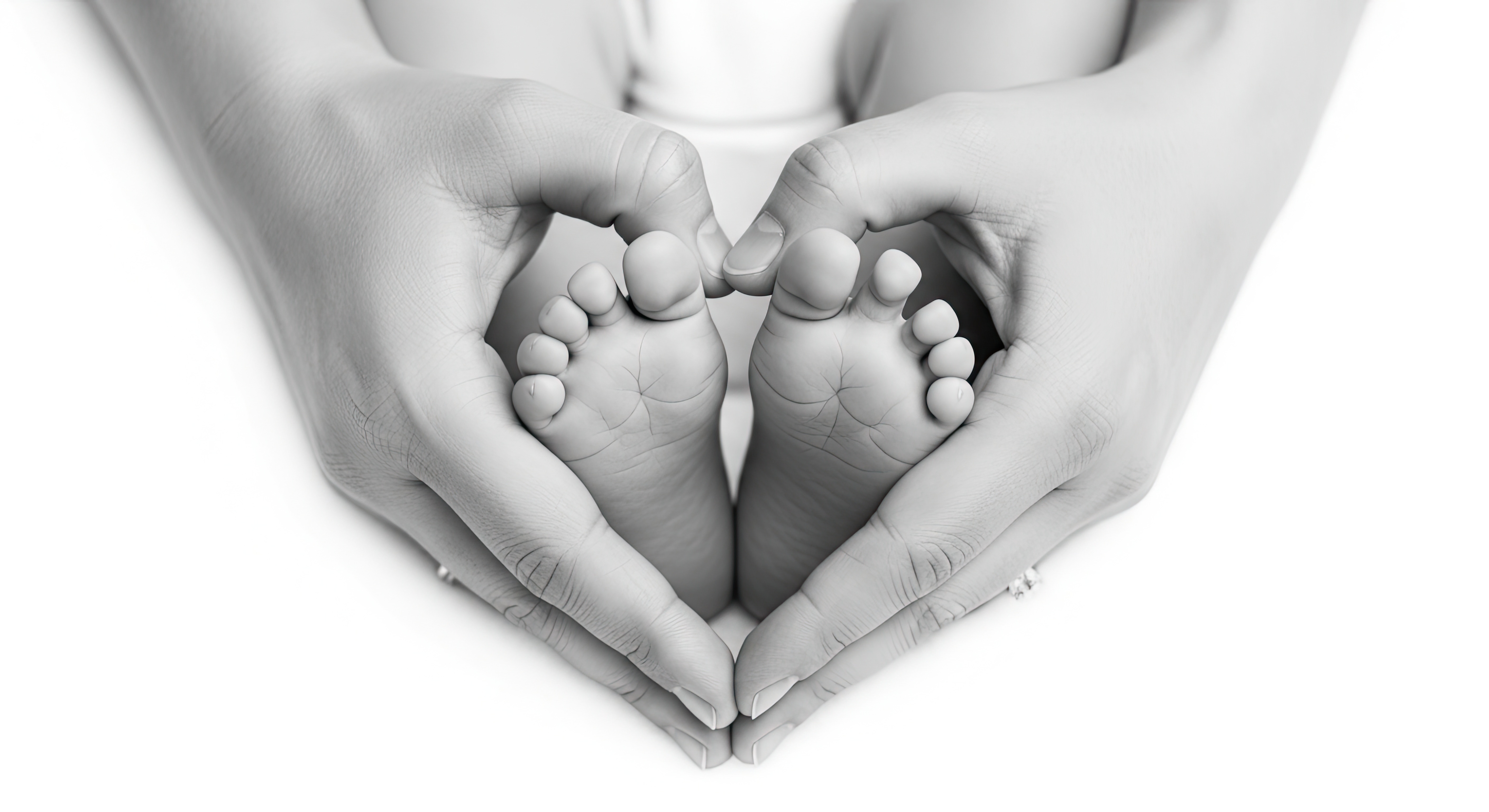
My Daughters Didn't Need the Strong Mom
I used to think being a good parent meant protecting my kids from my own uncertainty.
With my students, I was willing to let them struggle. I challenged them. I trusted them to solve problems. I asked questions more often than I gave answers. I knew discomfort was part of learning.
But at home? Somehow, I'd convinced myself my job was to prevent discomfort.
I desperately tried to figure things out before my daughters noticed I was struggling. I kept my own fears, mistakes, and messy growth tucked safely behind the scenes.
I was wrong.
Somewhere along the way, I realized my daughters weren't learning nearly as much from the version of me who seemed to have it all together.
From her, they learned what polished looked like. But they may also have learned that mistakes were something to hide, that uncertainty should stay behind closed doors, and that "still learning" wasn't something to be proud of.
Which version of me were they learning the most from?
The one who apologized.
The one who changed her mind.
The one who asked for help.
The one who started over.
The one who tried again.
The Moment They Needed
One afternoon, my daughters found me crying on the kitchen floor. Every instinct told me to pull myself together before they saw me.
Instead, I looked up and said,
"I don't know exactly how we're going to get through this. But I know who I'm doing it with."
It wasn't the moment I wanted them to remember. But I think it may have been the moment they needed.
Over the last several years, my girls have watched me navigate grief, an international move, career changes, separation and divorce, and discovering that my own brain worked differently than I'd always believed.
None of that was in the parenting books.
But it became the curriculum anyway.
Confidence Is the Receipt
For years, I believed confidence was something you built before you took a leap. Get stronger. Get calmer. Figure it out. Then make the move.
Life has taught me the opposite.
Confidence is the receipt, not the prerequisite.
Now I know confidence grows after we act.
That's true for me.
It's true for our kids.
It's true whether we're learning to ride a bike, rebuilding after a divorce, or simply apologizing after yelling.
Curiosity with a Dose of Compassion
Curiosity, with a dose of compassion, became the bridge to a version of myself I'm still becoming.
"Why can't I get this right?" became, "What am I learning through this?"
Instead of wondering, "What if there's something wrong with my kid?" I asked, "What might they need?"
Instead of believing, "I should know," I learned to say to my kids, "We can figure this part out together."
I hope my girls grow into capable women. But more than that, I hope they remember that becoming capable happens through the tough stuff.
Not because we dodged it.
Not after it.
But in it.
Because we learned to face it as a team.
I wonder...
Maybe our children don't need parents who have all the answers.
Maybe they need front-row seats to what growth actually looks like.
Join Influential Women and start making an impact. Register now.