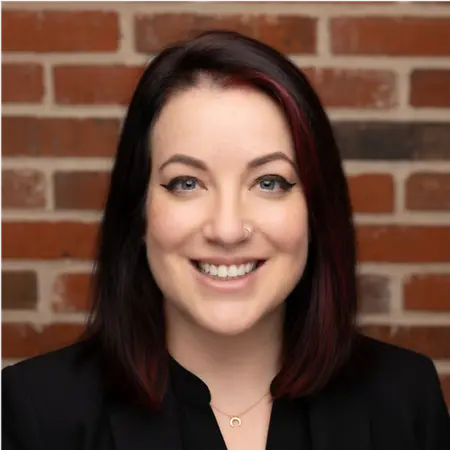
Life becomes much easier when you don't try to fit into someone else's definition of your life, but rather define it on your own.
Amanda Arena · In Her Own Words
Her Story
About Amanda
Amanda Arena, MBA, CEP, FGE, is a forward-thinking business leader and People-First Futurist dedicated to helping organizations navigate transformation at the intersection of people, technology, and strategy. With more than a decade of experience in organizational change, governance, and rewards consulting, she partners with executives, HR leaders, and boards to design innovative, data-driven talent strategies that prepare organizations for the evolving future of work. Her expertise lies in translating complex technical concepts into practical, human-centered solutions that drive growth, adaptability, and long-term success.
As a partner at Aon, Amanda leads conversations around artificial intelligence enablement, workforce transformation, and the responsible integration of emerging technologies into the workplace. She is deeply focused on ensuring that AI adoption remains people-centered, empowering employees at every level to adapt, grow, and thrive in changing environments. Amanda is widely recognized for her leadership in change management, talent strategy, governance, and innovation, as well as her ability to foster collaboration, elevate teams, and create inclusive workplace cultures. She is also passionate about mentorship and professional development, believing that building future leaders is one of the most meaningful measures of success.
Amanda holds an MBA in Business Analytics and a Bachelor of Arts in Accounting, along with MIT Sloan Executive Education certification in “Artificial Intelligence: Implications for Business Strategy.” In addition to her client and advisory work, she is an active contributor to industry conversations surrounding AI, organizational transformation, and the future of work. Based in the Philadelphia region, Amanda is committed to advancing thoughtful, inclusive approaches to technology adoption while helping organizations and individuals confidently prepare for tomorrow’s workforce today.
Her Interview
Ten minutes with Amanda
01What do you attribute your success to?
I've had two mentors who really shaped my career. The first was Laurel Sweet, an executive coach who taught me the concept of 'quit taking it personally' - Q-tip. She said this at a point where I was deciding whether to continue into leadership and bureaucracy, or stay as an individual contributor. I was explaining what felt inauthentic to myself in bureaucratic corporate America, and she asked me if I thought they were only acting like that toward me, or if it was just a bigger picture. It helped me really look at things differently and take a step back and ask what reaction I'm having, why I feel that way, and whether it's being directed only at me or just the way something works. I'd say 99% of the time, it's just the way something works. She was really pivotal in my ability to mature past that stage and take on broader leadership activities. The second is my employee Brianna, who mentored me as an employee. She was my first intern, and the first person I really got to shape as an employee. The feedback from her was such a gift, and still is a gift. It completely changed who I was as a people leader to have somebody that was honest and gave such open feedback to me and was vulnerable. Those two people combined have really made a difference, and I'm such a lucky person to probably have a dozen people that I considered mentors, but those two are really the most impactful.
02What’s the best career advice you’ve ever received?
Quit taking it personally - Q-tip. My executive coach Laurel Sweet told me this at a critical point in my career when I was deciding whether to continue into leadership or stay as an individual contributor. I was explaining to her what I felt was inauthentic to myself in bureaucratic corporate America, and she asked me to think about whether people were only acting that way toward me, or if it was just a bigger picture. It helped me really look at things differently and take a step back and ask what is the reaction that I'm having, why do I feel that way, and is it something being directed only toward me, or is it just the way that something works. I would say 99% of the time, it's just the way something works. This advice was really pivotal in my ability to mature past that stage and take on broader leadership activities.
03What advice would you give to young women entering your industry?
This is a field that needs more women, and it's a field that women can thrive in. The most important thing to be able to do is remember who you are and what motivates you, and ensure that what you're doing aligns with that so that you can maintain authenticity throughout your career. I think so often, women feel that they have to fit a mold or emulate their co-workers or colleagues or their bosses, and I just think it's extremely important that women stay authentic to themselves. We're often asked to make ourselves smaller to fit other people around us, and I think it's so important for us to take up all the space we need. The vulnerability, the empathy, the emotionality that we bring to the workplace - as much as historically that's been squashed - I think it's what makes the workplace a beautiful place to be in. We have to remember we spend 80% of our waking hours at work, so maintaining who you are is very important for all of that.
04What are the biggest challenges or opportunities in your field right now?
There's a lot of fear-mongering out there about AI. On one side you hear AI is going to take over everything and create huge losses in finances and a ton of poverty across the board. On the other side, you hear that AI isn't really doing anything and it's just business as usual. I think the truth is somewhere in between. The challenge and opportunity is ensuring that all employees, not just privileged employees, are able to integrate AI into their roles at work. I'm really challenging our clients to think thoughtfully about what this means for the future, both for economic positioning and for the future of humanity. You can't just all of a sudden replace everybody with robots and say this is fine - that doesn't really work. The opportunity is making sure that people have equal access to artificial intelligence courses and to utilizing it, especially when they've got caregivership, or they're a parent, or have to work multiple jobs for whatever reasons due to financial conditions. We need to make sure people don't see an ever-widening gap, because now artificial intelligence can accelerate the people that are privileged enough to know how to use it.
05What values are most important to you in your work and personal life?
Equality and access are at the core of everything I do. I'm a big Americans with Disabilities Act advocate because my older sister, who has since passed, had Down syndrome, so a lot of my thought process in equality is around true equality and access - whether it be physical or just anything, it's all about making sure that people have equitable chance at things. There's an overarching theme in my career where I've moved from being focused on executives to being focused on everybody. A lot of the work I'm trying to do is making sure that people have equal access to artificial intelligence courses, to utilizing it when they've got caregivership or they're a parent or have to work multiple jobs for whatever reasons due to financial conditions. I want to ensure that as we're discussing with our clients how to roll out AI, we're doing it in a way that is ethical and safe, particularly with all the PII that's tied to it, and thinking about the ethical implications of changing your whole workforce around it. Authenticity is also critical - I believe it's extremely important for women to stay authentic to themselves and take up all the space we need, bringing our vulnerability, empathy, and emotionality to the workplace.
Join Influential Women and start making an impact. Register now.