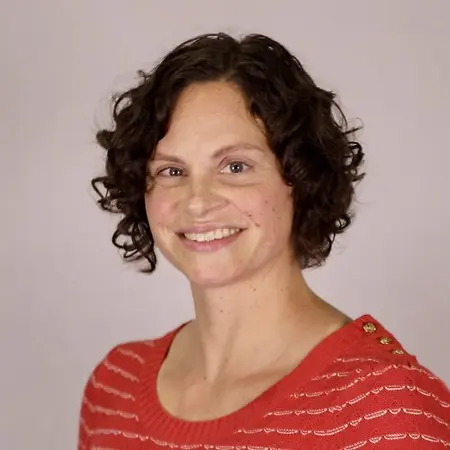
Her Story
About Amanda
Amanda Pain serves as Senior Manager of Communications and interim lead, bringing more than 20 years of experience to her role in the nonprofit and global health sector. After earning an undergraduate degree in journalism, she volunteered with the Peace Corps following college before pursuing a master's in public health communications. This unique combination of skills allows her to translate complex technical information into accessible content, a capability she has leveraged to build trust among highly skilled colleagues, including PhDs, during her nearly seven years with her current organization. Amanda values balance in her professional and personal life, which includes time for hobbies like knitting, yoga, adult tap dancing, and outdoor activities near her home in Bend, Oregon. She credits her success to embracing change and new opportunities, and she advises young women entering the field to apply critical thinking and speak up to supervisors rather than feeling disempowered when new to their roles. In her view, challenges such as AI advancements in writing and reduced funding present opportunities for communications professionals to guide effective tool use and connect with new donors through meaningful outreach.
Her Interview
Ten minutes with Amanda
01What do you attribute your success to?
I attribute my success to being willing to try something new. When I went into the Peace Corps after college, it was a hard experience, but being on the other side of it made me feel like there's not much that I couldn't handle if I decide it's something I want and I put my mind to it. Not being scared of change and things that are different, and not being afraid to ask for what I want and be told no, because there's always another avenue, and sometimes closed doors lead to other open doors.
02What’s the best career advice you’ve ever received?
The best career advice I ever received was really about setting boundaries in work-life balance, because I'm a mom. Being true to myself and what I want in my boundaries has actually made me more successful in some ways, because when you're not always saying yes, yes, yes, sometimes you get more of what you actually want.
03What advice would you give to young women entering your industry?
Don't feel disempowered when you're new. Apply critical thinking skills and say I don't think this is going to work because of X, Y, and Z. Don't be afraid to speak up to your supervisor or boss if you don't think something is the right way to do it, to get ahead of certain mistakes. I wish I would have done more when I was younger.
04What are the biggest challenges or opportunities in your field right now?
AI is definitely a challenge because it is getting better at writing, but it also can propose an opportunity to help other people understand how to use it as a tool and when a human interface is necessary. In the nonprofit and global health sector, there's challenges with reduced funding, and comms can get cut first, but that presents an opportunity because people have to reach out to new donors and the only way is to communicate appropriately.
05What values are most important to you in your work and personal life?
Having balance is really important because it makes me a better worker and colleague when I can do my hobbies, go outside, spend time with my family. It makes me more productive. Communication and honesty is more important than ever, and there's a real value and power to communication that I take responsibility with and want to use in a productive and helpful way.
Join Influential Women and start making an impact. Register now.