Influential Woman · Financial Services
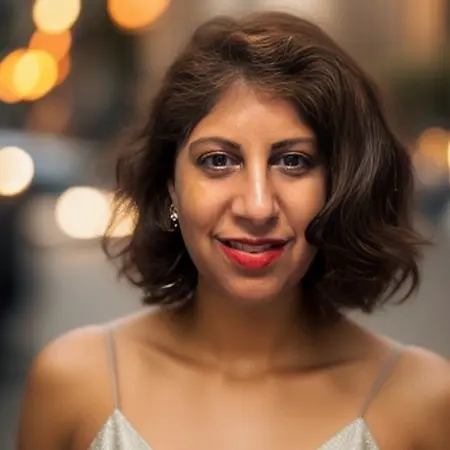
Amanda Sohan
Executive Assistant, Financial Services Firm
New York, NY 10036
Her Story
About Amanda
Amanda Sohan is an experienced Executive Assistant based in New York, United States, with more than two decades of expertise supporting senior leaders in the financial services industry. She currently works in a global financial services firm, where she provides high-level administrative and operational support, including calendar management, travel coordination, meeting logistics, expense reporting, and executive communication. Her career began in entry-level administrative roles and has grown through consistent development, adaptability, and a strong commitment to service excellence. Throughout her career, Amanda has developed a reputation for precision, reliability, and emotional intelligence in high-pressure corporate environments. She is highly skilled in managing complex schedules, coordinating all aspects of travel, handling sensitive documentation, and ensuring seamless daily operations for executives and teams. Her ability to remain calm under pressure while managing competing priorities has made her a trusted and dependable presence within every organization she has served. In addition to her corporate career, Amanda is also an accomplished author, having published four books and maintained a creative writing practice alongside her professional work. She is known for her people-centered approach, emphasizing warmth, authenticity, and strong interpersonal relationships in the workplace. Her ability to balance professionalism with empathy has been central to her long-standing success and her ability to create supportive, efficient, and collaborative work environments.
Her Interview
Ten minutes with Amanda
01What do you attribute your success to?
I attribute much of my success to my faith, which plays a central role in how I approach both my work and life's challenges. In a profession where priorities can shift by the minute and demands often come from every direction at once, my faith provides a sense of grounding and perspective.
When faced with difficult decisions or overwhelming situations, I often pause and seek God's guidance. It is, in many ways, a "What would Jesus do?" approach that influences how I respond to challenges, interact with others, and navigate uncertainty. My faith reminds me to slow down, take a breath, and approach situations with wisdom rather than react out of stress or urgency.
One piece of advice I often share with those entering the profession is to create space for reflection when things feel chaotic. Whether that means saying a prayer, taking a quiet moment, or simply pausing to collect your thoughts, stepping back can bring remarkable clarity. Once you quiet the noise, it becomes easier to identify what truly requires your attention and what can wait.
Experience has certainly taught me the importance of prioritization and composure under pressure, and there is no substitute for the lessons that come with time. But for me, faith is the foundation that supports those lessons. It provides the clarity, peace, and confidence to apply my experience thoughtfully, especially when the stakes are high.
02What’s the best career advice you’ve ever received?
The best career advice I ever received actually came from my ex-husband — and to this day, we remain very good friends.
About ten years ago, another EA asked me if I would share my conferencing procedures with her. Over the years, I had created and refined an entire booklet of processes that I’d carefully developed into what I considered a near-perfect system. I was incredibly proud of it — and honestly, I didn’t want to share it. I had poured so much time, effort, and experience into creating those materials that giving them away felt like handing over the keys to the kingdom for free. Part of me worried it would somehow diminish my value or even jeopardize my own job security.
When I spoke to my ex-husband about it, his response was immediate: “Absolutely share it.” He told me that the same way she came to me for guidance was the same way I should feel comfortable learning from others. He said that as EAs, we should foster a culture of collaboration because we are a community. Sharing knowledge doesn’t take anything away from us — it elevates everyone involved. It makes us better individually and stronger collectively. I thought about what he said, called her back, and shared my process. Ever since then, my perspective on collaboration has completely changed. I’ve learned that knowledge-sharing is not a threat — it’s a strength. And ever since that moment, I’ve made a conscious effort to mentor, collaborate, and openly share what I’ve learned along the way.
03What advice would you give to young women entering your industry?
What has really surprised me about the young women and men entering this field today is just how incredibly smart they are — and how naturally fluent they are with technology. They instinctively understand how to leverage AI and digital tools to streamline processes in ways my generation simply didn’t have access to. They’re faster, more digital, less paper-driven, and remarkably quick-thinking. But what I’ve also learned over the years is that there is no substitute for experience. Experience teaches you how to breathe when a million things are coming at you all at once. It teaches you that not everything requires panic, urgency, or immediate reaction. Sometimes the greatest skill is learning how to slow down in the middle of chaos. For me, my faith plays a tremendous role in that. I truly consult God at almost every turn throughout my day. And because of that, one of the biggest pieces of advice I would give to those coming into this profession is this: when everyone is pulling at you from every direction, pause for a moment. Breathe. Say a quiet prayer, collect yourself, or simply give yourself a second to think clearly. Once you do, things tend to settle. You begin to understand what truly needs your attention right now and what can wait until later. That clarity is invaluable in this profession. And lastly, don’t hold back information. If you have knowledge, insight, or a process that could help someone else, share it. Create collaboration with your peers because this profession truly is a community. Supporting one another and exchanging ideas only makes all of us better.
04What are the biggest challenges or opportunities in your field right now?
The greatest challenge in my role as an Executive Assistant has always been adapting to different personalities, leadership styles, and ways of working. Every Managing Director and every team operates differently. They each have their own preferences, communication styles, decision-making processes, and expectations, and success often comes down to understanding those nuances.
One of the most important skills I've developed is listening—not just to what people say they need, but also to what they may not yet realize they need. This is especially true when supporting an executive who has never worked with an assistant before. In those situations, part of my role is translating their ideas and expectations into effective processes and solutions that help them work more efficiently.
There is often a period of adjustment at the beginning of any new partnership. You're learning their rhythm while they are learning yours. Over time, a successful working relationship becomes a true collaboration. It's a two-way street built on communication, trust, and mutual respect. Throughout my career, regardless of the firm or industry, that process of understanding people and building strong partnerships has been one of the most rewarding—and challenging—aspects of the role.
Looking ahead, I believe one of the profession's greatest challenges will be the integration of artificial intelligence. As Executive Assistants, we're actively exploring how to leverage AI to improve efficiency and streamline administrative tasks while preserving the uniquely human elements of our work.
05What values are most important to you in your work and personal life?
I think authenticity is probably one of the most important values in both my professional and personal life. People can usually sense when someone is performing a personality rather than genuinely showing up as themselves, and I think that can feel very off-putting. By nature, I’m a very warm person, and throughout my career I’ve learned how to navigate different environments and personalities. Some firms and executives are naturally more formal, particularly in the beginning, so I’ve always tried to read the room and adjust accordingly. I can turn the volume of my personality up or down depending on the dynamic and gauge what makes people most comfortable. But more often than not, when people are given the choice between excessive formality and genuine warmth, they choose warmth. They respond to authenticity. They appreciate being able to have real conversations and human connection rather than feeling like they need to exist within rigid hierarchies or place someone on a pedestal. A large part of that warmth comes from my West Indian culture. Hospitality, openness, and making people feel comfortable are deeply rooted in how I was raised, and that has naturally carried over into my professional life. In many ways, it has become one of the defining qualities that makes me unique in my field, and I think people genuinely respond well to that energy. Beyond authenticity, trust and integrity are also core values that guide everything I do. People want to know they can rely on you, trust your word, and feel safe in your presence — both professionally and personally.
Join Influential Women and start making an impact. Register now.