Her Story
About Amaris
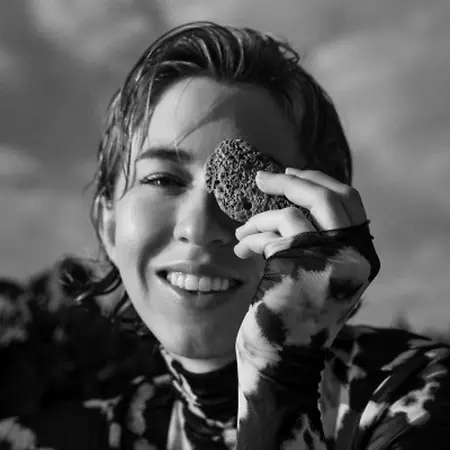
Amaris Mokhortov serves as Director of Education and Conservation at Treasure Coast Wildlife Center (TCWC), a nonprofit dedicated to wildlife rehabilitation, conservation, and environmental education in Palm City, Florida. Raised near Florida's waterways and beneath its oak canopies, she grew up watching manatees and ospreys, an upbringing that shaped a lasting bond with the state's ecosystems. In her current position, she leads community outreach, school programming, and public speaking initiatives, while forging partnerships with schools, government agencies, and civic organizations to expand the reach of conservation education across the Treasure Coast region.
With roughly five years in the wildlife conservation and advocacy field, Mokhortov's background includes fieldwork with the Florida Department of Environmental Protection, the Florida Conservation Corps (AmeriCorps), and the Indian River Lagoon Aquatic Preserves. Her hands-on experience spans prescribed fire management, oyster reef and seagrass restoration, invasive species control, and monitoring of endangered and endemic species such as the four-petal pawpaw, the Florida scrub-jay, and the red-cockaded woodpecker. She has also studied the impact of marine plastic pollution on seabirds through dissection-based research, and served as an Operational Team Lead during federal hurricane disaster response efforts following Hurricanes Helene and Milton, where she oversaw hazardous tree removal and advised incident command on pesticide safety protocols.
Mokhortov holds a Bachelor of Science in Environmental Studies, Marine Biology, and Sustainable Aquaculture from Unity Environmental University, which she completed with highest honors. Beyond her role at TCWC, she serves as Vice President of the Martin County Chapter of the Florida Native Plant Society, where she chairs the Children's Programming Committee, and she previously founded Conservation Energetics, an independent consultancy focused on native landscaping and sustainable living. Drawing inspiration from environmental literature, regenerative design, and time spent in nature with her children, she continues to advocate for stronger public understanding of how everyday human behavior shapes wildlife outcomes.
Her Interview
Ten minutes with Amaris
01What do you attribute your success to?
I attribute my success to staying faithful to a calling I've felt since I was young — an inherent knowing that I was meant to work in environmental conservation, and a conviction that nothing would keep me from that path. Alongside that inner sense of direction, I credit hard work: my time in AmeriCorps taught me the value of saying yes to every opportunity, actively seeking out new ones, and putting myself forward. Ultimately, it has been a combination of diligence and remaining aligned with the purpose I know is mine to pursue.
02What’s the best career advice you’ve ever received?
The best advice I've received is to get involved with as many organizations as possible, while being mindful not to overextend myself. Volunteering, joining organizations as a member, and making yourself available for opportunities are especially valuable when trying to break into a field you're passionate about. In the environmental sector in particular, there is no shortage of organizations doing meaningful work, and opportunities tend to present themselves to those who actively seek them out.
03What advice would you give to young women entering your industry?
I would encourage young women to start wherever they can, gain experience through volunteer work, and show up with genuine passion and dedication. National service programs like the Florida Conservation Corps and AmeriCorps gave me career experience that accelerated my path to a director-level role, and I believe similar opportunities can do the same for others. If the right opportunity doesn't yet exist, don't be afraid to create it yourself — I did this by starting my own business during a period when I couldn't find the right position. I'd also recommend using tools like guided meditation and visualization to get clear on the future you want, aligning your daily actions with that vision, and trusting that a place for you exists if you keep putting yourself out there.
04What are the biggest challenges or opportunities in your field right now?
One of the biggest challenges in wildlife rehabilitation is that so many of the cases we see are directly caused by human impact — for example, hawks brought in with secondary poisoning from rodenticides used to control rodents, or pesticide runoff that harms the insects birds rely on for food. While we're equipped to treat these cases when animals reach us, the deeper challenge is helping the public understand that wildlife isn't something distant — it exists in our own backyards, and our everyday choices directly affect the success or failure of local species. I see real opportunity in public speaking and education to bridge that gap, and I believe there's also a need to push for policy change, since practices like unrestricted rodenticide use and pesticide runoff should not be legal given the harm they cause to a sustainable environment.
05What values are most important to you in your work and personal life?
Staying true to myself is central to everything I do — being genuine and honest, and holding firm to strong ethics, both personally and environmentally, even when it means disagreeing with a company's practices or advocating for change. I value having grit, but I also try to stay soft with myself, recognizing that if something won't matter in five years, or doesn't affect my family, health, or core values, it's probably not worth excessive worry. In the end, it comes down to honestly upholding what I believe in.
Join Influential Women and start making an impact. Register now.