Her Story
About Amie
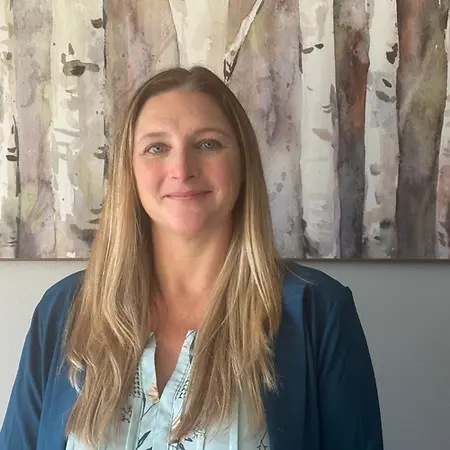
Amie Nephew, is a nationally recognized digital accessibility leader and serves as the Director of Accessibility for the Tennessee Board of Regents, where she leads accessibility strategy across the state's community and technical college system. With more than 15 years of experience in education, instructional design, and digital accessibility, she develops and oversees statewide training programs, awareness initiatives, accessibility standards, and implementation roadmaps that help ensure students with disabilities can access digital content using assistive technology. Her work brings together faculty, administrators, procurement teams, and technology partners to embed accessibility into every stage of digital content creation, creating more equitable learning experiences for all students.
Amie's passion for accessibility began during her career as a high school mathematics teacher, where she witnessed firsthand how inaccessible digital tools prevented students with disabilities from fully participating in the classroom. Determined to help remove those barriers, she transitioned into instructional design before specializing in digital accessibility. She holds a master's degree in education with an emphasis in mathematics, an instructional design degree, and professional credentials including the Certified Professional in Accessibility Core Competencies (CPACC) and Section 508 certification. A respected keynote speaker and trainer, she advocates for a people-centered approach to accessibility that extends beyond compliance to create digital experiences that are practical, inclusive, and empowering.
Amie attributes her success to a genuine desire to care for others and improve access for everyone. Guided by integrity and empathy, she believes accessibility is fundamentally about people—not just standards or checklists—and encourages organizations to design with the lived experiences of individuals with disabilities at the center of every decision. Through her leadership, education, and advocacy, she continues to advance a future where inclusive design is the norm, ensuring technology empowers rather than excludes those who rely on it most.
Her Interview
Ten minutes with Amie
01What do you attribute your success to?
I attribute my success to genuinely caring about others. As a former high school math teacher, I saw firsthand how inaccessible digital tools created barriers for students with disabilities. That experience inspired my transition into digital accessibility, where I continue to advocate for equal access by helping create technology and digital experiences that are inclusive for everyone.
02What’s the best career advice you’ve ever received?
The best career advice I have ever received is to always be my authentic self. Rather than overpromising or trying to be someone I am not, I have learned that authenticity, empathy, and integrity build trust and meaningful relationships. Being genuine about my passion for digital accessibility allows others to better understand my work and connect with its purpose.
03What advice would you give to young women entering your industry?
My advice to young women entering this industry is to keep people at the center of everything you do. Technical skills can be developed over time, but empathy and a commitment to inclusion are what create meaningful impact. By understanding the experiences of people with disabilities and designing with accessibility in mind, you can help build technology that benefits everyone.
04What are the biggest challenges or opportunities in your field right now?
One of the greatest opportunities in digital accessibility is expanding access to essential online services such as education, healthcare, and everyday activities like shopping. At the same time, there are ongoing challenges in increasing awareness of accessibility best practices and ensuring digital content works effectively with assistive technologies. I believe accessibility is both a responsibility and an opportunity to create a more inclusive digital world for everyone.
05What values are most important to you in your work and personal life?
The values that guide both my professional and personal life are integrity and empathy. I believe in doing the right thing, even when easier alternatives exist, and in always considering the needs and experiences of others, particularly individuals with disabilities. These principles shape my approach to creating accessible technology and help me ensure that inclusion remains at the heart of everything I do.
Join Influential Women and start making an impact. Register now.