Her Story
About Amy
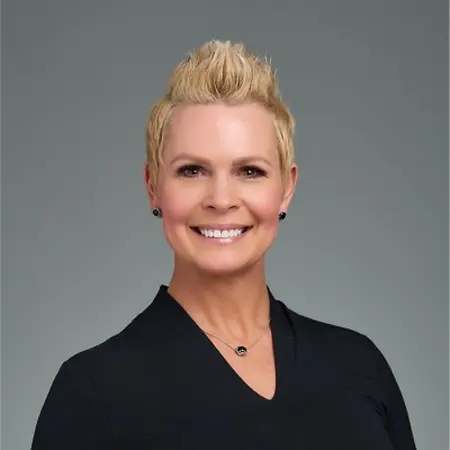
Amy Bennett serves as Vice President and Practitioner in the Business Resilience practice at DuraBante, a business consulting and management firm based in Whitehall, Maryland. She founded the practice within the company this past year after nearly eight years culminating as Vice President of Business Resilience at T. Rowe Price. A retired Army veteran who served for 21 years, Amy helps organizations develop and mature business resilience, business continuity, and crisis management policies and procedures. She supports clients in building discipline around core functions and processes to protect against disruptions and prepares leaders to respond, communicate, and lead effectively during incidents through training and exercises. Amy earned a BA from the University of Dayton in 1996 through the ROTC program, where she commissioned as an officer, followed by an MA from the University of Oklahoma in 2001 and a post-graduate certificate from Johns Hopkins University Cary Business School as a skilled facilitator. She maintains certifications as a Certified Business Continuity Professional (CBCP) and Lean Six Sigma Black Belt. Her professional affiliations include the FEMA Vanguard Executive Crisis Leaders Fellow, the Disaster Recovery Institute (DRI), the Association of Continuity Professionals (ACP), and the Disaster Recovery Journal (DRJ). As a founding member of the Stop Soldier Suicide Executive Leadership Council, Amy is also a dedicated advocate for veteran mental health and suicide prevention. Amy is the author of a bi-weekly, published newsletter on LinkedIn called "The Resilience Brief" and she is on the precipice of launching a new monthly panel/podcast that she will facilitate for the 7 Eagle Group military SkillBridge Program starting in September called "The Resilience Debrief", featuring military veterans who are business owners/entrepreneurs sharing their business resilience story and lessons learned.
Her Interview
Ten minutes with Amy
01What do you attribute your success to?
If I had to attribute my success to one thing, it would be building meaningful relationships grounded in trust, integrity, and service. Throughout my military and civilian career, I've learned that no one accomplishes anything truly significant alone. Every opportunity I've had has been the result of people who invested in me, challenged me, mentored me, and believed in my potential.
I've also tried to pay that forward by investing in others. Whether leading Soldiers, mentoring professionals, helping organizations become more resilient, or supporting veterans through nonprofit work, I've always believed that leadership is about leaving people and organizations better than you found them.
02What’s the best career advice you’ve ever received?
The best career advice I ever received came from a military mentor who challenged me with a simple question:
"Are you and owner or a renter"?
He wasn't talking about real estate. He was talking about leadership.
His point was that too many people treat their roles as temporary assignments - they show up, do what's required, and move on. Owners think differently. They take pride in their work, invest in the people around them, look for ways to improve the organization, and leave things better than they found them.
That lesson has stayed with me throughout my military and civilian career. Whether leading Soldiers, building business resilience programs, consulting with clients, or serving nonprofit organizations, I've tried to approach every role with an owner's mindset.
Titles change. Organizations change. Careers evolve. But your reputation for taking ownership, creating value, and investing in others follows you wherever you go.
To me, that's what leadership is all about.
03What advice would you give to young women entering your industry?
My advice to young women entering the business resilience profession is simple: don't underestimate the value of your perspective or your potential.
Business resilience touches every part of an organization, so take every opportunity to understand how the business operates - not just your own role. The broader your perspective, the more valuable you'll become. Be curious, ask thoughtful questions, and never stop learning.
Invest in relationships. Some of the greatest opportunities in my career have come from mentors, colleagues, and professional connections who challenged me, encouraged me, and opened doors. Build your network before you need it, and don't be afraid to ask for guidance.
Don't wait until you feel 100% qualified to raise your hand for a new opportunity. Growth happens when you're stretched. Some of the most rewarding experiences of my career came from stepping into roles that felt just beyond my comfort zone.
Lead with integrity, be dependable, and let your work speak for itself. Credibility is earned through consistency, preparation, and following through on your commitments.
Finally, remember that resilience is about people as much as plans. Learn how to listen, collaborate, and build trust. Technical skills may get you in the door, but your ability to connect with people, lead through uncertainty, and bring others together will define your long-term success.
And wherever your career takes you, strive to leave every team and every organization better than you found it. Improve your foxhole. That kind of leadership creates a legacy that lasts long after you've moved on.
04What are the biggest challenges or opportunities in your field right now?
One of the greatest challenges facing the business resilience profession today is helping leaders recognize the value of investing in resilience before they need it.
When organizations are performing well, resilience can feel like an insurance policy - important in theory but easy to postpone when budgets are tight and competing priorities demand immediate attention. It's human nature to focus on today's pressures rather than tomorrow's uncertainties.
The reality is that resilience isn't built during a crisis. It's built in the months and years beforehand through thoughtful planning, strong leadership, trusted relationships, and a culture that embraces preparedness and adaptability.
At the same time, I see tremendous opportunity. The pace of change has never been greater. Organizations are navigating cyber threats, supply chain disruptions, workforce changes, geopolitical uncertainty, extreme weather, and rapidly evolving technology, including artificial intelligence. More leaders are beginning to realize that resilience isn't just about business continuity or recovering from disruption - it's a strategic capability that enables organizations to adapt, protect what matters most, and continue creating value in an increasingly uncertain world.
The organizations that will thrive won't necessarily be the ones that avoid disruption. They'll be the ones that invest in building resilience before the next challenge arrives.
05What values are most important to you in your work and personal life?
The values that guide both my professional and personal life are integrity, loyalty, service, resilience, and relationships.
Integrity is my foundation. I believe in doing the right thing, even when it's difficult or unpopular, because trust is earned over time and can be lost in an instant.
Loyalty is equally important to me. I believe in showing up for the people who count on me - my family, my colleagues, my clients, and my community. Loyalty isn't blind agreement; it's being dependable, investing in others' success, and standing beside people through both challenges and triumphs.
Service has been the common thread throughout my life - from serving in the Army to helping organizations become more resilient, mentoring others, and supporting veterans and military families in my community. I believe leadership is less about position and more about making a positive difference in the lives of others.
Resilience is both my profession and my passion. I believe resilience isn't simply about bouncing back from adversity; it's about anticipating challenges, adapting with purpose, learning from experience, and emerging stronger because of it.
Finally, I value relationships above accomplishments. I've learned that success is rarely achieved alone. The strongest teams, families, and organizations are built on trust, collaboration, and people who genuinely invest in one another. At the end of the day, I hope my legacy isn't defined by the titles I've held, but by the people I've helped and the organizations I've left stronger than I found them.
Join Influential Women and start making an impact. Register now.