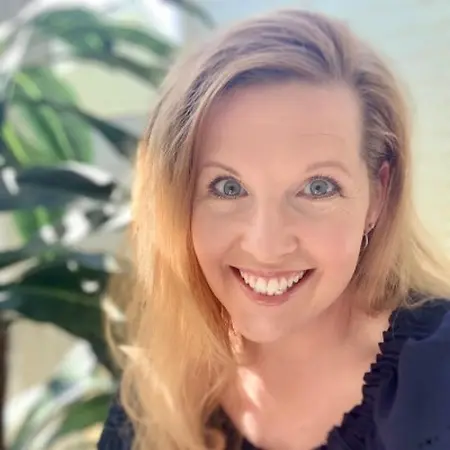
Her Story
About Amy
I've been working in the military nonprofit space for 10 years, serving Gold Star families - families of those who served and died while serving on active duty. This work is incredibly personal to me because I became a wife, a mother, and a widow in the span of 18 months when I received that knock on my door. As Director of Outreach at the Woody Williams Foundation (named after Medal of Honor recipient Woody Williams from World War II), I manage four key areas: resourcing families who reach out needing peer support, grief support, education or benefits connections; planning events across the country to bring families together because healing really does happen in community; writing a monthly newsletter that shares what's happening at the foundation and in the Gold Star community; and hosting my podcast 'After the Knock,' which is supported by Wreaths Across America Radio and gives families a platform to share their stories. I'm also deeply involved in mental health work, focusing on changing conversations around mental health, suicide prevention and postvention. I've worked with organizations like TAPS, Stop Soldier Suicide, and many other military family nonprofits, sometimes in consulting roles to help with lead generation and program development. I'm called a subject matter expert in grief and the grief journey, though I see myself more as someone who sits with people, hears their stories, and holds space with them, using the knowledge and perspective I've gained from each story to shape better programs to serve these families.
Her Interview
Ten minutes with Amy
01What do you attribute your success to?
I attribute my success to showing up authentically as myself and leading with my heart. The best advice I've received came from people who know me best - they told me that my emotions are my superpower and to never be anyone other than who I am when I'm with these families. I've learned that there's no other person to show up as, and the older I get, the more I realize this. It takes a lot of heart, emotional intelligence, and emotional regulation to do this work with Gold Star families. When I can just show up and be who I am, I think it gives people the courage to be more vulnerable, open, and honest about who they are and how they're going to operate in this relationship. Life is too short, and we don't have time to really dig in and break down walls to get to the heart of what people are going through. So if I can just show up and be myself, that's what makes the difference.
02What’s the best career advice you’ve ever received?
The best career advice I've ever received is that my emotions are my superpower, and I should never be anyone other than who I am when I'm with these families. This advice came from people who know me best - they know my heart, my emotions, and my sensitivity. They know me as a whole person. Because of the work I do with Gold Star families, it takes a lot of heart, emotional intelligence, and emotional regulation. There have definitely been moments when things have gotten funky at work or I've had a stressful day and I don't show up as my very best self. But the older I get, the more I realize there's no other person to show up as. I'm always thankful for people who remind me to show up in the world just as who I am. I can meet families where they are because I get it, and I think showing up authentically gives people the courage to be more vulnerable and open and honest about who they are.
03What advice would you give to young women entering your industry?
Find your voice and use it. I struggled for a long time because in military culture, it's very male-dominated. I've even experienced moments where, even when there are females in charge, I can see the ones who had to fight to get there. It's hard when you're in a male-dominated area, and it's hard when you're in an area where people are going after the same donor dollars. It's hard to remain present in your authenticity when everybody else is fighting for that dollar. It's a really interesting juxtaposition to have to be that emotional stability for the families that we're serving, and remain intact with your own emotions and that sensitivity that is your superpower. But then you've got to pivot and suddenly become this boss fighting for the place at the table, fighting for the last donor dollar. The world is very interesting, and remaining calm in those instances is important. I think just knowing who you are, finding your voice, and making sure that you are in a position to pivot and use your voice where it needs to be heard, in the right ways. Don't spend your days feeling unheard and unseen.
Join Influential Women and start making an impact. Register now.