Her Story
About Amy
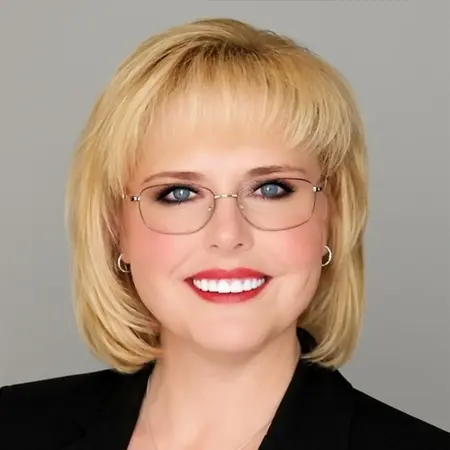
Amy Forsee is a Distinguished Architect certified by The Open Group, with more than 25 years of experience in IT and enterprise architecture. Her deep expertise spans AI, automation, and cloud architecture, with a focus on innovative technologies that move organizations forward. She serves as Director of Advanced Systems Architecture for the State of Missouri's Information Technology Services Division, where she built the state's AI governance standards from the ground up and now guides agencies through the shift from experimentation to enterprise-scale AI adoption.
Amy treats governance as an engine for innovation, not a brake on it. She designs multi-agent architectures for policy compliance, evaluates enterprise AI security stacks, and aligns emerging technology programs with NIST and ISO/IEC 42001 standards. Her work earned her a nomination for Architecture Leader of the Year, Americas 2026, from the Chief Architect Network. Before her state government role, Amy held Chief Enterprise Architect positions at IBM and Kyndryl.
Amy carries a servant leader's mindset into every room. She mentors rising architects and champions women in technology through the Chief Architect Network and WomenTech Network. She believes in governing the envelope, not every action, so leaders can scale AI with confidence instead of fear. Amy's background spans electronic engineering, computer science, and information security. She holds 3 published inventions, with one pending patent.
Her Interview
Ten minutes with Amy
01What do you attribute your success to?
I attribute my success to a willingness to step into the gaps other people avoid. Early in my career, that meant infrastructure and enterprise architecture work most people found too complex to touch. Later, it meant AI governance, a discipline no one else in my organization was ready to own. I built the expertise because the moment demanded it, not because the path was already mapped out.
My engineering background trained me to think in systems: interdependent, structured, built to hold weight under pressure. I apply that same discipline to AI governance today. Govern the envelope, not every action. That mindset lets organizations move fast without losing control.
None of it happens alone. I have had many mentors and sponsors over the years, and I have learned they are not the same gift. A mentor teaches you how to do the work. A sponsor spends their own credibility putting your name in a room you are not in yet. I needed a different mentor for different mountains. One who has spent years helping me grow as a leader, and another who walked me through earning my Distinguished Architect certification, one of the hardest climbs of my career. I try to give both gifts back now, coaching the architects and women in technology I mentor, and putting my own credibility behind them when the door is closed and they don't yet have the standing to open it themselves.
02What advice would you give to young women entering your industry?
Do not wait for a mentor who looks like you. Some of my strongest mentors have been men, and those relationships shaped my career as much as any other. Find people who can help you with the specific challenge in front of you right now, and build several of those relationships instead of just one. No single mentor can walk you through every stage of a technical career.
Learn to describe your own work out loud, too. Talent does not speak for itself. The women who advance are the ones who can explain their impact in language that builds influence instead of quietly disappearing into the background.
And take on the work other people avoid. The hardest, most technical problems in the room are usually the ones nobody wants to own. That is where careers get built. Step into the gap, and the room starts to notice you belong in it.
03What are the biggest challenges or opportunities in your field right now?
The biggest opportunity in my field is also the biggest risk. Organizations are moving from AI pilots to production faster than they are building governance to support it. I call this the AI divide. Organizations that build governance as a foundation will scale with confidence. Organizations that treat it as paperwork will spend years cleaning up the fallout.
Agentic AI sharpens that risk. Some AI works like an elevator: press a button, and it does the same thing every time, no judgment involved. That predictability is the whole point. Newer AI works more like a new hire, reasoning through a situation and choosing its own path, which is powerful, but it will not choose the same path twice. The mistake I see most often is leaders trusting the new hire with an elevator's blind confidence. Keep the predictable actions locked down like the elevator, and save judgment for where it actually helps. That is where enterprise architecture earns its seat back at the table.
There is a quieter opportunity underneath that one. Women hold roughly a quarter of professional computing occupations today, a share that has been sliding for forty years. As AI absorbs more routine execution, the people left in the room are the ones setting direction and drawing boundaries. Getting more technical women into those seats now, while the discipline is still being defined, matters.
04What values are most important to you in your work and personal life?
Family and friends are my foundation. They ground me, and everything else I do draws on that stability.
At work, I am fortunate. I love what I do, and I get to do it alongside teammates I genuinely enjoy working with. That combination is not something everyone gets, and I do not take it for granted.
Trust and hard work anchor how I operate. Trust is what lets a team move fast without checking every step behind them. Hard work is what earns that trust in the first place.
I also believe complex problems do not have to be joyless. Some of the hardest technical and governance challenges I have worked on have also been the most fun, solved alongside people I respect.
And I care about lifting other people up. Watching someone I have mentored or sponsored get their moment, their time in the spotlight, matters to me as much as any win of my own.
Join Influential Women and start making an impact. Register now.