Her Story
About Dr. Amy
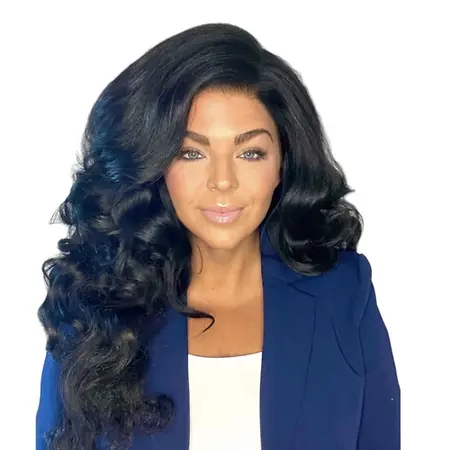
Amy Moore, Ed.D., is a High School Assistant Principal at The School District of Philadelphia, where she is committed to creating the conditions necessary for improved student outcomes in and beyond the classroom. A results-driven instructional leader, she focuses on strengthening teacher practice through responsive professional development and individualized coaching while fostering a safe, structured, and supportive school climate. Her leadership philosophy centers on “doing the quiet work” — designing systems, anticipating challenges, and safeguarding a culture where both students and staff can thrive. Her efforts have contributed to measurable gains in literacy achievement, on-track rates, graduation, and reductions in disciplinary actions. Dr. Moore brings more than two decades of experience in urban education. Prior to her current role, she served as Dean of Students and Student Advisor in Delaware, where she concentrated on student well-being, school climate, and organizational culture. She also worked as a Literacy Specialist with Children's Literacy Initiative and an Executive Coach with American Reading Company, partnering with schools and districts to improve literacy outcomes, and began her career as an educator and instructional coach with Baltimore City Public Schools. Throughout each role, she has maintained a deep commitment to closing literacy gaps for students in historically underserved communities. Dr. Moore earned her Doctorate of Education in Public and Nonprofit Leadership from American College of Education and a Master of Education in Educational Leadership from Wilmington University. Across her 20 year career, she has remained steadfast in her belief that strong systems, authentic leadership, and intentional advocacy transform schools. Passionate about literacy acceleration, graduation readiness, and holistic student development, Dr. Moore continues to lead with clarity, purpose, and an unwavering dedication to student success.
Her Interview
Ten minutes with Dr. Amy
01What do you attribute your success to?
I attribute my success to both the positive and negative experiences I've had in my life, because I think both types of experiences shape you. I have a very supportive family who always supports anything I want to do, no matter how difficult or overwhelming it may seem. I am a first-generation master's degree and doctorate degree graduate from my family, and going on those educational endeavors, they were very supportive of me and very proud of me. Some of the negative experiences I have had in education or in schooling have also driven my resiliency and my passion for the work. Education has been the catalyst that changed my life trajectory, and my commitment to remaining grounded in my values while continuously growing academically and professionally has fueled my 21-year impact in education.
02What’s the best career advice you’ve ever received?
The best career advice I have ever received is to shut down the noise and keep doing what's right. I think it all aligns with having integrity and being very aware of your values. When you know you're doing what's right, that can come with a lot of noise, a lot of criticism, a lot of outside rebuttal. Sometimes you just have to shut out the noise and do what you know is right.
03What advice would you give to young women entering your industry?
When you come to enter the education sector, you're going to experience a lot of joys and a lot of challenges- situations that will challenge and stretch you professionally and personally. I think it's very important for you to enter into this sector as your authentic self. Know who you are, and reassure yourself that you're sticking to your values and being true to who you authentically are. Whether your journey through your educational career takes you on a pathway to teacher, instructional coach, working and supporting parents and community, working in curriculum and instruction, or school leadership, You really have to show up as your authentic self and be unapologetic in showing up that way.
04What are the biggest challenges or opportunities in your field right now?
I think there are general challenges in the educational landscape right now. We're battling a teacher shortage and building pressure from societal needs. That pressure is building up and everyone's feeling it- students, staff, families, and communities. One of the challenges at this time
is cultivating and maintaining a culture of joy at a time
of inconsistency and dysregulation. It can be done, but it's a lot of work, a lot of pivoting, a lot of strategy, a lot of empathy, a lot of consideration, and being very aware of what's happening in other people's lives, in the community, and in society in general. On the flip side, I think there's a lot of opportunity for innovation and risk-taking around how we are transforming our educational systems and practices. That area of innovation allows for people to think creatively, provides more of a safe space to try different things, and there is more of a space to be a little more vocal about student needs, staff needs, and community needs.
05What values are most important to you in your work and personal life?
I think that integrity is very important in work and personal life. Moving with integrity builds a lot of trust, and I think to be successful in a professional field and in your personal life, you have to be trustworthy. Trust leads to positive relationships and collaboration. Self-awareness is also extremely important, because in order to succeed, especially in a professional field, being aware of who you are, your values, what you stand for, your strengths, and where you operate in the most productive way is extremely critical when you talk about leadership. Going against the grain and having confidence in yourself to stand on what you believe in is very important in professional and personal settings as well.
Join Influential Women and start making an impact. Register now.