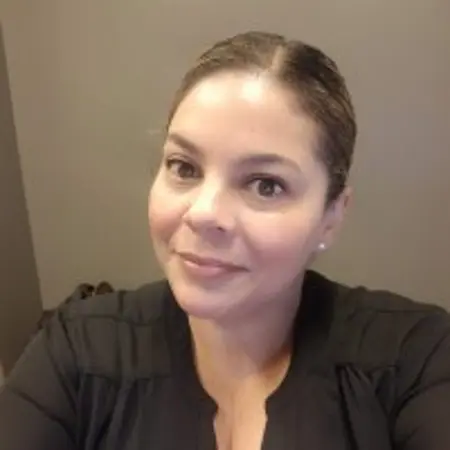
Her Story
About Amy
Amy Nunez (She/Her) is a seasoned compliance and licensing professional with over 15 years of leadership in California's public-sector legal system.
Most recently, Amy served as Director of Examinations and Administration at the California State Bar, where she oversaw the California Bar Exam, the First-Year Law Student Exam, and 13 specialty-area exams. She was the first female Latina to hold a director position at the State Bar's Office of Admissions — a role in which she managed multi-site teams, collaborated with boards, committees, law schools, the Supreme Court, and the legislature, and led her teams through complex challenges, including the pandemic transition to remote examinations.
Throughout her career, Amy has championed efforts to reduce bias in legal exams, improve accessibility for minority applicants, and implement progressive assessment methods. Her work with the Blue Ribbon Commission, directed by California's Chief Justice, reflects her deep commitment to equitable and representative licensure.
Amy began her career at the Judicial Council of California, advancing from analyst to program manager while overseeing California's CASA program. She later served as Director of the Family and Juvenile Court at Alameda County Superior Court before joining the State Bar.
Her leadership philosophy is grounded in humility, honest communication, and human dignity, with a consistent focus on building supportive, multidisciplinary teams aligned with organizational goals.
A UC Berkeley graduate (B.A., Sociology and Ethnic Studies) and Washington State University alumna (M.A., Sociology, ABD), Amy retired in May 2025 and is now exploring consulting and advisory opportunities in compliance, board governance, and strategic leadership.
Her Interview
Ten minutes with Amy
01What do you attribute your success to?
My success comes down to two things: the right mentors and a clear set of values.
Throughout my career — from my first job after my Master's program to my time at the court — I've been fortunate to find mentors who helped me navigate government and non-profit work. All of my role models have been women, and seeking them out at every stage has been one of the most important things I've done professionally.
My values have been equally foundational. At the core is human dignity — I believe leadership must respect it unconditionally. Closely tied to that is humility: no one is too good to roll up their sleeves, and I've always tried to lead by example rather than by title. I also see my role as a supporter of my staff, and I hold honest communication as non-negotiable, especially when things get hard.
When I combine those values with a strong work ethic, that's where my success as a leader has come from.
02What’s the best career advice you’ve ever received?
The best career advice I ever received came from a mentor early in my career, when I was searching for work right out of graduate school. She told me that to accurately assess your own value, you have to learn to look at yourself from the outside in.
What she meant was this: stop letting emotion drive the evaluation. Instead of asking "How do I feel about my experience?", ask "What would someone else see when they look at this person on paper?" Step back, look at your accomplishments objectively, and let your résumé tell the story.
That perspective shift is powerful — especially when it comes to not undervaluing yourself. It's so easy to discount what we've achieved because we lived through the hard parts and remember the doubt and the stumbles. But an outside observer doesn't see any of that. They see results, skills, and contributions.
So my advice is: revisit your résumé regularly. Treat it as a living record of who you are professionally. When you look at it with fresh eyes — as if it belonged to someone else — you often realize you have more to offer than you thought.
03What advice would you give to young women entering your industry?
My advice to other young women is this: find a mentor — someone you look up to, someone whose values resonate with you, someone you simply admire from a distance. Then take the chance and reach out.
I know that's easier said than done. For those who are shy or more reserved, making that first move can feel daunting. But some of the most important relationships in my career began with a single conversation. Early on, I worked with a director who embodied the same values I held — a strong work ethic, humility, and quiet strength. I approached her, and little by little, she became one of my most trusted advisors. Even after we went our separate ways professionally, we stayed connected. She remains my mentor to this day.
Over the course of my career, I've been fortunate to have at least three mentors, and I don't take that lightly. What makes those relationships so powerful is the one-on-one exchange — the personal stories, the hard-won lessons, the honest guidance you can't get from a book or a training. When someone shares their lived experience with you and a real relationship forms around it, that will take you further than almost anything else.
Don't wait for a mentor to find you. Be bold enough to seek one out.
04What are the biggest challenges or opportunities in your field right now?
One of the most significant shifts I've observed in my field is how we define a successful career trajectory. In much of the technology sector, long tenure at a single organization is increasingly viewed with skepticism — the more varied your experience across different workplaces, the stronger your résumé is perceived to be. This represents a fundamental change in how we value careers, and it creates a disconnect between generations. For those of us who built deep expertise within institutions over time, that shift can feel like a reframing of what professional success even means.
Tied to this is the challenge of technology adoption across generations. Despite my years in public-sector leadership, I've worked extensively in technology and have seen both the old world and the new. I understand the potential of what's ahead — and embracing it isn't optional. AI, for example, is not a trend to watch from a distance. It's a must. The challenge for leaders today is bridging both worlds: honoring institutional knowledge while fully committing to what's coming.
This shift also changes the nature of mentorship. When career paths look so different across generations and technology is evolving so rapidly, the traditional mentoring relationship requires reimagining. That work is ongoing.
Finally, there's a pipeline challenge in law. Fewer people are pursuing legal careers because the return on investment takes too long — three years of law school before you're even eligible to sit for the bar exam is a significant ask in an era when other fields offer faster rewards. Any profession that requires deep, prolonged education is facing this pressure. People want to see the payoff sooner, and that expectation is reshaping who enters the field and how.
05What values are most important to you in your work and personal life?
At the heart of everything is human dignity. It's something every person deserves, and I think we underestimate how often it goes unacknowledged in the workplace. For me, honoring it isn't abstract — it shapes how I lead, how I communicate, and how I build teams.
Creating genuine support networks at work has always been a priority. In practice, that looked like weekly huddles — sometimes 15 minutes, sometimes an hour — that became a consistent, safe space for my teams. We used that time to share project updates, recognize personal milestones, and make sure everyone understood how their work connected to the bigger picture. Because I led multidisciplinary teams — administrators alongside analysts, for example — those gatherings were also about cohesion. They helped people see not just what they were doing, but why it mattered and how they fit into the larger strategic plan. That kind of intentional communication builds trust over time.
Humility is equally non-negotiable for me. No one is too good to roll up their sleeves — and as a leader, I never asked anything of my team that I wasn't willing to do myself. Leading by example isn't just a philosophy; it's a daily practice.
And finally, honesty and transparency. In any work environment, being clear about intentions and goals isn't just good management — it's a form of respect. People deserve to know where they stand and where the organization is headed.
Join Influential Women and start making an impact. Register now.