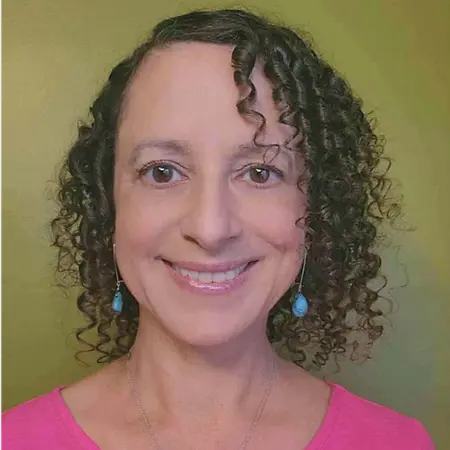
Her Story
About Ana
Ana Ruiz is a Bipolar Healing Coach based in Seattle, Washington, dedicated to helping people with bipolar disorder develop the skills to prevent manic and depressive episodes through her proprietary holistic Return to Self methodology. Drawing from more than two decades of personal experience living with bipolar disorder, as well as training in trauma, nervous system healing and regulation, and attachment theory, she empowers clients to build greater emotional stability and increased nervous system capacity. Bilingual in English and Spanish, Ana is passionate about making holistic healing resources accessible to a broader global community. Before transitioning into coaching, Ana built a successful 25-year career in the software industry after earning a bachelor's degree in Management Information Systems from Instituto Tecnológico y de Estudios Superiores de Monterrey, Mexico's leading Engineering and Technology University. She left the technology sector nine years ago to pursue her passion for helping others, initially working as a relationship coach specializing in trauma before expanding her practice to focus on supporting people living with bipolar disorder. Her multidisciplinary approach integrates coaching, trauma healing practices, somatic healing, and nervous system regulation. Ana attributes her success to tenacity, dedication, and an unwavering belief in herself, even when she was told that healing from bipolar disorder was impossible. Guided by the values of honesty, transparency, understanding and compassion, she is committed to helping people reclaim themselves and create meaningful, lasting change in their lives. She is currently writing the memoir "I Arrived"! that chronicles her personal struggles and healing journey from bipolar and plans to publish it in both English and Spanish to extend its reach and inspire individuals around the world.
Her Interview
Ten minutes with Ana
01What do you attribute your success to?
I attribute my success to unwavering tenacity, dedication, and a steadfast belief in myself. Despite being told by multiple doctors that recovery from bipolar disorder was not possible, I refused to let those opinions define my future. Instead, I remained committed to my vision, persevered through every challenge, and continued pursuing my goals with resilience and determination. That mindset has been the foundation of both my personal growth and professional success.
02What’s the best career advice you’ve ever received?
The best career advice I've ever received has come through the mentors who have shaped both my life and my work. My father taught me the importance of resilience, staying grounded, and believing in myself, reminding me that lasting success is built through perseverance and an appreciation for life's simple moments. Later, a mentor who is a retired chiropractor and trauma and nervous system specialist transformed the way I understood healing from bipolar by showing me the profound connection between the mind, body, and nervous system. His guidance helped me recognize that true transformation requires addressing the root causes of trauma rather than simply managing symptoms. Together, these lessons have shaped my philosophy: trust yourself, remain resilient through adversity, and never stop learning. They continue to guide both my personal journey and the compassionate, evidence-informed approach I bring to my coaching practice.
03What advice would you give to young women entering your industry?
My advice to young women entering this field is simple: never give up on your dreams. Work hard, believe in yourself, and stay committed to the vision you have for your life, even when others doubt your potential. There will be challenges and setbacks, but perseverance, self-belief, and consistent effort can open doors that once seemed impossible. I am where I am today because I refused to let go of my dream, trusted in my abilities, and remained dedicated to making that vision a reality.
04What are the biggest challenges or opportunities in your field right now?
One of the biggest challenges in my field is overcoming the long-standing stigma and limiting beliefs surrounding bipolar disorder and mental health. Many people are told that their diagnosis are incurable and will define them for life, which can create fear, hopelessness, and resistance to exploring new possibilities for healing. Another challenge is the slow advancement of psychiatry. Most psychiatric medications came from discoveries made decades ago. The side effects make them intolerable for a lot of people. While newer drugs often have improved side-effect profiles, relatively few introduce fundamentally new mechanisms. Researchers have argued that psychiatric drug discovery has progressed more slowly than in many other medical fields.
My method is holistic and effective. It is designed to work either as a standalone practice or alongside medication, depending on what feels right for the individual.
05What values are most important to you in your work and personal life?
The values that matter most to me, both professionally and personally, are honesty, transparency, understanding, compassion. I believe that trust is built through authenticity and open communication, while genuine compassion and empathy create meaningful connections and lasting transformation. These principles guide every interaction I have, shaping how I support others, build relationships, and strive to make a positive impact in both my work and my everyday life.
Join Influential Women and start making an impact. Register now.