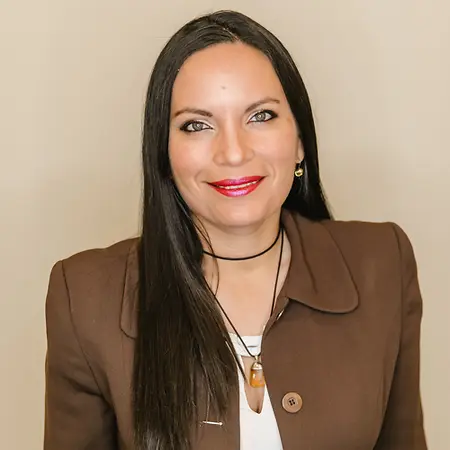
Her Story
About Ana
I have been working in the energy industry since 2010, building my career across government, academia, and industry. I began in Venezuela, working in the Hydrocarbons Exploration and Reservoirs Department at the Ministry of Hydrocarbons, where I collaborated on multidisciplinary projects with international companies.
Driven by a desire to grow, I made the decision to leave my country and pursue a PhD in the United States. Starting from learning English as a second language to completing my doctoral studies in Petroleum Geochemistry at the University of Houston, this journey shaped both my technical expertise and my adaptability.
During my PhD, I expanded my geosciences skill set into data science, recognizing the importance of integrating disciplines to better understand complex systems. I also completed internships with companies such as Aramco Americas, Oxy, Chevron, and Diamondback Energy, gaining exposure to a wide range of operational and technical environments.
Additionally, I worked as a social media intern for six months at the Paleontological Society of America, where I developed skills in communication, outreach, marketing, and visual storytelling, strengthening my ability to translate complex technical concepts into clear and engaging narratives.
Today, I work at the intersection of geoscience, data, and business. I am passionate about translating complex technical concepts into clear insights that support decision-making and create value.
I believe the energy industry has a critical role in shaping a better future, and I am motivated to contribute by fostering collaboration, innovation, and a broader understanding of the work we do.
Her Interview
Ten minutes with Ana
01What do you attribute your success to?
I attribute my success to two things: courage and curiosity.
Leaving my country to pursue a PhD in a new language, with no support system, forced me to grow quickly. But what truly made the difference was learning to stay curious and open-minded.
Over time, I realized that the more you learn, the more you understand how much you don’t know. That mindset keeps you evolving.
I’ve also learned that success is not just about technical knowledge, but about developing soft skills such as clearly communicating complex ideas to different audiences, adapting to unfamiliar situations, and working with people from different backgrounds.
02What’s the best career advice you’ve ever received?
One of the best pieces of advice I’ve received is: “Don’t try to follow a perfect path, build your own by learning from everything.”
That idea changed how I approach my career. Instead of focusing on whether an experience fits a predefined plan, I focus on what I can learn from it.
Over time, I’ve realized that the most valuable skills often come from unexpected places, and that seemingly unrelated experiences can become your greatest strengths.
03What advice would you give to young women entering your industry?
<ol><li>Don’t wait until you feel ready to step into opportunities; growth happens when you challenge yourself beyond what feels comfortable.</li><li>This industry can be complex and sometimes intimidating, but your perspective has value from the beginning. Confidence is not something you have before you start; it’s something you build by doing.</li><li>And finally, and most importantly: <strong>Be yourself, stay authentic, and don’t be afraid to show your own light, even when it doesn’t fit the crowd. </strong>Society often promotes a narrow definition of success, and I believe that’s limiting. As Einstein said, <em>“Insanity is doing the same thing over and over again and expecting different results.” </em>Our individuality is what truly drives change and innovation. Thus, don’t feel pressured to follow the ideal or expected path, <strong>your uniqueness is your strength.</strong></li></ol>
04What are the biggest challenges or opportunities in your field right now?
One of the biggest challenges in our field, and in modern society more broadly, is how we integrate machine learning and artificial intelligence responsibly.
While these technologies offer powerful capabilities, they also raise important questions around ethics, validation, and quality. In many cases, decisions are being made based on models that are not fully understood or properly tested.
In our field, this includes challenges such as distinguishing true relationships from spurious correlations, separating signal from noise, and ensuring models are reproducible rather than overfitted to limited datasets. Models can appear robust on paper, while key assumptions and validation metrics remain hidden or insufficiently examined, especially as access to these tools becomes more widespread.
At a broader level, the ability to generate highly realistic images, videos, or even signatures is already challenging our ability to distinguish what is real from what is not.
This creates a critical need for frameworks that ensure transparency, rigorous validation, and accountability. Without them, we risk placing confidence in results that may not be reliable.
05What values are most important to you in your work and personal life?
Curiosity, continuous improvement, and collaboration are at the core of how I approach both my work and personal life.
I enjoy solving complex challenges and constantly look for better, more efficient ways to approach them. Even in routine tasks, I try to find opportunities to improve and create value.
I also place a strong emphasis on communication and teamwork. Truly effective collaboration requires listening, understanding different perspectives, and aligning toward a common goal.
Finally, giving back is very important to me. I’ve benefited from the support of mentors throughout my journey, and I believe in creating that same opportunity for others.
Join Influential Women and start making an impact. Register now.