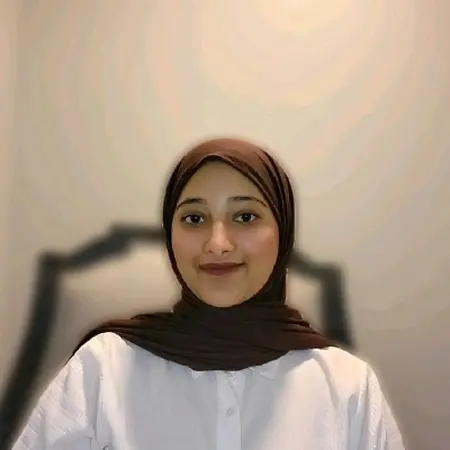
Her Story
About Anam
My passion for mental health began as a child when I struggled with expressing my emotions and talking about what I felt, always confronting the discomfort associated with expressing pain and other uncomfortable feelings in our society. This made me question why emotions and feelings, being such an essential part of our life and shaping so much of our understanding of ourselves and others, were so forbidden from being expressed freely. I also witnessed my family members being affected by depression and anxiety, which taught me about how serious yet stigmatized the topic of mental health was, even in spaces that are supposed to be safe spaces such as families or friend circles. In my journey to understand more about mental health, I developed my understanding in terms of the spoken and unspoken - mental health is a highly spoken topic nowadays, but there's much more to mental health than just mental illnesses, and it has so much to do with social issues that are unspoken about. Today, I work with children medically diagnosed with autism in a school readiness program where we make these kids ready for mainstream school. These are preschoolers on the spectrum, some mild, some severe, some with very challenging behaviors. We focus on changing their behaviors, dealing with challenging behaviors like eloping (escaping the task), sometimes to a severe level where they want to leave the clinic or building, as well as aggressions, tantrums, or self-injurious behaviors. We are safety trained for all these roles, and our main focus is to help them gain function in their everyday life and everyday skills so they are functionally communicating and functionally engaging in everything around them while keeping their behavior in control.
Her Interview
Ten minutes with Anam
01What do you attribute your success to?
I would definitely go back to my family values. My dad - we grew up learning a lot from my dad about education in general and knowledge in general, where I was constantly motivated to learn and to seek knowledge from every source that I get. I would definitely give credit to my dad about it. Growing up as a child, my dad would, you know, we used to have vocabulary Sundays where me and my siblings used to learn words from my dad that none of the other kids knew. That foundation of constantly seeking knowledge and being motivated to learn has been instrumental in shaping who I am today and the success I've achieved in my field.
02What advice would you give to young women entering your industry?
I would say it is difficult in the beginning, for sure, because we deal with a lot of challenging clients, and it's not easy to get hold of yourself when there's a lot of overstimulation happening around you, but it's definitely, definitely worth it. It's definitely worth it because every day when you see teeny tiny progresses in the kids, and you see that progression throughout days and it sums up to months, you see little progresses every single day in each kid. Some days we don't see any, but to be able to hold on to that hope that they're gonna have that progress that we are hoping for - I think there's a long way to go in the field. This is a woman-dominated field because women naturally are nurturing and they understand the emotional needs of the client better, I believe. You require immense, immense patience in the field, which I also believe women have. Women play better in those fields where there's a lot of patience and are able to regulate their emotions way better than others, and this is definitely the field for them where they can personally and professionally grow.
03What are the biggest challenges or opportunities in your field right now?
In the broader healthcare field, I think research studies on women's health and just considering women's words for how they feel about their health need to be taken more seriously. There's a large gap in the healthcare industry for women's health, even just for medications being tested on women. There's also a huge gap in mental health for the prescriptions being prescribed by doctors, even to kids. I was surprised to know, coming from a very cross-cultural background, when I moved to the States it was very surprising for me to know that middle schoolers get prescribed antidepressants, which is very shocking to me for where I come from because we don't even know what anti-psychiatry medications are until we become adults. I think proper usage of those medications and limiting those medications to a certain age definitely has too much to work on in the mental health industry. In my field of ABA, I feel that there are a lot of things that are common sense that analysts sort of psychopathologize a lot and try finding problems, especially younger analysts and new analysts coming in the field. There's a lot of psychopathological things going on there, but it's just common sense and that's just the personality of a kid. It does suppress the personality of the kid when you try inserting therapy into every single thing that's going on. As for opportunities, I think definitely focusing on the mental health of RBTs, who are basically the backbone of ABA and give therapy to the kids day in and day out. It has one of the highest burnout rates in the field. Giving them more space to work independently is somewhere I could expand, and they have a lot of room to explore. The way you set the tone of the environment affects the therapeutic environment a lot, and a lot of places fail in that regard. This is a very growing field as I've seen - BCBA positions are rising every year. You can become a BCABA if you're at an undergraduate level and a BCBA at a master's level, which I think is an incredible opportunity for younger kids early on if they decide to get into behavioral health. They could simultaneously work as an RBT because it only requires a high school diploma to get a job, so you could really see if that's the field for you.
04What values are most important to you in your work and personal life?
Integrity, for sure. I think you've got to be honest with wherever you are, whatever you're doing, both in personal and professional life. Along with integrity lies honesty. I believe in honesty a lot in work and personal life. I believe it helps me maintain relationships, interpersonal relationships with everyone. It sort of gives you the leverage, and everyone knows you as a person who is truthful to their work.
Join Influential Women and start making an impact. Register now.