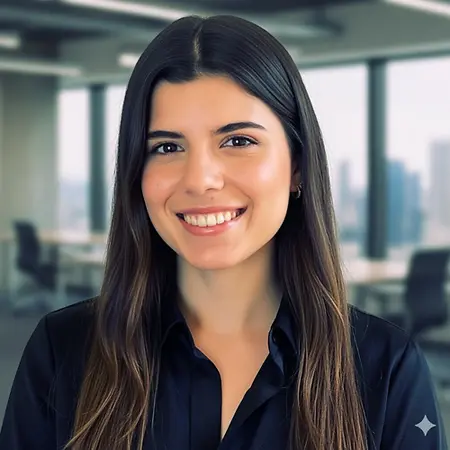
Her Story
About Andrea
I'm a senior editor at Drug Discovery News, a pharmaceutical and biotech drug discovery magazine where I've been for a year. My career path has been a natural evolution of my passion between communications, research, and science. I started out on the traditional path of probably becoming a PhD student, pursuing biology undergrad, and loving research and science. Then I took an elective in journalism in college and fell in love with that aspect of communications, research, and storytelling. I was able to combine the two and went from pop science and radio coverage and production into more trade journalism and science journalism. A typical day for me looks like overseeing and managing a team of writers and editors, as well as writing and contributing myself to the publication. We used to have a magazine that would print out, now we're doing digital editions. It looks like staying up to date with trends and news from the industry, looking at clinical trials and files that are relevant, assigning stories, selecting some stories for me to write, editing, and overseeing the editorial direction for the publication, working with other writers, editors, and the art department.
Her Interview
Ten minutes with Andrea
01What do you attribute your success to?
I think it's just love and passion for what I do, and care. I think when you care about what you do and you understand the stakes, you're more likely to follow through with love and persevere through more challenging times. My younger brother was diagnosed with an autoimmune disease when I was very young, and I just remember so vividly my parents trying to sort through all the materials that the doctors were handing over, and the treatment plans, and all this scientific jargon that they didn't really understand, even though the professionals also just wasn't their field. So that really inspired me and shaped me to want to be in a career where I get to bridge science to the general public, and I also get to convey that excitement that I feel for all the advances that are happening in the labs, and how they are going to change people's lives in the real world.
02What’s the best career advice you’ve ever received?
One of my lead editors a couple years ago, when I started out, told me that how you do anything is how you do everything. So there's little tasks and admin things, and just maybe some chores that come along with writing stories and having a fun job, but having care and intention through everything that you do and the little things also translates into the bigger things. It's really informed kind of how I now lead a team, and how I try to inspire others to move through some of the less exciting parts of the day-to-day.
03What advice would you give to young women entering your industry?
I would tell them to keep their why and their purpose on top of their mind as they're selecting employers, and to remember that when you are heading into interviews, it's not only about a potential employer liking you, but about you liking a potential employer. It's a very important relationship that you're establishing. So I would encourage them to practice some healthy skepticism with every interview that they have, just to make sure that they're very aware of why they want to go into this role, and whether or not this employer aligns with what they want to do, because I feel like a lot of the times when you're younger, you are so eager to just get your foot in the door and you can't always afford to be picky, which I completely understand, but I think having self-awareness of why you went into this career and why you want to do what you want to do, sometimes it's better to sit out certain opportunities just to make sure that the right one comes along.
04What are the biggest challenges or opportunities in your field right now?
I think the biggest challenge right now is just public skepticism with science. Talking about and covering these therapeutics, there's just a general distrust in science that us as journalists are responsible for bridging over. So I enjoy that challenge, but I'm aware that it's something that a lot of journalists have to battle in their newsrooms. When it comes to AI, I think what most writers and editors would say is that the real human voice is always going to cut through. AI poses a threat, I think, for most industries. When it comes to storytelling and compelling copy, I think the human experience and the human lens is never really going to be replaced, because there's a warmth that comes along with that.
Join Influential Women and start making an impact. Register now.