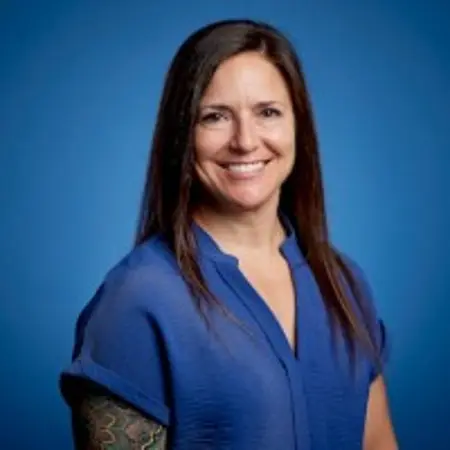
Her Story
About Andrea
I've been in healthcare for 15 years, and it's always been my passion. My mom was my biggest inspiration - she was diagnosed with cancer before she found out she was pregnant with me, and watching her persevere and show resilience through all of that, even 40 years later, has been a huge inspiration to me. I'm an occupational therapist by discipline, and I currently work as an assistant professor for an entry-level occupational therapy doctorate program, teaching the new generation of practitioners to do the same meaningful work. I also own my own business, an LLC, where I see patients directly. My specialty is neuro-OT, so I work with a very complex and dynamic population. I'm very passionate about interdisciplinary and transdisciplinary care and collaboration, working closely with pathologists, neuropsychologists, and other colleagues. I always wanted to own my own business mainly to erase some of the barriers that come with healthcare, particularly the physical barriers of the facilities themselves. I go to my patients wherever they are, so they can actually receive quality care as opposed to going without. My patients are the things that actually inspire me - seeing them be able to overcome such devastating illnesses or devastating injuries has a huge impact on my life, my professional trajectory, my professional growth, and just me as a human being. Those are my biggest inspirations.
Her Interview
Ten minutes with Andrea
01What do you attribute your success to?
I attribute my success to flexibility, adaptability, and resiliency. I think being resilient is crucial in this field. You also have to be passionate about what you do, or you get really bored. Being flexible and adaptable is essential when it comes to certain things in our healthcare landscape, because we can't control everything, so you have to be able to kind of roll with it. I'm pretty decisive in my nature - when I decide on something, that's what I'm gonna do, so I have a strong drive after I've decided. I also credit a lot of my success to my professors who were extremely influential on basically how I became the practitioner I am today. My biggest mentors are definitely my professors, and then my colleagues that work alongside me. I value independent thought and thinking outside the box, not being pigeonholed into something I don't want to do.
02What’s the best career advice you’ve ever received?
The best career advice I've received is from actually a PT, one of my PT mentors at the Mayo Clinic. She always told me that I didn't have to be what people told me I had to be. She influenced me in a way to make me an independent thinker. Just because I'm an OT doesn't mean I have to subscribe to everything that an OT does, or subscribe to the old assumptions. She taught me to be able to think outside the box. And if you want to shift and pivot, it is well within your power to do so. Basically, you can do anything you want to do, as long as you put your mind to it.
03What advice would you give to young women entering your industry?
I would make sure that they understand what they want to do and have a very good sense of self. Make sure you find your passion and follow it. Don't be pigeonholed into something that you don't want, because you will have burnout, and it will happen very quickly. Just keep learning. Be curious. Avoid being complacent in your field, because healthcare will run over you if you are stagnant. I think it's important to maintain flexibility and adaptability. Being able to flex yourself with the changing landscape is extremely important. It removes stagnation, and you don't become complacent. You don't have to be stuck in a hospital facility - those days are pretty much done. You can basically do whatever you want to do, you just have to keep pushing forward and set your mind to it.
04What are the biggest challenges or opportunities in your field right now?
I think our healthcare landscape is dynamic and always changing. I think it's important to maintain flexibility and adaptability. Being able to flex yourself with the changing landscape is extremely important. It removes stagnation, and you don't become complacent. Transitional justice is a huge thing right now - being able to connect individuals with what they want to do in life and live meaningful lives, even after some sort of devastating illness. You don't have to be stuck in a hospital facility anymore. Those days are pretty much done. So you can basically do whatever you want to do, you just have to keep pushing forward and set your mind to it. One of the biggest opportunities I see is removing barriers in healthcare. I started my own business mainly to erase some of the barriers that come with healthcare, mainly the physical barriers of the facilities themselves. I go to my patients wherever they are, so they can actually receive quality care as opposed to going without.
05What values are most important to you in your work and personal life?
I value education, I value my family, I value quality relationships. I value independence and freedom to do what you want to do. Those values are important both professionally and personally. I'm part of the LGBTQ community, so without my freedom and independent thought, my life would look a lot different. I think I value taking everything at face value and doing your own research. Those are probably my biggest ones.
Join Influential Women and start making an impact. Register now.