Influential Woman · Experience Design for Cultural Institutions
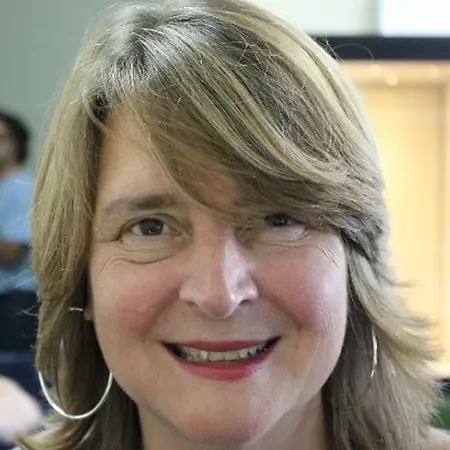
Andrea Weatherhead
Minister
Senior Interactive Exhibit Developer, WEATHERHEAD Experience Design Group
Seattle, WA 98108
Her Story
About Andrea
I founded Weatherhead Experience Design to create immersive exhibitions for museums and cultural centers. My journey into this field was unconventional - I started as an English major at Stanford, then pursued audio engineering with a Master's of Science in audio technology and acoustics from American University. I worked as a recording engineer in the Baltimore-DC corridor before joining Microsoft as a contractor, where I created cutting-edge interactive music products featuring artists like B.B. King, Cyndi Lauper, and Herbie Hancock. That work led me to my breakthrough project: designing the interactive music gallery at Experience Music Project (now MoPop) in Seattle, where I had the privilege of working under Anne Farrington, the former Director of Design for the United States Holocaust Memorial Museum. What makes my work unique is how it brings together every skill and passion I've ever had - I'm a musician who still plays rock, a natural teacher like my parents, an artist who loves graphic design, a writer from my English literature background, and an audio engineer who understands acoustics deeply. This multidisciplinary approach allows me to research diverse subjects - from how submarines work for the Pacific Fleet Submarine Museum, to the story of personal computers for the Living Computer Museum, to World War II aircraft for the Flying Heritage Collection - and then turn around and teach those subjects in brief, engaging ways in voluntary learning environments. Beyond my museum work, I'm also a spiritual counselor and minister with a Master's of Consciousness Studies, which informs how I mentor young professionals and help them understand that their path will unfold naturally.
Her Interview
Ten minutes with Andrea
01What do you attribute your success to?
I attribute my success to having an extraordinary mentor, Anne Farrington, who gave me the opportunity to create the interactive music gallery at Experience Music Project. She was the former Director of Design for the United States Holocaust Memorial Museum, and she taught me not only about exhibit design, visitor flow, and architectural space planning, but also how to manage myself in high-pressure settings with powerful founders who had high standards. She hired me because what I was doing with multimedia and computer-driven experiences was something she'd never done before, and together we made something amazing. When I interviewed with her, she said 'I wish you knew more about museums,' and I felt crestfallen, but then she smiled and said 'but I know enough for both of us.' That project was such an extraordinary use of all the skills and experience I'd ever had in my life - I'm a musician, a teacher like my parents, an artist, a writer from being an English major, and I had studied audio technology and acoustics. It brought together every single skill and passion I ever had. I also think my education at Stanford shaped me, because they emphasized what you were going to do to make the world a better place, not just grades and SATs. That gave me a sense of caring about something beyond myself.
02What’s the best career advice you’ve ever received?
If your supervisor wont listen to you, let the train wrecks happen. THey'll learn.
Let your ideas be your supervisors ideas if you want them to gain traction
Not every email needs answering immediately, or sometimes, ever.
03What advice would you give to young women entering your industry?
I would tell them to try to find a company that already exists to learn from the people that have been doing it for a while. Either go to a museum, or go to an exhibit design company, or an exhibit fabricator to learn the ropes. If they want to go into the museum field, they should probably study architecture or product design - some kind of skill set where you can actually lay out spaces and render and show people a space. Or they need to be good storytellers and good researchers, so that they can take something that's an interesting subject and turn it around and teach it as quickly as they are learning it. One of the things I've found so satisfying is how many different subjects I've had to study and then turn around and teach as a museum person - constantly a different subject, constantly needing to dive in and research and then turn around and teach other people in a brief way, in a voluntary learning environment. If people have that interest in researching and teaching, I would suggest they go find a museum where they could be on the education team, because a lot of younger people get hired on education teams, and that gives them access to how to know where to go within a museum. It's a very niche industry and one of the most multidisciplinary fields that exists - you have to know how to write, work with structure and design, know about HVAC, acoustics, graphic design, video, projection, sound design. A lot of people end up in it accidentally, either from theater or as storytellers and researchers.
04What are the biggest challenges or opportunities in your field right now?
The museum industry has been politicized by the current Trump administration. It has been criticized for representing diverse stories. The administration is erasing history and punishing museums for telling stories the administration doesnt like. It is frightening. Funding has been cut from most of the research and grant sources that are the seeds for good exhibits, such as NEA, NEH, NIH, IMLS, and more. Sponsors are afraid of paying for exhibitions because museums have been labeled "too woke." Censorship cannot happen and everyone needs to protest this behavior before it is impossible to trust museums as the Truth tellers they are. Every fact in a history museum needs to be fact checked and source from at least three different places before it goes into an exhibit. Can the same be true of any other institution? The administration is undermining trust in the one industry that is built to be storing our history and culture. And it must stop.
05What values are most important to you in your work and personal life?
The most important value to me is caring about something beyond myself and making the world a better place. That emphasis from Stanford - what have you done to improve the world in some way - was very formative for me. I believe deeply in education, because I think the root of a lot of our problems as a society is our lack of education. People aren't educated enough to have critical thinking, and museums have a tendency to bring that out, to give people something to look at and think about and respond to. That's why I support museums in general - they're all doing such good work in the world. I also support causes that help people's basic needs, like the Union Gospel Mission that feeds people and gets them off the street into shelter and jobs. And my spiritual work through the Centers for Spiritual Living is very important to me - that teaching changes people's lives, and it's coherent with people's spiritual upbringing whether they were Jewish, Islamic, Muslim, Buddhist, or any different religion. The Master's of Consciousness Studies is really the culmination of life to me - to really be on a spiritual journey and understand what all this is all about. When I mentor young people, I reassure them that their path is their path, that there's a natural unfolding to what they are supposed to be doing on the planet, and they don't have to work quite as hard at it as they feel they do.
Join Influential Women and start making an impact. Register now.