Her Story
About Angela
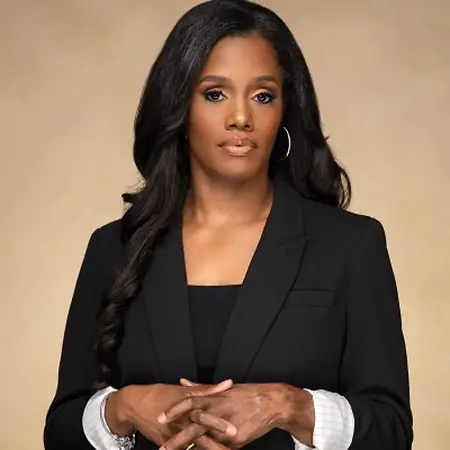
Angela Armstrong is a Medical Social Worker whose career spans nearly two decades and multiple corners of the social work profession. Since entering the field in 2008 as a residential specialist working with troubled teens, she has gone on to serve in adult mental health, spent seven years with Child Protective Services, worked in forensic social work within a correctional setting, and now practices in medical social work. Along the way, she completed her Doctorate in Healthcare Administration in December 2025, adding an academic milestone to a career already defined by hands-on experience across diverse populations and settings.
Beyond her clinical practice, Angela has become a dedicated advocate for the social work community, driven by the belief that the profession's skill set, including communication, crisis management, assessment, and relationship-building, extends far beyond conventional roles. She is the author of Social Work 918: Real Talk for New Social Workers, a book that speaks candidly to the realities new professionals face, including burnout and imposter syndrome. In January 2026, she launched an ASWB exam preparation program built around confidence and encouragement rather than rote memorization, a project shaped in part by her own experience navigating dyslexia. The program has already helped social workers, including some who had failed the licensing exam multiple times, finally pass and move forward in their careers.
Recognized as an Influential Women representative for Alabama in 2026, Angela continues to expand her reach through educational content, mentorship, and public speaking, with an eye toward helping more social workers see the full scope of what their training can offer. Outside of her professional work, she competes in bodybuilding, channeling the same discipline and perseverance into the sport that has carried her through her career. Whether guiding a client through a medical crisis or coaching a colleague through licensure exam prep, Angela remains committed to one central message: social workers are capable of far more than they're often taught to believe.
Her Interview
Ten minutes with Angela
01What do you attribute your success to?
I attribute my success to honesty, perseverance, confidence, and adaptability, along with a willingness to take chances on myself even when the odds weren't in my favor, including building my exam prep resources despite my own struggles with dyslexia. Being honest with the people I serve, especially in difficult environments, has helped me build trust and mutual respect throughout my career. I've also made it a priority to invest my time in helping other social workers grow, which has been just as meaningful to my journey as my own achievements.
02What’s the best career advice you’ve ever received?
The best career advice I ever received came from a mentor of mine named Sarah, who encouraged me to get back on the horse after I failed an exam. That simple push to keep going, rather than let one setback define me, has stayed with me and shaped how I approach every challenge since.
03What advice would you give to young women entering your industry?
I would tell them to remember their "why," the reason they chose this profession in the first place, and to treat every person they serve with respect and kindness, since we are all only a couple of decisions away from needing support ourselves. I encourage new social workers to stay humble, keep learning, and never be afraid to ask for help. I also want them to know that their degree and skills can take them much further than they may realize, so protecting their confidence and prioritizing genuine self-care, through therapy, rest, proper nutrition, and setting boundaries, is essential. Struggling with burnout or imposter syndrome doesn't diminish what you're capable of.
04What are the biggest challenges or opportunities in your field right now?
Some of the biggest challenges in our field right now are burnout, imposter syndrome, and the way social workers are often underutilized, which affects both our professional confidence and our compensation. At the same time, I see tremendous opportunity for social workers to move into nontraditional spaces like healthcare leadership, technology, program evaluation, consulting, and education. Expanding our presence through media and mentorship, and building structured study resources for those coming up behind us, is one way I hope to help change the broader perception of what social workers can do.
05What values are most important to you in your work and personal life?
Honesty, respect, kindness, and humility are at the center of everything I do, both professionally and personally. I value collaboration and intentionality in my work, and I believe strongly in genuine self-care, not just the surface-level version, but the kind that actually addresses the emotional and professional pressures that lead to burnout. Ultimately, I want to keep growing personally while helping others recognize their own potential.
Join Influential Women and start making an impact. Register now.