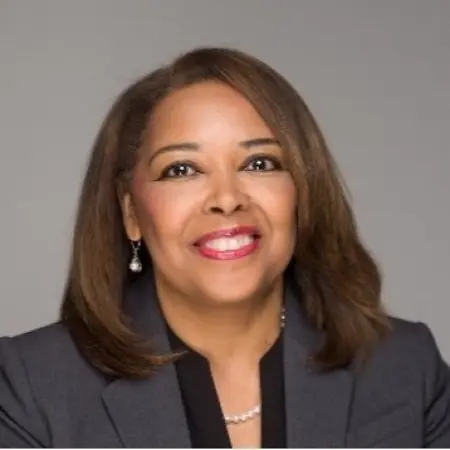
Her Story
About Angela
I established Dixon Consulting 2 in 2019 after spending over 25 years in public service. I've worked in several different industries throughout my career. Most recently, I served as a Senior Vice President for a regional bank in upstate New York and Massachusetts. Prior to that, I was the Vice President for Talent and Inclusion with the Capital Region Chamber. My public service career included working for both New York State Government and local government in the City of Albany. I even took a brief sidestep into the financial services industry, working as a financial consultant for Smith Barney, where I worked with clients on their investments, buying stocks, bonds, and mutual funds. While that experience wasn't the right fit for me at the time, it motivated me to go back to school and get my MBA, and ultimately led me back to public service where I could have a positive impact on people's lives in my community. One of my most notable achievements has been making the transition from employee to entrepreneur - it was scary after spending 25 years in government, but I'm very proud of taking that leap of faith. Today, my company is focused on a major initiative: putting together a leadership summit for women of color to help them navigate their next chapter, whether that's starting a business, becoming an entrepreneur, or getting back into the workforce after career disruptions.
Her Interview
Ten minutes with Angela
01What do you attribute your success to?
I think my values have been key to my success. When things get tough, especially in a leadership capacity, it's always important to take a deep breath when you have to make a very difficult decision or have a very difficult conversation, and be mindful of ensuring that you don't hurt people and that you understand the responsibility to be mindful of your communication. Sometimes in the rush of trying to get things done, check the boxes, and move your to-do list forward, you still need to take a step back and say, am I really doing the best for the organization and the people? And often, if I have to make a decision, I go back to my values - how does this line up with what I say I'm really about as a person, as a leader? Is it consistent? Are people going to see the consistency in the action, not just what you say, but it's how you do it and what you do. I think those are the keys right there.
02What’s the best career advice you’ve ever received?
The best advice I received was 'wherever you are, be there.' I got that advice back when I was in my early 30s, and it really stuck with me. I took that to really understand the importance of being fully engaged. Over my career, especially in the HR space where I spent a lot of time, people are really having a lot of challenges even before they walk into the workplace. Regardless of what I might have been dealing with or the priorities I needed to get done for the day, I always had to make sure that my employees or folks who reported to me knew that I was there for them, to listen and be supportive, and to help them with whatever challenges would help them be a better employee. It's important to stop and focus on what's in front of you and who's in front of you - don't look at them and act as if you're listening but not really paying attention. Wherever you are, be there, and be fully engaged, and bring your best self to the work at hand. The other piece that goes hand in hand is to treat people as they would like to be treated - I heard someone characterize this recently as golden rule number two. You're making that other person the focal point. What do they need? How do they need to hear things? How are they going to receive this when I share it with them? That takes effort because it's not just about what I want, it's about that other person I'm communicating with, putting them first.
03What advice would you give to young women entering your industry?
My advice would be: know your values, and know your value. I think the two go hand in hand. Know your values because that will help you identify what organization may or may not be good for you. I worked in organizations where they were all about that bottom line. For example, I worked for Smith Barney as a financial consultant, and I did not like that job at all because it was really about what stock did you sell, did you promote that mutual fund the company wanted you to promote. It was much more driven by the company's needs versus the needs of the individual, and I just couldn't reconcile that in my mind. Had I known what I valued at that point as an employee, as a person, as an individual contributor to an organization, I probably wouldn't have taken that sidestep. But even when I did those sidesteps, what I call them in my career, they always proved very beneficial. What could have been viewed as a failure or a misstep, I thought was really an advantage long-term.
04What values are most important to you in your work and personal life?
I'm so glad you asked me that, because this is one of the things that I talk about, particularly when it comes to coaching - really encouraging folks to step back and think about what their values are, because your values also help to drive your value to yourself, to organizations that you might work with. My values are definitely around integrity, being trustworthy, and continuous learning. Equity is also very important to me - being equitable in my approach and really trying to step back and ask myself, okay, what am I missing? If I'm in a group situation conducting a meeting or there's an opportunity to engage with folks, I think it's important to talk less and listen more. Is everyone having a chance to speak? Some folks don't want to speak up, so are we creating the type of environment where they can come and provide their ideas or input at a later point in a more comfortable situation? As a leader, you take on the responsibility of ensuring that there's a level playing field for folks. Those are just a few of my values that are always top of mind.
Join Influential Women and start making an impact. Register now.