The season I almost gave up became the season I rose. I could not control what happened to me, but I controlled how I responded, and that changed everything.
Angela Irizarry · In Her Own Words
Her Story
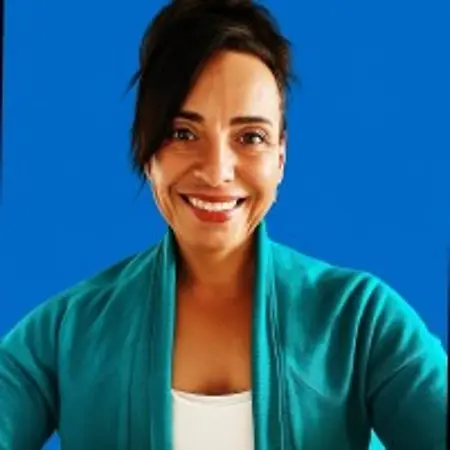
About Angela
Angela Irizarry is a Case Manager based in Austin, Texas, serving at the National Center for Missing & Exploited Children, where she supports critical efforts to locate missing children and assist families impacted by exploitation and abduction. In this role, she serves as a liaison between law enforcement, social service agencies and families across all 50 states, helping coordinate case response efforts involving children reported missing, family abductions, and children being targeted or exploited online. Her work is rooted in compassion, urgency, and a lifelong commitment to protecting vulnerable youth. Angela’s journey into this field was shaped by both personal experience and professional inspiration. Early in life, she was deeply influenced by Detective Olivia Benson from Law & Order: SVU, which helped spark her desire to become a voice for the vulnerable. That calling became even more personal through witnessing the impact of childhood and adult abuse on friends and family members, an experience she has carried with strength, particularly within cultural contexts where such topics are often not openly discussed. She chose to frame her mission around supporting survivors, rather than defining them by their trauma, and dedicated her career to ensuring they are seen, heard, and protected. Her professional path began at the Hayward Police Department on the civilian side in crime prevention and community outreach, where she quickly realized her deeper calling in frontline law enforcement. She went on to become a police officer and graduated from the academy as one of only two women in her class. Within two years, she promoted to detective in the Special Victims Unit, later working on sex trafficking investigations and leading a Bay Area vice task force focused on locating and rescuing sexually exploited children. She later served as a detective sergeant, mentoring officers, teaching at the police academy, and working with schools to build awareness and prevention strategies. After retiring and relocating to Texas, she continues her mission at the national level, committed to education, advocacy, and collaboration with law enforcement—feeling that her work has come full circle and remains far from finished.
Her Interview
Ten minutes with Angela
01What do you attribute your success to?
It really started with my admiration for Detective Olivia Benson from Law and Order: SVU. Watching her fight for people who didn’t have a voice struck something deep in me. But my path wasn’t shaped by TV alone. It came from real life. I grew up seeing the impact of childhood and adult abuse on people I cared about. The trauma, the silence, especially in Latino families where these things are rarely talked about, stayed with me. It made me want to be someone who could stand up for those who felt they couldn’t. That show didn’t just entertain me, it empowered me. Seeing Olivia Benson’s strength made me realize I wanted to do something meaningful, something where I could be a voice for the vulnerable. I’ve never liked the word “victims.” To me, they’re survivors. My first step was applying to the Hayward Police Department on the civilian side. I just wanted to get my foot in the door, so I started in crime prevention and community outreach. Being out in the community opened my eyes. I realized I wanted to do more. So I became a police officer. In the academy, I was one of only two women in my class. Less than two years after hitting the streets, I promoted to detective and landed my dream assignment: a detective in the Special Victims Unit. Working SVU exposed me to some of the hardest cases, especially those involving children. Later, I became a vice detective and helped run a Bay Area task force focused on finding sexually exploited kids who were being trafficked. It was one of the most challenging roles I ever had. Many of these kids didn’t see themselves as victims at all. Building trust with them took time. It was one child at a time, one conversation at a time. If I could help even one kid step away from that life, I felt like I had done my job. After promoting to sergeant, I returned to investigations and eventually finished my career as a detective sergeant in SVU. One of the most meaningful parts of that role was mentoring officers and detectives, helping them see that these cases weren’t just files to clear, but people who needed compassion, patience, and resources. I also taught at the police academy and worked closely with schools. When I retired and moved to Texas, I wasn’t ready to walk away from this work. I joined the National Center for Missing and Exploited Children on the civilian side, serving as a liaison with law enforcement and supporting families whose children were missing. In many ways, it felt like everything had come full circle. Even now, I’m not ready to let go of this mission. I want to keep educating the community, supporting law enforcement, and sharing the experience I’ve gained over the years. This work has always been more than a job. It’s been a calling.
02What’s the best career advice you’ve ever received?
It definitely is my mother. She was a single mom for many years raising me. The resilience that I have, the strong mentality comes a lot from her. She is a cancer survivor three times. Just watching her be resilient through that period of time, and even now she's still dealing with health ailments, but it doesn't stop her. She's in her 70s, still working. She's known as everybody's mother. She works at a funeral home, so she's the first point of contact when a family comes in, whether they just lost somebody or they're preparing for funeral services, and she shows that empathy. Everybody loves her. I know I get a lot of that from her. She worked hard, she made sure I had a great education. She eventually remarried and made sure that the man she chose was choosing us, and he was more of a father to me than my own father. I've seen her go through life with cancer and still be so cheery and be there for others. I've also surrounded myself with very strong women. In my career in law enforcement, I was very fortunate to have strong women in my circle, whether we've all promoted to sergeant, to lieutenant, one of them who's a chief of police. I've always surrounded myself with women where they would influence me to just keep trying harder and picking goals. We were never competitive with each other. If anything, we empowered each other. I have one friend that's a lieutenant but she's also in city council. I have another friend who's a chief of police at another agency. I've always been a big fan of just always having positive, strong women in my inner circle. And even though it's a fictional character, Mariska Hargitay has inspired me. I had the opportunity to meet her in New Jersey when I was actually an SVU detective at the time, and I let her know that one of the reasons why I became a police officer was because I wanted to be a detective in SVU. The reason why she has inspired me is because she has used that role also in real life. She has a Joyful Heart Foundation, she's the founder of that, and it's a foundation for survivors of sexual assault and domestic violence. She's on the political forefront getting all the DNA rape test kits tested in all 50 states. She uses that in real life to be the voice for the vulnerable and to make change in how we investigate.
03What advice would you give to young women entering your industry?
To the young women entering the law enforcement profession, do not let your gender restrict you or close any doors. Law enforcement is still a male dominated field, and while that may not change completely, I have seen real progress with more women rising through the ranks, even becoming chiefs of police. If this is the path you want, pursue it with confidence. Take your training seriously, stay fit, and build physical strength so you can trust your body when the job demands it. Keep sharpening your perishable skills, especially your ability to communicate. Learn how to use your voice, because verbal judo, de-escalation, and calm command presence will carry you further than trying to fit into the "good old boys" mold. Leadership is not tied to rank. Even on patrol, when you arrive on a scene, it becomes your scene, so invest in leadership courses and keep expanding your knowledge. Embrace new tools and technology, including AI, because they can elevate your work in meaningful ways. Most importantly, build your confidence and know that you belong here. There are countless opportunities in this field, whether you are drawn to investigations, gangs, narcotics, or working with vulnerable populations. Find your why, because once you know what drives you, the path becomes clearer. And never underestimate the power of mentorship and networking. Step out from behind the phone screen and let people see you. A polished resume matters, but showing up in person, speaking with confidence, volunteering, and staying open to new experiences will take you further. Your strength comes from integrity, courage, and the willingness to be your authentic self in rooms not originally built for you. When you lead that way, you do more than find your voice. You create space for the women who will follow after you.
04What are the biggest challenges or opportunities in your field right now?
Angela will be jumping in to add more detail regarding her inspirations, how she would like to connect with our readers, how she would like to inspire and make a greater impact in the future, Her joy is outside of work, her accolades and accomplishments we can highlight, and any additional detail she would like to share with our readers regarding her career and what empowers her that she would like to share to inspire the next generation and lead them into a successful lives as an advocate invoice for others.
05What values are most important to you in your work and personal life?
The value that matters most to me, both in my work and in my personal life, is integrity. To me, integrity means doing the right thing even when no one is watching. Every day, I take a moment to reflect on what good I contributed, because character is built through small, intentional choices. I also believe in maintaining a positive attitude and choosing kindness. We live in a time when it is easy to get pulled into online negativity, gossip, or drama, but choosing not to participate in that is powerful. When I taught high school students about bullying, I encouraged them to be upstanders rather than bystanders. Even though I no longer wear a badge, I still carry that mindset. I often ask myself whether I would step in if someone needed help, and the answer is always yes. I also draw inspiration from Wonder Woman, who I jokingly call my alter ego. I admire her belief in truth, love, and humanity, especially in a world that feels overwhelmed by division and hate. In my personal life, I have learned to embrace my own path. I chose not to have children, which can be challenging in a Latin culture where motherhood is often expected. Instead, I became a proud dog mom and later filled that nurturing space by mentoring hundreds of high school students. Guiding young people has become one of the most meaningful parts of my life. Another core value for me is wellness. Fitness has always been a major part of who I am, and it has helped me navigate the physical and emotional transitions of being in my fifties, including menopause. I tell my girlfriends that fitness is not just about looking strong. It reduces stress, builds confidence, and keeps us mobile and flexible as we age. It should not feel like a chore. You have to find a form of movement you genuinely enjoy. For me, fitness has been a constant source of strength, resilience, and balance.
At the end of the day, my values come down to integrity, being an upstander, choosing kindness, embracing authenticity, and taking care of my body and mind. These are the things that guide me, no matter what chapter of life I am in.
Join Influential Women and start making an impact. Register now.