Angela S. Jones
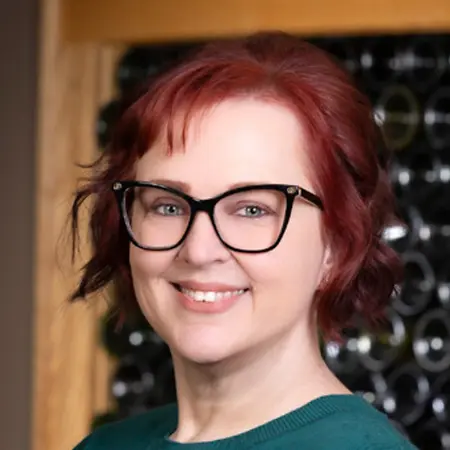
Angela S. Jones is a seasoned healthcare marketing and communications executive serving as Assistant Vice President of Media and Marketing Communications at WVU Medicine. With more than 18 years of experience within the organization, she leads enterprise-wide media relations, crisis communication, executive messaging, and reputation strategy for one of the nation’s largest academic health systems. Headquartered in Morgantown, the system spans 25 hospitals across four states, and Angela oversees a cross-functional team responsible for media engagement, editorial operations, video strategy, and high-stakes executive communications. Her leadership ensures consistent, accurate, and mission-driven messaging that strengthens public trust and advances organizational visibility at the local, national, and international levels.
Angela began her career in journalism after earning both her Bachelor of Science in Journalism and Master of Arts in Corporate and Organizational Communication from West Virginia University. She worked as a newspaper reporter and editor in Indiana and Virginia before transitioning into healthcare communications—what journalists often call “the dark side” of marketing and public relations. What she initially believed might be a short-term role evolved into a long-term calling. Over nearly two decades, she has advanced through progressive leadership roles, guiding executive teams through complex, high-visibility moments while building resilient crisis communication frameworks and proactive reputation strategies.
Known for her calm leadership under pressure and strong editorial judgment, Angela is particularly effective in environments where communication is mission-critical. She is deeply motivated by WVU Medicine’s nonprofit mission to transform lives and eliminate health disparities across Appalachia. Beyond her professional achievements, she is a dedicated caregiver, avid reader, and advocate for lifelong growth—often encouraging young professionals, especially women, to embrace evolving career paths and trust that they have earned their place at the table.
• Government Relations Academy
• Executive Leadership Certificate
• SHSMD Health Care Social Media Trends and Strategies
• Basic Incident Command System for Initial Response, ICS-200
• Introduction to Incident Command System, ICS-100
• SHSMD ADVANCE™ Credential: The Power of Effective Storytelling in Health Care
• West Virginia University - M.A.
• American Marketing Association
• Society for Healthcare Strategy & Market Development
• Association of American Medical College’s Group on Institutional Advancement (GIA)
• Public Relations Society of America (PRSA)
What do you attribute your success to?
It was instilled in me at a very young age. My parents, like all parents, want their children to do better than they did and want to see them have a higher level of success. Going to college was never an option, it was a given, it was happening. My parents did a wonderful job of pushing me to pursue education. Neither of my parents went to college - my mom has since gone back as a full-time mom and working full-time and got her college degree. They encouraged me to pursue my dreams, to do whatever it was that made me happy, and championed whatever it was. I thought I was gonna be a lawyer, and that didn't work out, and then I was going into the newspaper business, which they were a little unsure of. When I transitioned into this job, my parents have been my biggest cheerleaders, my strongest foundation of support. I attribute it to them - they wanted more for me, and I think together we have succeeded in making that happen.
What’s the best career advice you’ve ever received?
One of the women I interviewed as part of working with an executive coach said, you know, trust in the fact that you were invited to the table for a reason. Know and take comfort in the fact that the people who put you there saw something in you that made them believe that you deserved to be there, and they needed you to be there. That has been incredibly helpful to me to be more confident in my skills and my background and my training and what I bring to the organization. To say, yeah, you know, you're right. I have earned this position at the table. I do have something to offer, and I'm not gonna make myself small because I feel inadequate or like I don't belong. Like, I do belong here, and I'm gonna own it.
What advice would you give to young women entering your industry?
I think there's two key things. The first thing is that Plan B, C, D, all the way through Z doesn't mean that Plan A failed or was a failure. I think it is dangerous to think that when you graduate from high school at 18 that you are going to have completely figured out everything that you're going to do for the rest of your life. Because until you're out in the world, experiencing it, being an adult, and really discovering who you are, it's all part of personal growth and development, and you can't discount that process or feel like a failure because what you thought you were going to do ended up not being your true calling in life. I often quote the Beatles, specifically John Lennon and Paul McCartney wrote, life is what happens when you're busy making other plans. And it's okay for that to happen. Like, you're not a failure, you didn't screw it up, you're not a disappointment. You're finding yourself. If you don't love what you do, then you're not in the right field. And trial and error, and practice makes perfect. It may take a few tries to find your passion and your calling, but stick it out, you will find it, and that happiness is out there and can be found. The second thing is imposter syndrome is very real. I personally struggled with it when I became an AVP. One person said the feeling of imposter syndrome is being humble enough to know that you're not the smartest person at the table, you don't know everything, but you're willing to learn from your colleagues and your superiors.
What are the biggest challenges or opportunities in your field right now?
One of the biggest challenges—and greatest opportunities—in my field right now is serving a largely underserved, economically disadvantaged population in West Virginia. This reality requires innovative thinking, resourcefulness, and a deep commitment to addressing health disparities. At the same time, it presents a meaningful opportunity to create lasting impact by improving access, education, and outcomes within communities that need it most.
Additionally, I recognize that the shift from traditional journalism to marketing and public relations reflects broader changes across the industry. Rather than viewing this evolution as a limitation, I see it as an opportunity to expand my skill set, adapt to emerging platforms, and pursue new career pathways that align with the changing media landscape.
What values are most important to you in your work and personal life?
The values most important to me are helping others and staying mission-driven in everything I do. I’m deeply committed to service and to making a meaningful difference, especially through education and empowering others with knowledge.
I also value strong family support and loyalty. My family is my foundation, and I carry those principles of commitment, integrity, and standing by others into both my personal and professional life.
Locations
WVU Medicine
Morgantown, WV 26505